
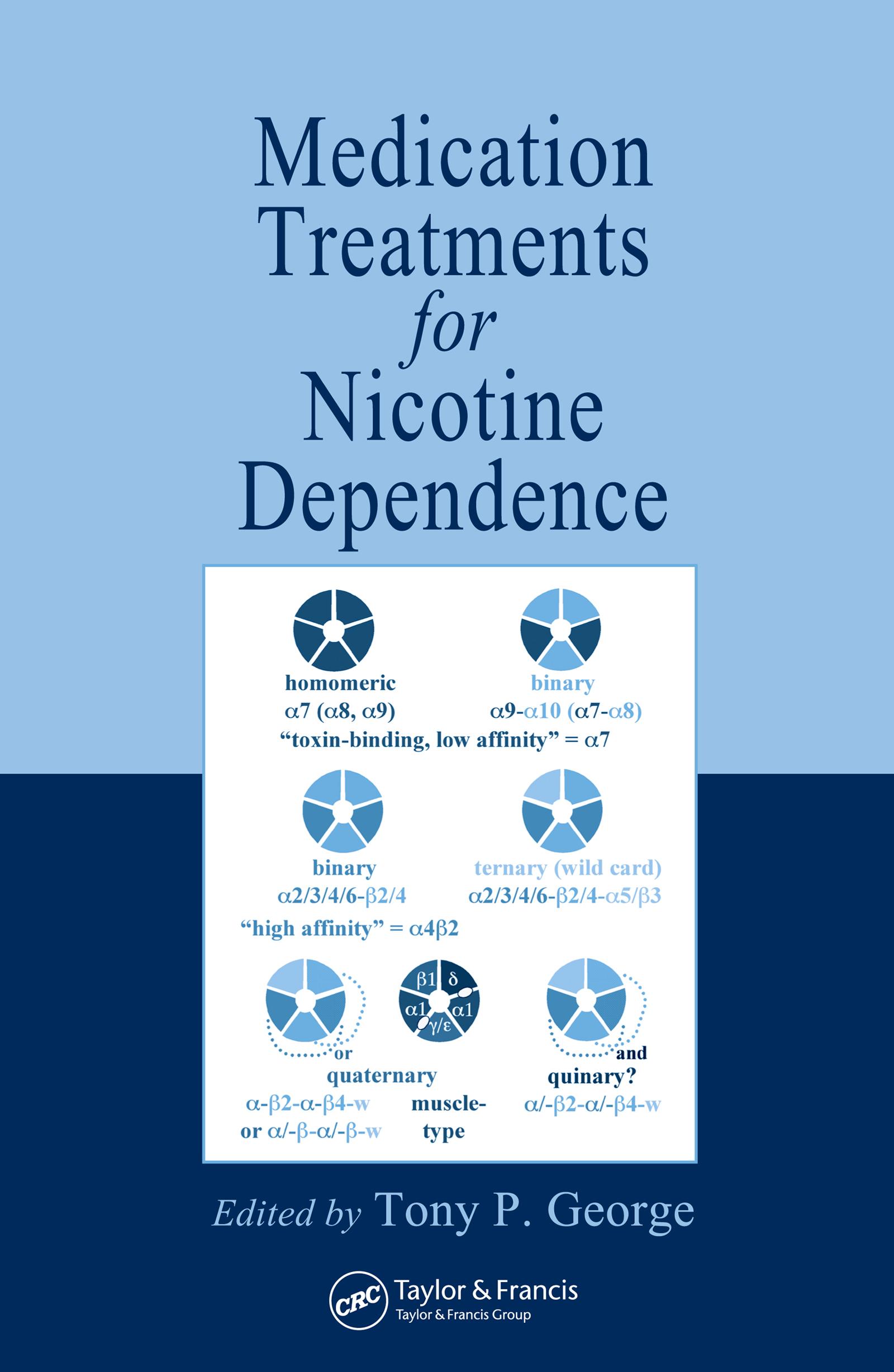
Despite the prevalence of both pharmaceutical and behavioral approaches to encourage cessation, over a billion people still indulge in tobacco. Even in the U.S., where tobacco use is considered a clearly treatable and socially regrettable condition, a significant percentage of individuals remain resistant to treatment modalities. It is believed that the problem lies with the availability, the effectiveness, and the tolerance of the treatments. Thus, the development of new and more effective medications for treating nicotine dependence is an area of significant therapeutic importance, and one made increasingly more viable given our rapidly increasing knowledge about the actions of nicotine and tobacco components on the brain.
“We are entering a Renaissance period … that promises to provide us with improved pharmacological tools to tackle this most serious of worldwide public health problems.”
-- from the Preface
Medication Treatments for Nicotine Dependence assembles contributions from leading researchers and clinicians to provide the most comprehensive volume on current and future possibilities for addressing nicotine and tobacco dependence with medication. Organized into six sections, this important work covers—
Basic pharmacology and physiology of nicotine and nicotinic receptors
First-line medications for nicotine addiction, including NRTs and sustained release bupropion
Second-line medications including antidepressants, inhibitors, and antagonists
Promising treatments currently in development
Special topics such as the combination of medications with behavioral treatments and pharmacogenetic approaches to treatment
The text concludes with the presentation of two unique perspectives on the development of medications for nicotine dependence and its implications for clinical practice.
Medication Treatments for Nicotine Dependence serves as a useful primer and resource for established investigators, as well as those new to the research; for students from a range of disciplines, including pharmacology, psychology, public health, and medicine; and for those clinicians actively engaged in the treatment of nicotine dependence.
Pay easily by card, Klarna, Apple Pay or Google Pay. Not happy? You always have a 14-day money-back guarantee. Read more in our terms. If you have any questions, email us at hello@memmo.org.
Memmo makes studying easier – wherever you are in the world. We bring your course books and smart study tools together in one place: summaries, quizzes, podcasts and flashcards. Plus Ted, your study buddy who answers anything you wonder. Over 75,000 students already study here – built to help you learn faster and stress less.