
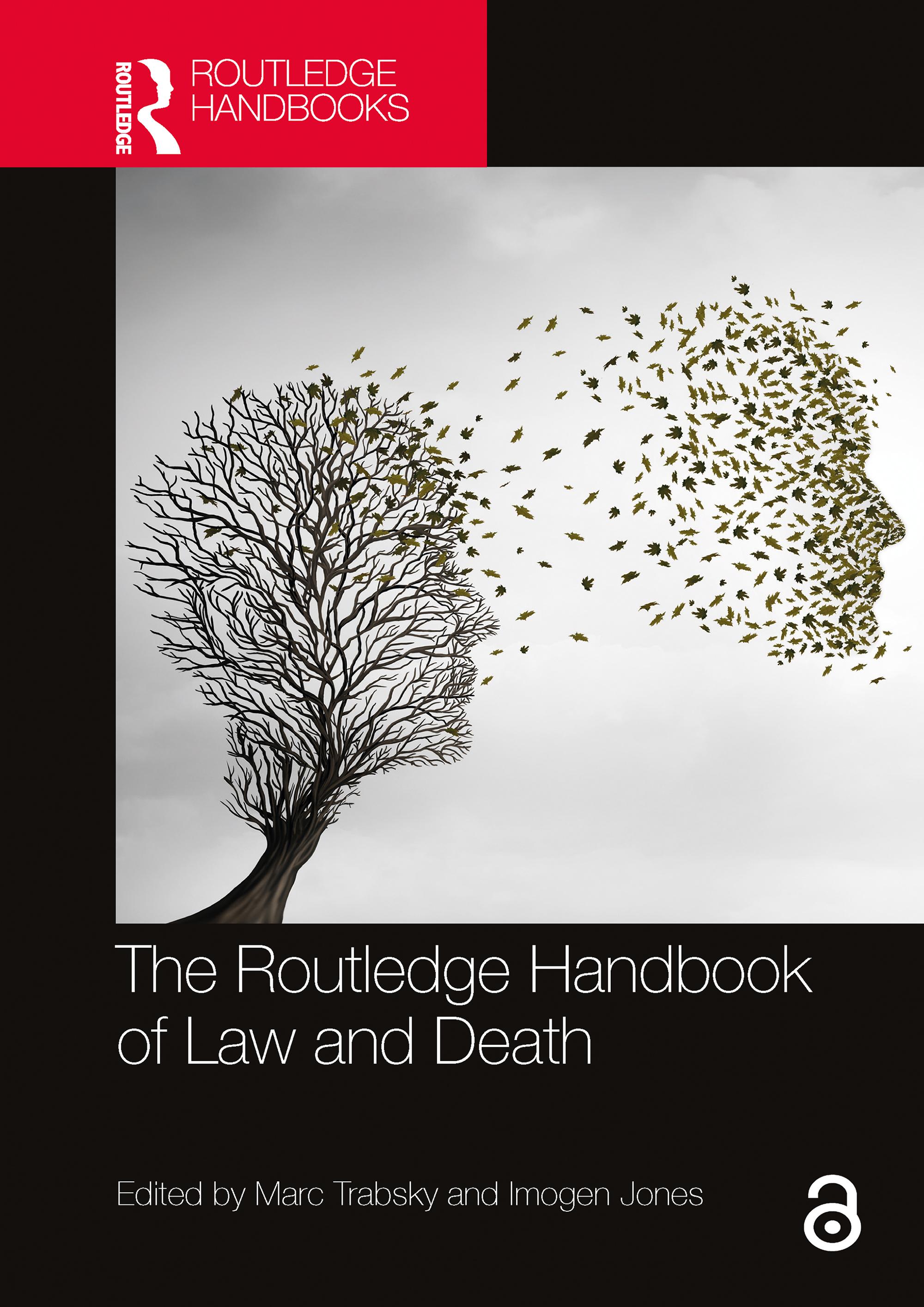
The Routledge Handbook of Law and Death provides a comprehensive survey of contemporary scholarship on the intersections of law and death in the 21st century.
It showcases how socio-legal scholars have contributed to the critical turn in death studies and how the sociology of death has impacted upon the discipline of law. In bringing together prominent academics and emerging experts from a diverse range of disciplines, the Handbook shows how, far from shunning questions of mortality, legal institutions incessantly talk about death. Touching upon the epistemologies and materialities of death, and problems of contested deaths and posthumous harms, the Handbook questions what is distinctive about the disciplinary alignment of law and death, how law regulates and manages death in the everyday, and how thinking with law can enrich our understandings of the presence of death in our lives.
In a time when the world is facing global inequalities in living and dying, and legal institutions are increasingly interrogating their relationships to death, this Handbook makes for essential reading for scholars, students, and practitioners in law, humanities, and the social sciences.
The Open Access version of Chapter 19, available at www.taylorfrancis.com, has been made available under a Creative Commons Attribution (CC-BY) 4.0 International license.
Pay easily by card, Klarna, Apple Pay or Google Pay. Not happy? You always have a 14-day money-back guarantee. Read more in our terms. If you have any questions, email us at hello@memmo.org.
Memmo makes studying easier – wherever you are in the world. We bring your course books and smart study tools together in one place: summaries, quizzes, podcasts and flashcards. Plus Ted, your study buddy who answers anything you wonder. Over 50,000 students already study here – built to help you learn faster and stress less.