
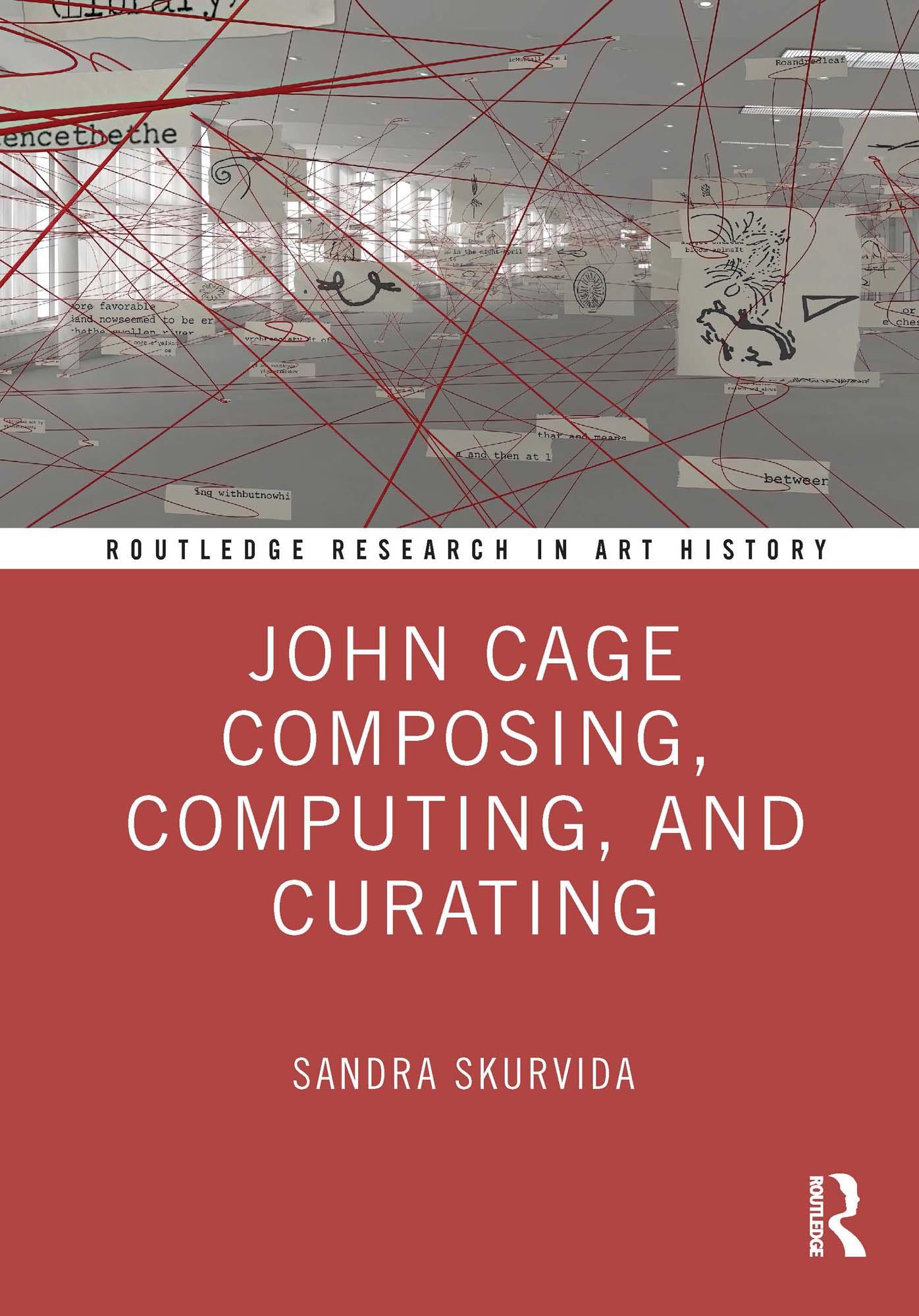
This study reassesses Cage’s multifaceted practice from a transdisciplinary perspective, using text as a premise for his musical, visual, lingual, and museal compositions.
In his compositions, John Cage opened the structures of music, language, and the museum to change perpetuated by chance operations. His correspondences across history with an extended circle of creators, including Erik Satie, Marcel Duchamp, and Henry David Thoreau, among many others, erased single-minded authorship via methodical processing of source material. Foreshadowing ecological recycling, Cage’s late compositions for museum opened perspectives for posthuman mediation in curating and contemporary art. He conceived of anarchy as the coexistence of mutually aiding yet autonomous self-determinate entities. This book introduces Cage to the twenty-first century as a composer whose work intersects different temporalities and modes of being, the past and the present, the human and the non-human, and the individual and the communal.
The book will be of interest to scholars of art history, music, curatorial studies, and museum studies.
Pay easily by card, Klarna, Apple Pay or Google Pay. Not happy? You always have a 14-day money-back guarantee. Read more in our terms. If you have any questions, email us at hello@memmo.org.
Memmo makes studying easier – wherever you are in the world. We bring your course books and smart study tools together in one place: summaries, quizzes, podcasts and flashcards. Plus Ted, your study buddy who answers anything you wonder. Over 50,000 students already study here – built to help you learn faster and stress less.