
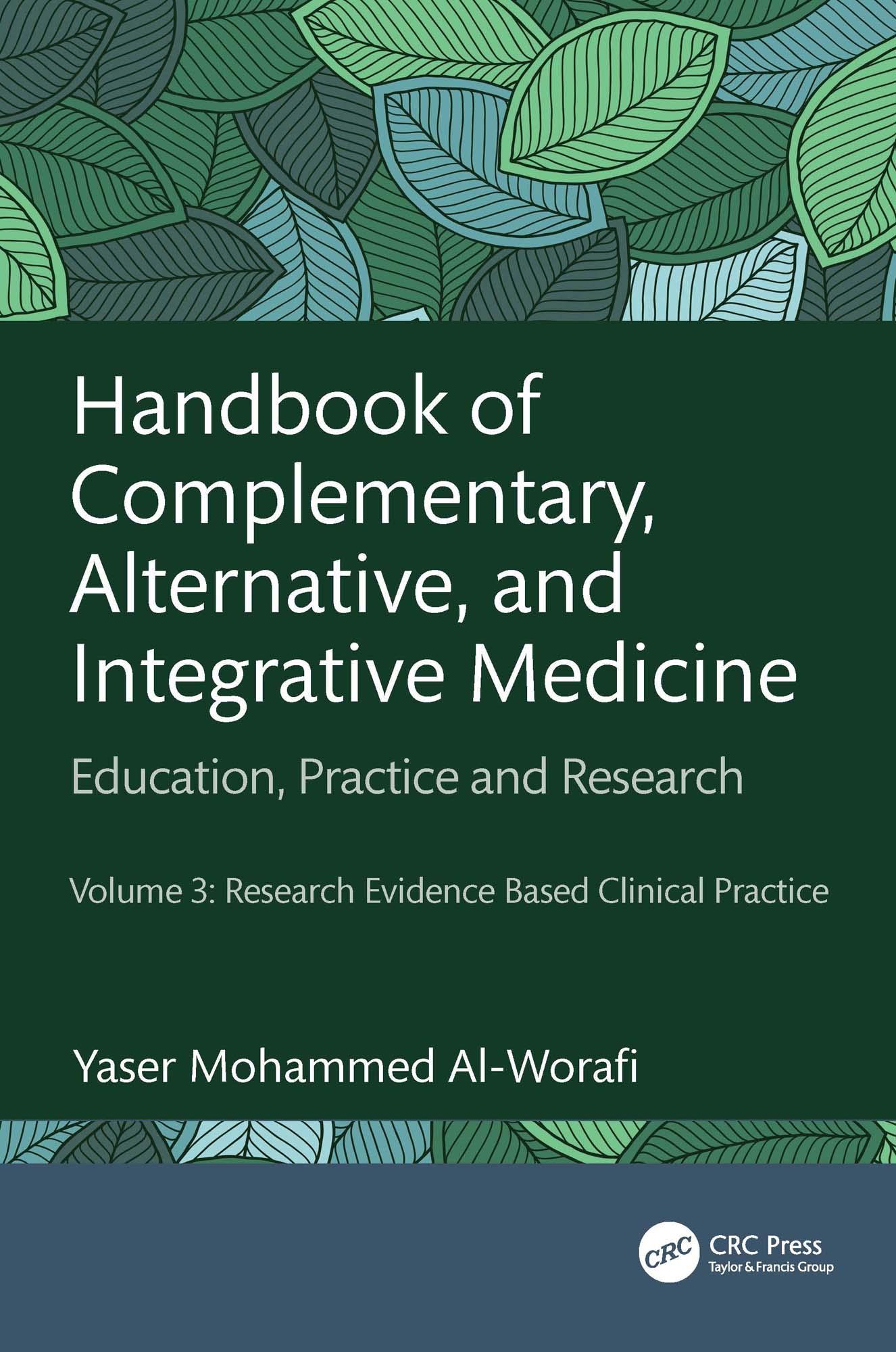
Six volumes combine to make up the Handbook of Complementary, Alternative, and Integrative Medicine: Education, Practice, and Research, which describes the education, practice, and research-related issues of complementary, alternative, and integrative medicine; and its efficacy and safety in treating diseases and health conditions. Further the volumes review integrative medicine around the world to share the best practices and experiences in terms of education, practice, and research; and identify the challenges and suggest recommendations to overcome them.
The 20 chapters of Volume 3 focus on complementary, alternative, and integrative medicine research-related issues. It begins with a history of complementary, alternative, and integrative medicine research and continues with coverage of the different research issues such as complementary and alternative medicine (CAM) research importance, plans, proposals, funding, ethical issues, study designs, methods, advantages and disadvantages for each method, best practices in CAM research, and publications.
Key Features:
- Describes the complementary, alternative, and integrative medicine research-related issues
- Describes the complementary and alternative medicine importance, plans and funding issues
- Describes the complementary, alternative, and integrative medicine research methodology with examples
- Describes the challenges of complementary, alternative, and integrative medicine research and suggest recommendations to overcome them
Pay easily by card, Klarna, Apple Pay or Google Pay. Not happy? You always have a 14-day money-back guarantee. Read more in our terms. If you have any questions, email us at hello@memmo.org.
Memmo makes studying easier – wherever you are in the world. We bring your course books and smart study tools together in one place: summaries, quizzes, podcasts and flashcards. Plus Ted, your study buddy who answers anything you wonder. Over 50,000 students already study here – built to help you learn faster and stress less.