
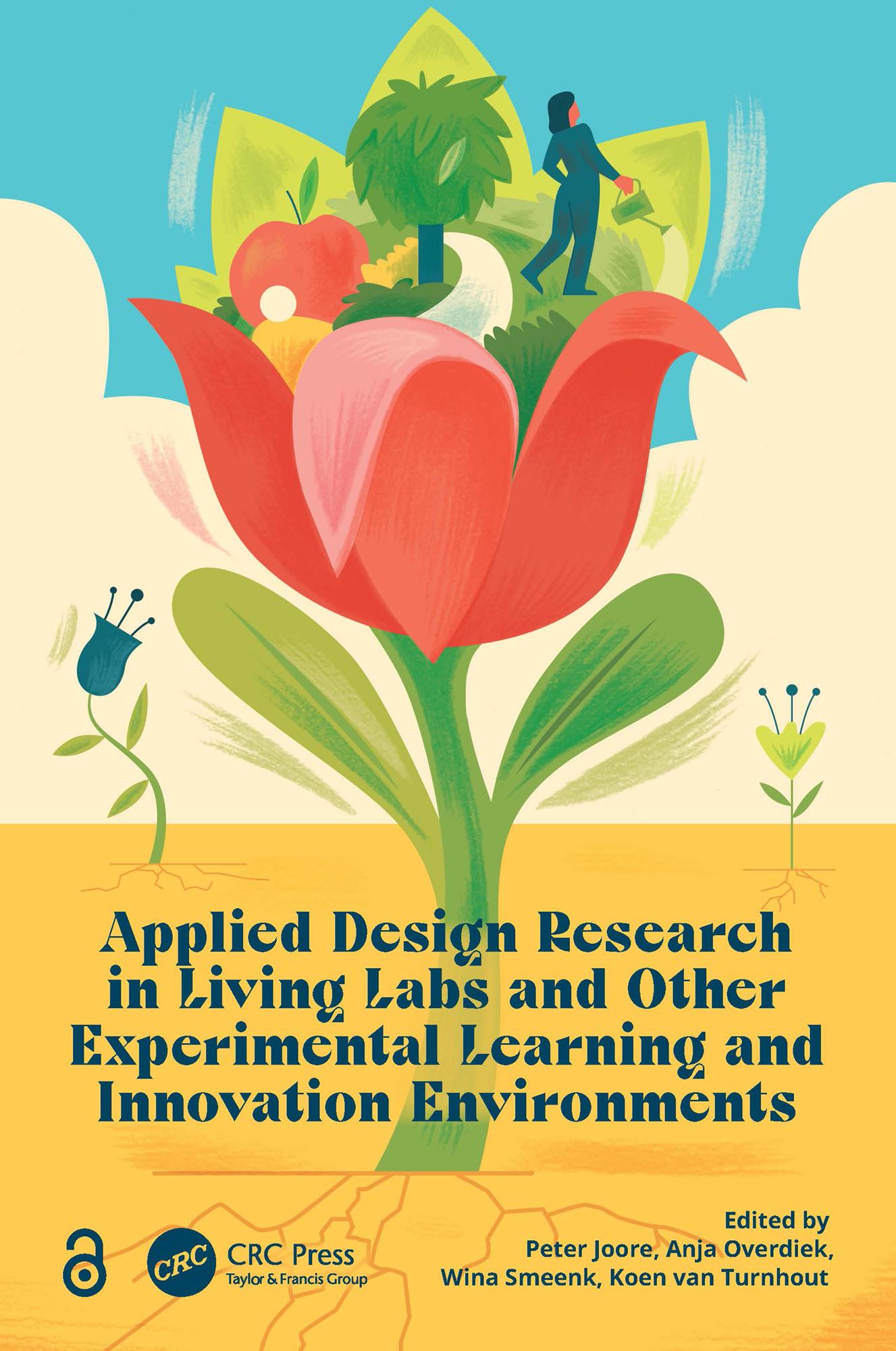
Experimental Learning and Innovation Environments, such as Living Labs, Field Labs, and Urban Innovation Labs, are increasingly used to connect multi-stakeholders in envisioning, creating, experimenting, learning, and trying out novel responses to diverse societal challenges. With designers facilitating the co-creation processes that take place in these labs, the design discipline plays an important role in these experimental environments.
Applied Design Research in Living Labs and other Experimental Learning and Innovation Environments combines a focus on Experimental Learning and Innovation Environments (or Living Labs) with a focus on Applied Design Research. It offers an interdisciplinary perspective by bringing together diverse stakeholders from different disciplines. The book will adopt an interdisciplinary perspective, integrating insights from design, innovation, sociology, technology, and other relevant fields. It showcases real-world examples and case studies of successful Applied Design Research in Living Labs and focuses on design dilemmas that emerge while working in these Experimental Learning and Innovation Environments. The book explores the role of various stakeholders, including the roles that may play out during the development of Experimental Learning and Innovation Environments, and goes on to discuss the balance between fixed or fluid roles of these stakeholders and the polarity between working within one specific discipline versus working with various expertise or disciplines.
Designers, government representatives, and researchers who apply a living lab approach to solve multi-stakeholder challenges in various fields by applying Urban Innovation Labs, Energy Living Labs, Mobility Living Labs, Health Living Labs, Education Living Labs, or Social Living Labs will find this book of interest.
The Open Access version of this book, available at http://www.taylorfrancis.com, has been made available under a Creative Commons Attribution-Non Commercial-No Derivatives (CC-BY-NC-ND) 4.0 license.
Pay easily by card, Klarna, Apple Pay or Google Pay. Not happy? You always have a 14-day money-back guarantee. Read more in our terms. If you have any questions, email us at hello@memmo.org.
Memmo makes studying easier – wherever you are in the world. We bring your course books and smart study tools together in one place: summaries, quizzes, podcasts and flashcards. Plus Ted, your study buddy who answers anything you wonder. Over 50,000 students already study here – built to help you learn faster and stress less.