
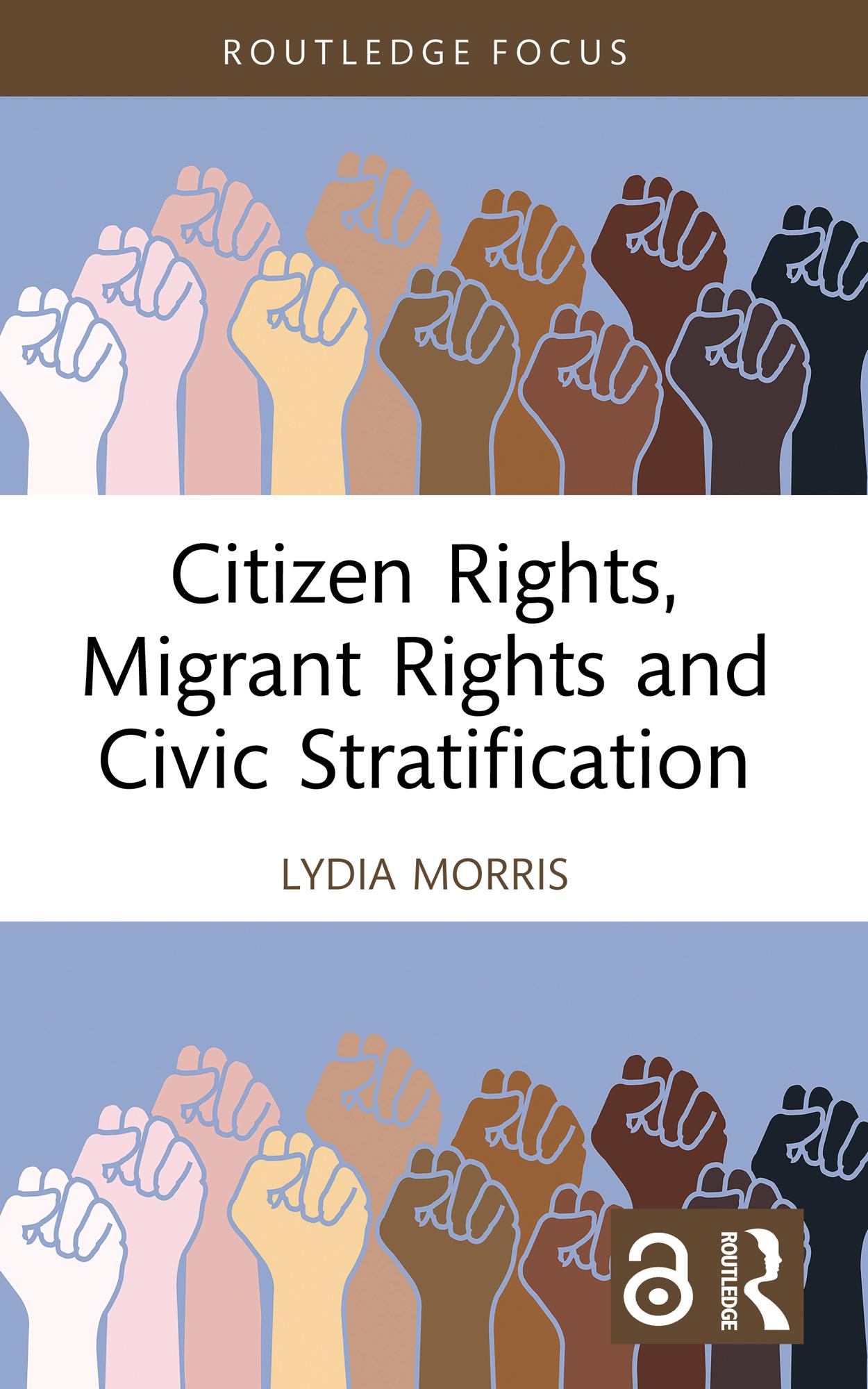
This book explores the concept of civic stratification and examines its contemporary relevance for analysis and understanding of the functioning of rights in society.
David Lockwood’s (1996) concept of civic stratification outlines the way in which the rights associated with citizenship can be a source of inequality by virtue of their formal granting or denial by the state, or by informal impediments to their full realisation. The purpose of this book is to explore the meaning and significance of this concept, and elaborate its potential in offering a framework for understanding the dynamic nature of rights. Lockwood’s model reverses Marshall’s (1950) view of citizenship as guaranteed inclusion in society and is linked to the way that the differential entitlement and the qualifying conditions associated with certain rights can be harnessed as a means of control. While both Marshall and Lockwood were principally concerned with the rights attaching to citizenship, this book extends the insights of these two authors to show how such controls apply in various ways to both citizens and non-citizens alike. Building on Lockwood’s conception of ‘moral resources’ the book set out a theoretical framework and empirical illustration of how the position of different groups within society is subject to shifting perceptions of social worth and is engaged both in claims to fuller access to rights and in justifications of their denial or removal.
This book will appeal to scholars and higher-level students with relevant interests in sociolegal studies, sociology, social policy and politics.
The Open Access version of this book, available at www.taylorfrancis.com, has been made available under a Creative Commons Attribution-NoDerivatives (CC-BY-ND) 4.0 license. This publication was supported by the University of Essex’s open access fund.
Pay easily by card, Klarna, Apple Pay or Google Pay. Not happy? You always have a 14-day money-back guarantee. Read more in our terms. If you have any questions, email us at hello@memmo.org.
Memmo makes studying easier – wherever you are in the world. We bring your course books and smart study tools together in one place: summaries, quizzes, podcasts and flashcards. Plus Ted, your study buddy who answers anything you wonder. Over 50,000 students already study here – built to help you learn faster and stress less.