
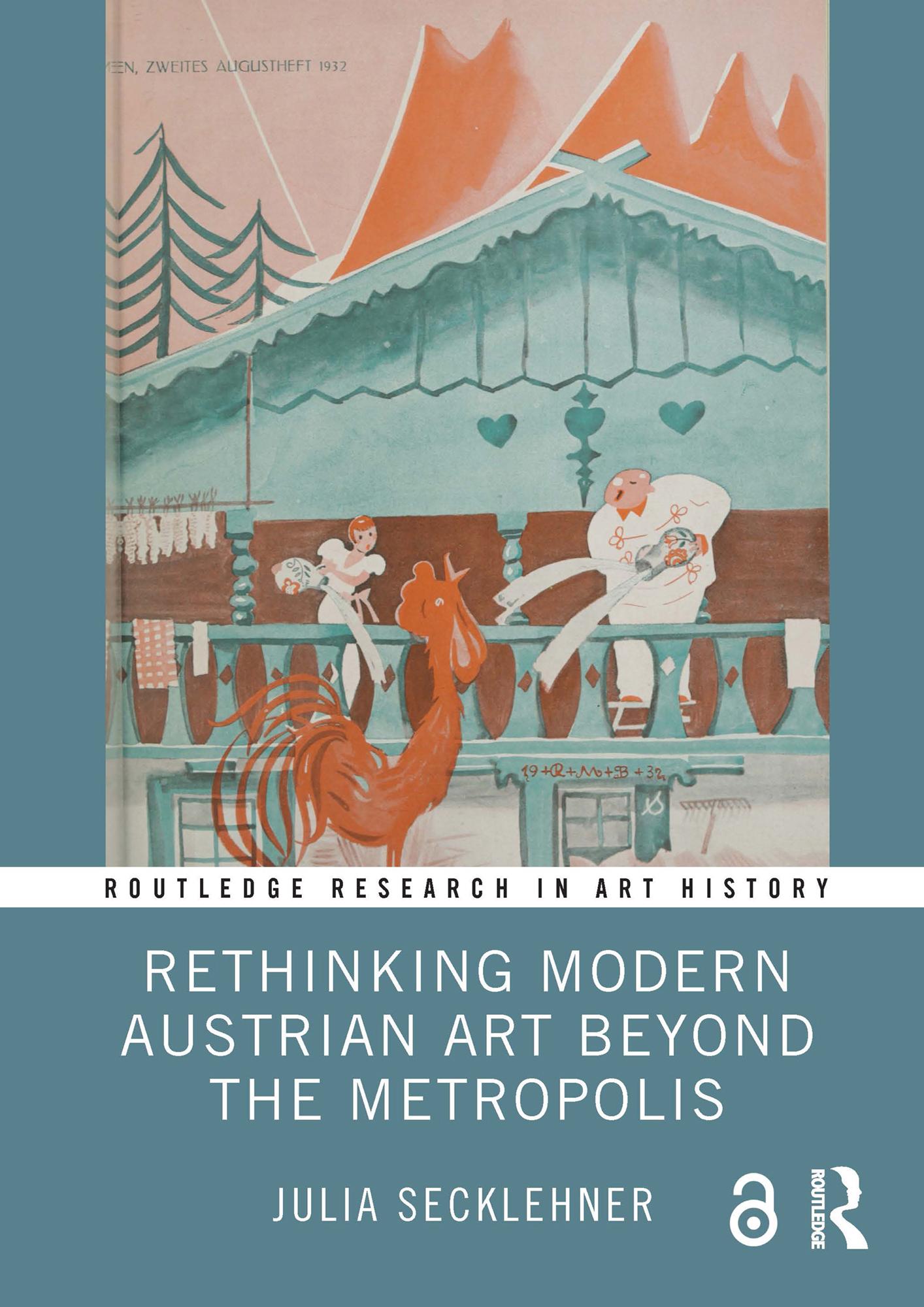
This study examines the role played by regional cultures in modern art and visual culture in Central Europe between 1918 and 1938.
Analysing paintings, photographs, prints, and illustrated magazines in relation to topics such as tourism, social activism, rural exoticism, gender, and ethnic diversity, the book offers a fresh perspective on Central European art and visual culture. It pays particular attention to Austria, a country often ignored in histories of modernism in Central Europe, yet one where the countryside gained high visibility as a part of modern culture between the wars. Examples from Czechoslovakia and Hungary also play an important role in comparison and challenge the nationally fragmented histories of modernism in the region. The book’s approach overall is also relevant beyond Central Europe: it corrects assumptions that modern art and visual culture were at home in the urban space and emphasises the role of the countryside as an agent of renewal and emancipation in order to construct a more nuanced history of modernism.
The book will be of interest to scholars studying art history, Central European studies, European Studies, modernism, and cultural history.
The Open Access version of this book, available at www.taylorfrancis.com, has been made available under a Creative Commons Attribution-Non Commercial-No Derivatives (CC-BY-NC-ND) 4.0 license.
Pay easily by card, Klarna, Apple Pay or Google Pay. Not happy? You always have a 14-day money-back guarantee. Read more in our terms. If you have any questions, email us at hello@memmo.org.
Memmo makes studying easier – wherever you are in the world. We bring your course books and smart study tools together in one place: summaries, quizzes, podcasts and flashcards. Plus Ted, your study buddy who answers anything you wonder. Over 50,000 students already study here – built to help you learn faster and stress less.