
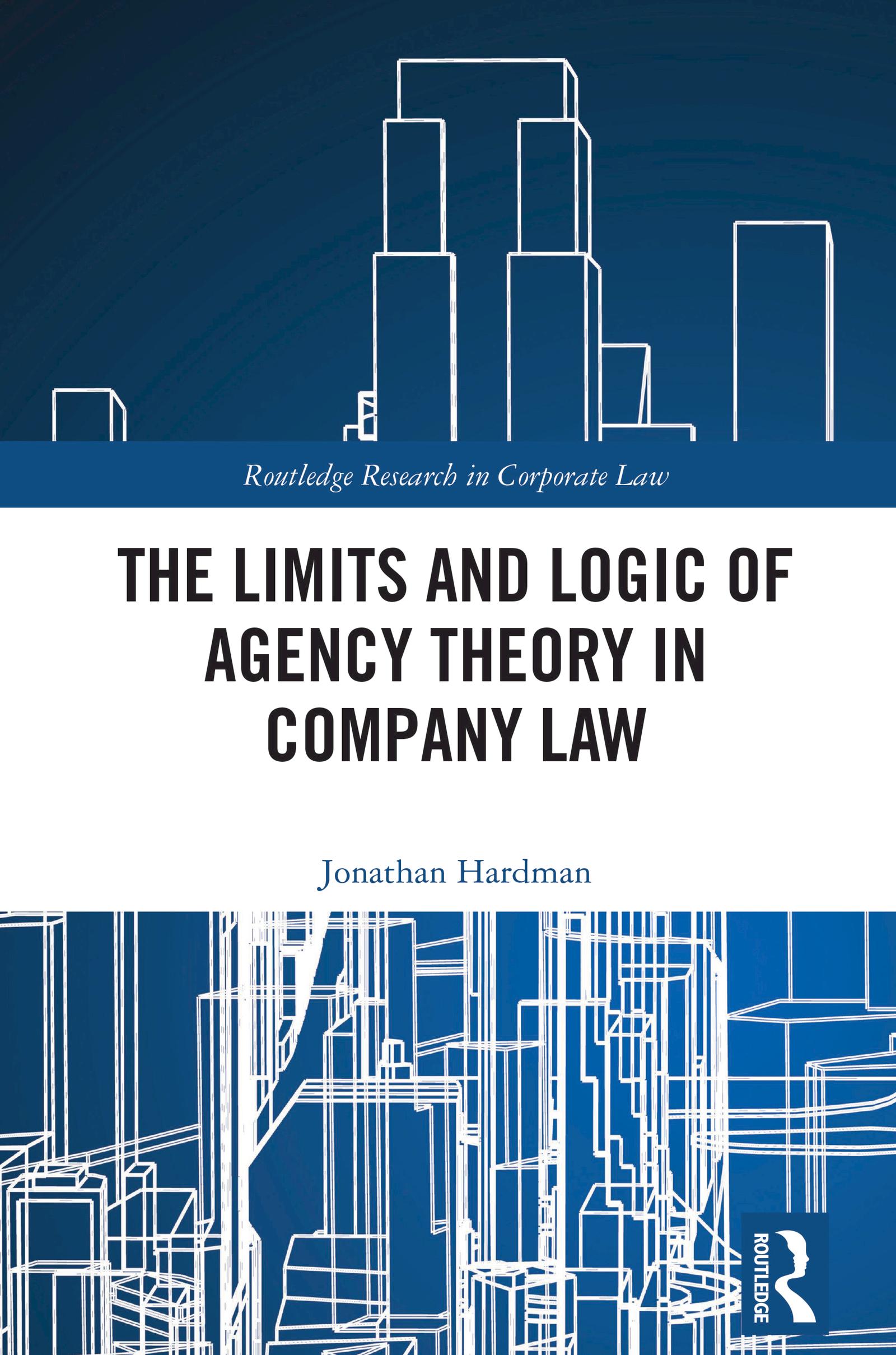
Agency theory is ubiquitous in company law. This book explores (a) the limits of such deployment, and (b) the logic of how to deploy it.
The book makes five linked arguments in respect of the limits of agency theory in company law. First, it argues that agency theory has become so broad that it can be used to analyse most human relationships. Such breadth, though, comes at the expense of legal clarity: as agency relationships cover such a broad range of relationships, there are no normative legal conclusions that can be drawn merely from identifying such a relationship. Second, it argues that we need to differentiate more specific concepts with clearer legal implications, such as externalities, and the particular manifestation of moral hazard that appears in insurance dynamics. Third, it argues that considerable amounts of existing company law theory - which is ostensibly built from agency theory - is in fact based on a series of hidden value judgments at each stage of the analysis. Fourth, it argues that company law theory should use agency theory less to rebalance the discipline: agency theory has become hegemonic, which is dangerous for the discipline, obscures company law’s role in establishing incentives, undermines accountability, and reduces company law’s autonomy.
The book then moves to the logic of agency theory and makes three arguments. First, it argues that we need to factor in the company, only apply agency theory to voluntary interactions, and foreground our value judgments when identifying agency relations to do it properly. Second, it argues that it is rational to incur agency costs when we perceive the benefits of doing so to outweigh the costs, meaning that agency costs can be facilitative and we should look to front-end them rather than universally minimise them. Third, it argues that this needs to be undertaken through mandatory laws.
Exploring the external limits and internal logic of agency cost analysis, this book will be of interest to academics, students, and researchers of corporate and company law.
Pay easily by card, Klarna, Apple Pay or Google Pay. Not happy? You always have a 14-day money-back guarantee. Read more in our terms. If you have any questions, email us at hello@memmo.org.
Memmo makes studying easier – wherever you are in the world. We bring your course books and smart study tools together in one place: summaries, quizzes, podcasts and flashcards. Plus Ted, your study buddy who answers anything you wonder. Over 50,000 students already study here – built to help you learn faster and stress less.