
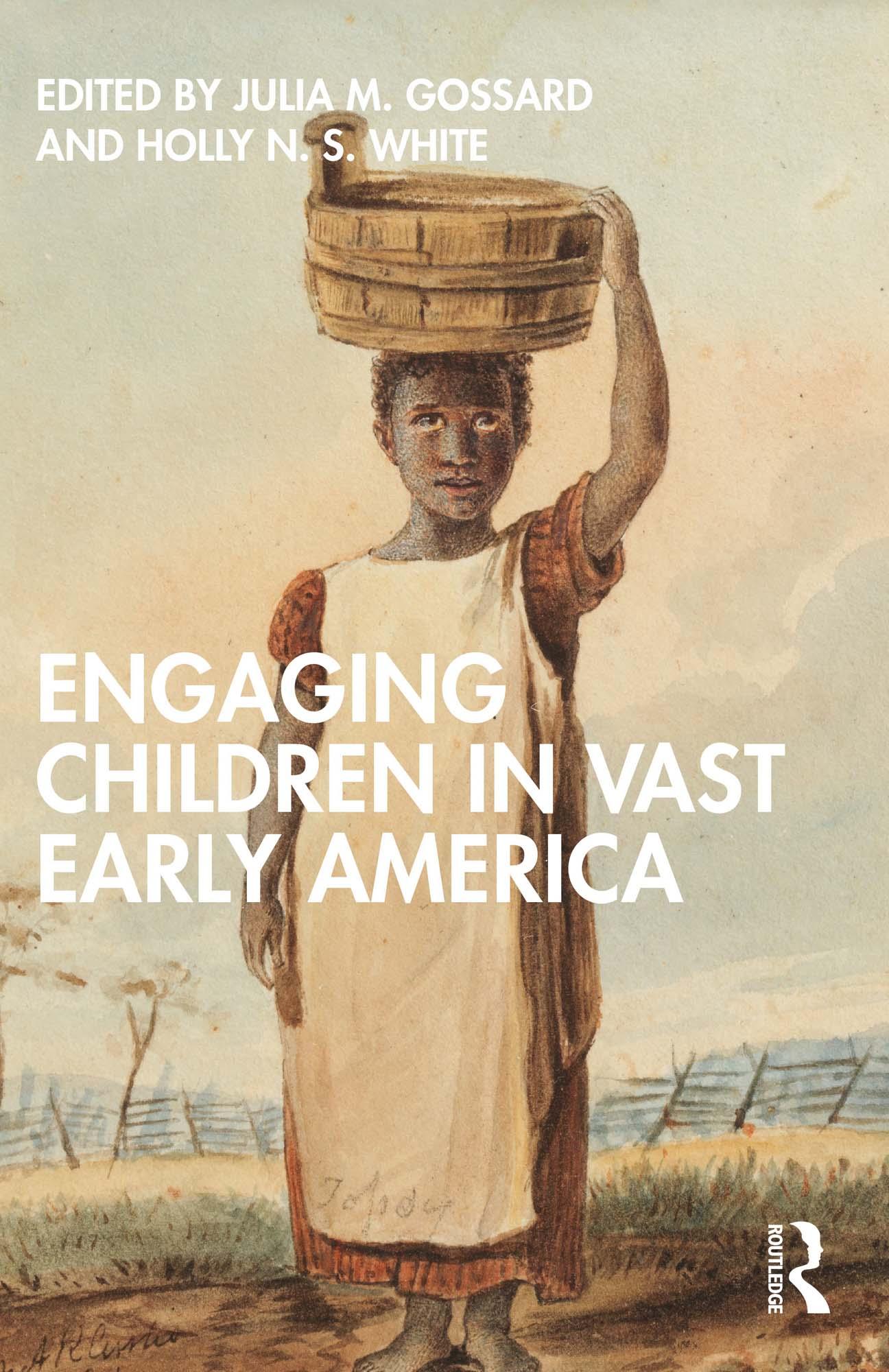
Engaging Children in Vast Early America examines the often overlooked roles that children played in moments of contact between Indigenous groups, Europeans, and Africans in North and South America over the course of the seventeenth through nineteenth centuries.
Adulthood is the default lens through which most of history is examined. This is because so few historians analyze the age or life stage of those they study. As a result, people of the past are often assumed to be adults when their actions or experiences align more closely with what modern society deems “adultlike.” Many of these “assumed adults,” however, were agentive children. This collaborative collection is the first of its kind to invite experts in the field of Vast Early America to engage with the history of childhood and youth. The result is nine innovative essays that expand our understanding of childhood and agentive children but also of empire and everyday life in Vast Early America.
This accessible text is a unique resource for undergraduate courses in childhood and youth history, family history, and early American history.
Pay easily by card, Klarna, Apple Pay or Google Pay. Not happy? You always have a 14-day money-back guarantee. Read more in our terms. If you have any questions, email us at hello@memmo.org.
Memmo makes studying easier – wherever you are in the world. We bring your course books and smart study tools together in one place: summaries, quizzes, podcasts and flashcards. Plus Ted, your study buddy who answers anything you wonder. Over 50,000 students already study here – built to help you learn faster and stress less.