
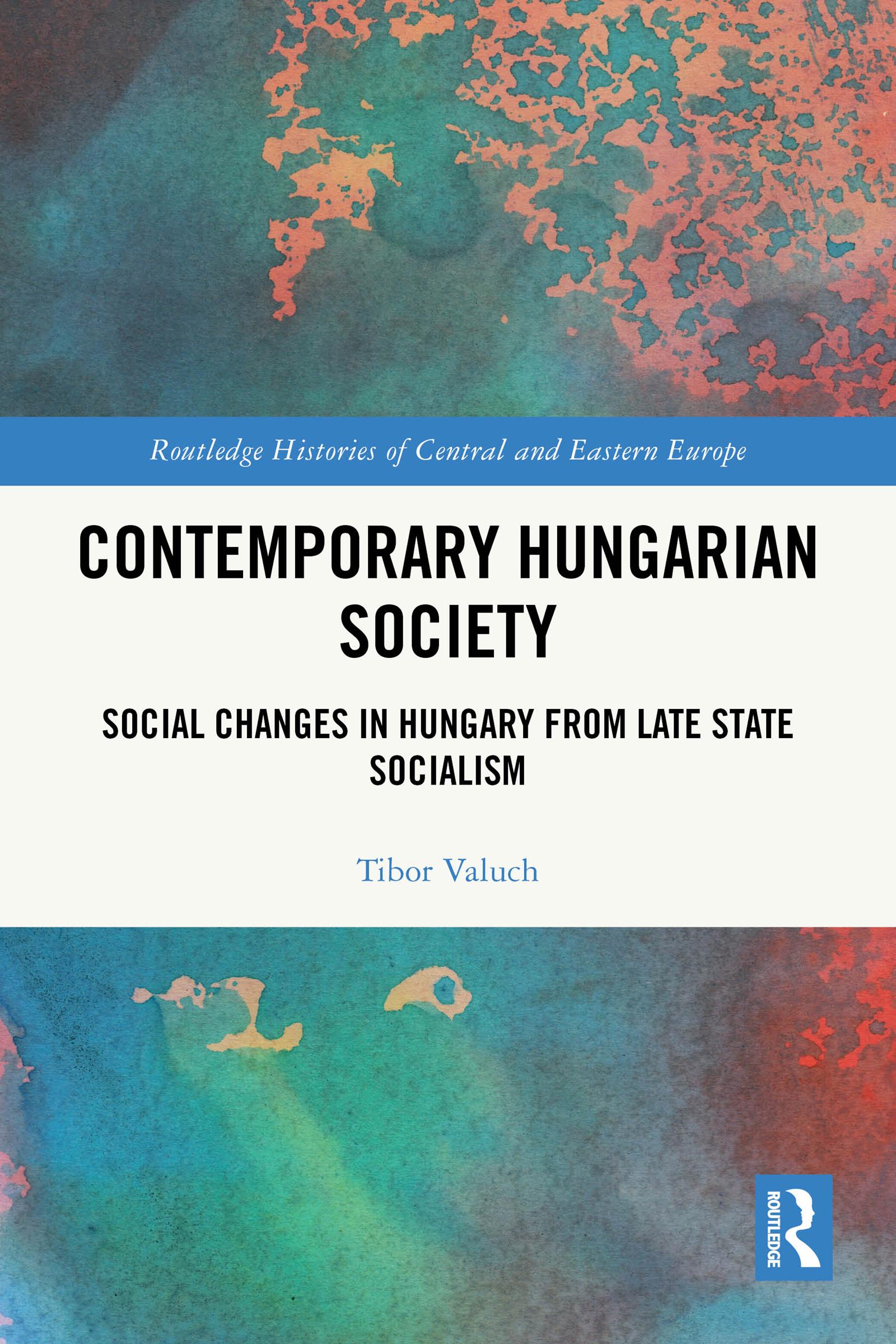
This book examines social change in Hungary, commencing with the period of late-stage socialism, the country’s immediate post-communist transition, its subsequent consolidation, and the emergence of authoritarian leadership since 2010. The volume seeks to employ a longitudinal and comparative perspective and provides comparison to other central and East European states that emerged from state socialism.
The Hungarian regime change of 1989–1990 led to previously unimaginable social and economic transition. In recent decades, regime change and socioeconomic transition in Central and Eastern Europe have produced a library of literature, and transition studies has periodically become a discipline in its own right. The author uses an interdisciplinary approach – drawing from social history, sociology, statistics, and contemporary history – in order to understand and analyse social change in all its complexity.
The book will be of interest to undergraduate and postgraduate students, social scientists, historians, experts, and those interested in Hungarian and Central and Eastern European history and social change.
Pay easily by card, Klarna, Apple Pay or Google Pay. Not happy? You always have a 14-day money-back guarantee. Read more in our terms. If you have any questions, email us at hello@memmo.org.
Memmo makes studying easier – wherever you are in the world. We bring your course books and smart study tools together in one place: summaries, quizzes, podcasts and flashcards. Plus Ted, your study buddy who answers anything you wonder. Over 50,000 students already study here – built to help you learn faster and stress less.