
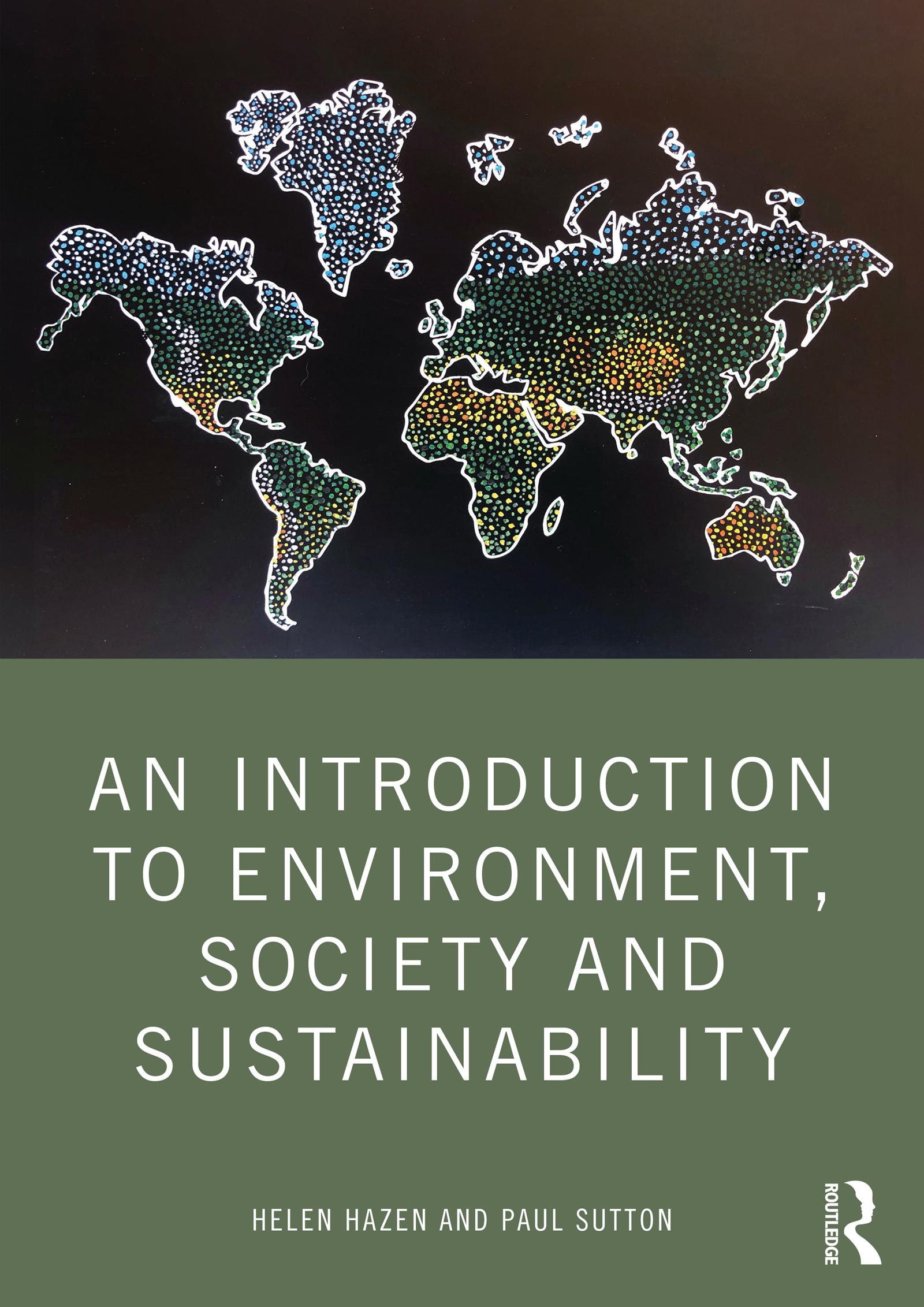
This timely and innovative book delves into the complex interplay of human activities and natural limits in generating today’s sustainability challenges. By contrasting the pressures of growing populations with ecological footprints associated with consumption, the volume navigates the contested terrain where human societies generate environmental impacts.
Adorned with illustrative figures, examples and case studies throughout, this book presents insightful analysis of ecological, economic, technological, and social justice responses to the challenges faced by human civilization, including land degradation, climate change, pollution, and overexploitation of natural resources. Many of these issues are wicked problems, characterized by incomplete information, multiple stakeholders, and contested approaches to addressing them. In simple terms, sustainability issues are an interplay between population growth and rising consumption, which are placing impossible demands on finite resources. Potential solutions to the crisis are split between green growth approaches that emphasize technology and institutional capacity to guide economic growth in more sustainable ways, and degrowth approaches that call for a fundamental rethinking of the way we structure society and generate value. This book emerged from a student seminar where undergraduate and graduate students highlighted sustainability topics of concern, helped consider their framing, and then assisted with co-writing several of the chapters. The volume encourages readers to consider structural questions that underpin sustainability dilemmas, and begins with four theoretical frameworks for understanding sustainability issues: ideas from the natural sciences, the population/consumption debate, economic frameworks, and ethical approaches. It then uses a systems approach to apply these theoretical ideas to complex global systems such as the atmosphere, oceans, and agriculture.
This volume will be of pivotal interest to students, scholars and academics in the fields of environmental studies, environment and society, human geography and environmental geography, as well as those with an interest in these areas more generally.
Pay easily by card, Klarna, Apple Pay or Google Pay. Not happy? You always have a 14-day money-back guarantee. Read more in our terms. If you have any questions, email us at hello@memmo.org.
Memmo makes studying easier – wherever you are in the world. We bring your course books and smart study tools together in one place: summaries, quizzes, podcasts and flashcards. Plus Ted, your study buddy who answers anything you wonder. Over 50,000 students already study here – built to help you learn faster and stress less.