
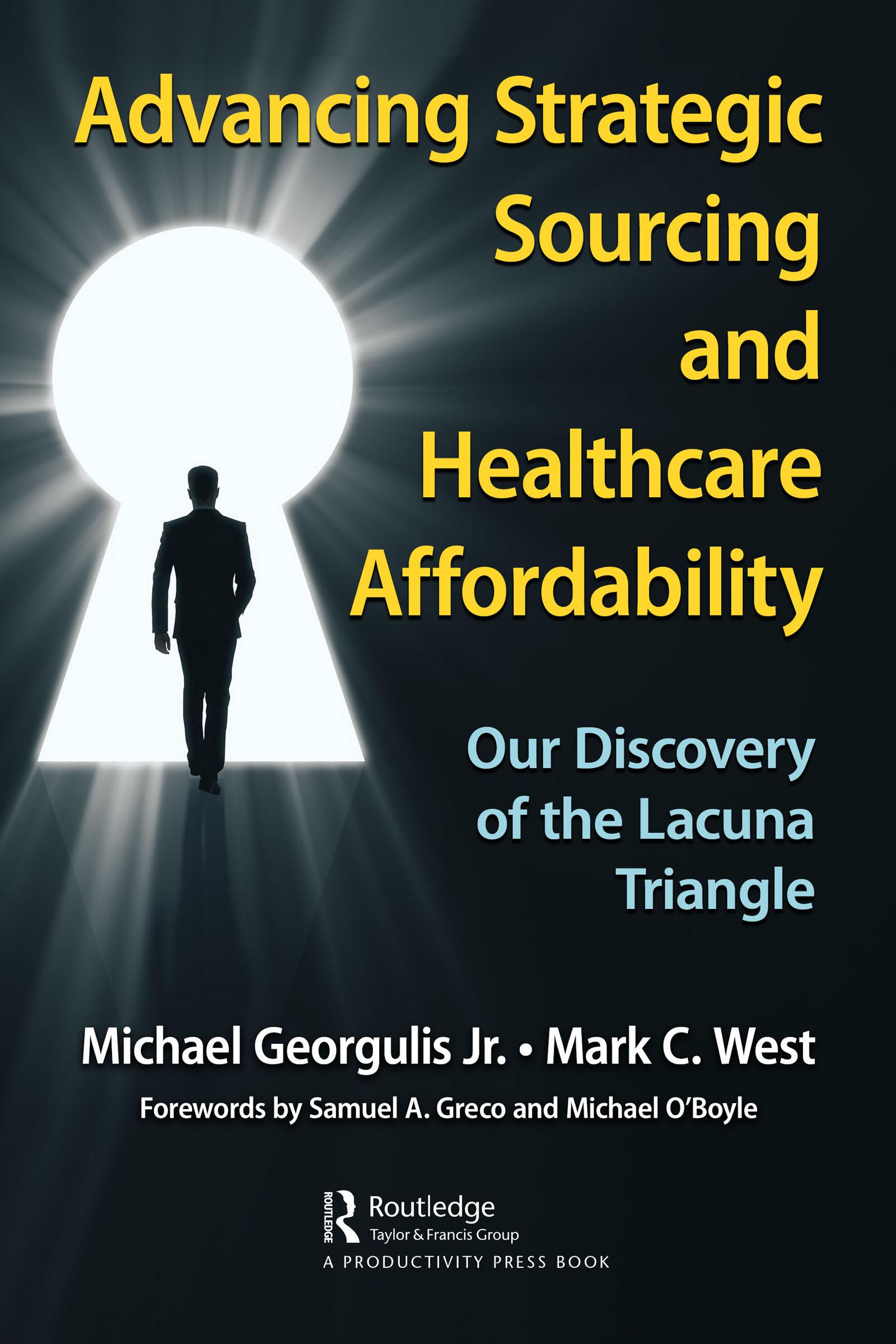
The United States spends more than 17% of its gross domestic product (GDP) on health care, while other developed countries throughout the world average 8.7% of GDP on healthcare expenditures. By 2028, that percentage in the United States is projected to be 19.7% of GDP.
Yet all this spending apparently doesn’t equate to value, quality, or performance. Among 11 high-income countries, the U.S. healthcare industry ranked last during the past seven years in four key performance categories: administrative efficiency, access to care, equity, and healthcare outcomes. This book centers on ways to bring down skyrocketing healthcare costs and improve comparatively low patient outcomes by focusing on the second-highest cost after staffing in U.S. healthcare: the supply chain. The authors present strategies for aligning the healthcare supply chain, leadership, physicians, and department budget owners to achieve evidence-based value analysis (EVA) and effective strategic sourcing. The key to bringing alignment to where it needs to be is understanding the art and science of EVA and strategic sourcing and reorienting the health systems toward productively and gainfully accomplishing them both. Within healthcare, the biggest opportunities for a quantum leap in affordability and quality directly tie to improving the product and service selection process through EVA and greatly advancing hospital and health system supply chain sourcing strategies. The book outlines what the authors call the Lacuna Triangle—three lacunas (or gaps) that occur in hospitals and health systems that prevent them from pursuing effective EVA and strategic sourcing. The authors explore the three effects of those gaps, which keep the Lacuna Triangle walls tightly closed so that the oligopolies, irrational markets, and irrational pricing that those gaps create can continue to thrive, and where many healthcare organizations remain trapped. The goal with this book is to pluck the supply chain and health system executive and clinical leadership out of the chaos and irrationality they are caught in and give them tactics and strategies for reengineering the alignment of these processes to serve their enterprises’ needs.
The book does this by a deep exploration into strategic sourcing, a way of doing business that has been embraced and employed effectively for decades in supply chain management in various industries and in healthcare supply chain in other countries.
Pay easily by card, Klarna, Apple Pay or Google Pay. Not happy? You always have a 14-day money-back guarantee. Read more in our terms. If you have any questions, email us at hello@memmo.org.
Memmo makes studying easier – wherever you are in the world. We bring your course books and smart study tools together in one place: summaries, quizzes, podcasts and flashcards. Plus Ted, your study buddy who answers anything you wonder. Over 50,000 students already study here – built to help you learn faster and stress less.