
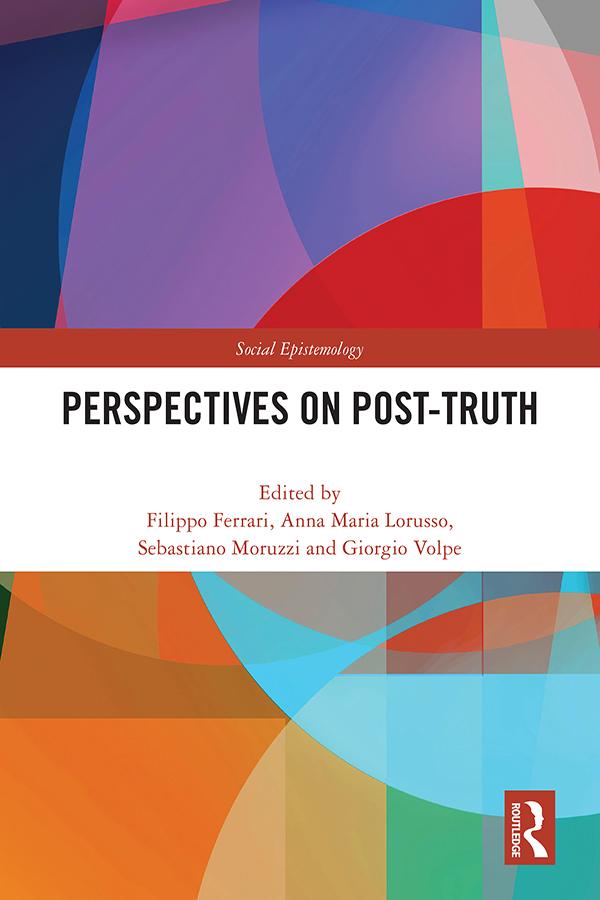
This volume tackles an array of complex and interrelated phenomena which are usually referred to as the post-truth condition – from confirmation bias to science denialism, misinformation, and the rise of polarized ‘epistemic tribes’ on social media. Based on a multi-disciplinary approach, the book seeks not just to chart the landscape of post-truth but to equip the readers with the intellectual tools to navigate and counteract its most detrimental aspects.
‘Post-truth’ denotes a cluster of phenomena that pose significant epistemic and societal challenges, including the proliferation of confirmation bias, denial of scientific findings, reinforcement of beliefs within echo chambers, and rampant spread of misinformation, conspiracy theories, and fake news—most notably via social media platforms. These phenomena have tangible effects, manifesting in a societal schism and contributing to public opinion polarization. Trust in scientific institutions and expertise is eroding, and the fragmentation of public opinion in opposed ‘epistemic tribes’ threatens the very foundations of democratic societies, undermining the role of scientific bodies in public discourse and policy-making. Drawing on diverse methodologies, theoretical frameworks, and expert insights, the contributions to this book scrutinize core post-truth phenomena through a multi-disciplinary lens and construct a nuanced understanding and an effective toolkit to confront the challenges posed to our social fabric.
Tailored for a diverse readership, including scholars in social and traditional epistemology, semiotics, and related fields, as well as an informed general audience, this volume will be particularly relevant for individuals interested in fostering their understanding of phenomena such as post-truth, science denialism, societal polarization, and their impact on democratic processes and institutions. It was originally published as a special issue of Social Epistemology.
Pay easily by card, Klarna, Apple Pay or Google Pay. Not happy? You always have a 14-day money-back guarantee. Read more in our terms. If you have any questions, email us at hello@memmo.org.
Memmo makes studying easier – wherever you are in the world. We bring your course books and smart study tools together in one place: summaries, quizzes, podcasts and flashcards. Plus Ted, your study buddy who answers anything you wonder. Over 50,000 students already study here – built to help you learn faster and stress less.