
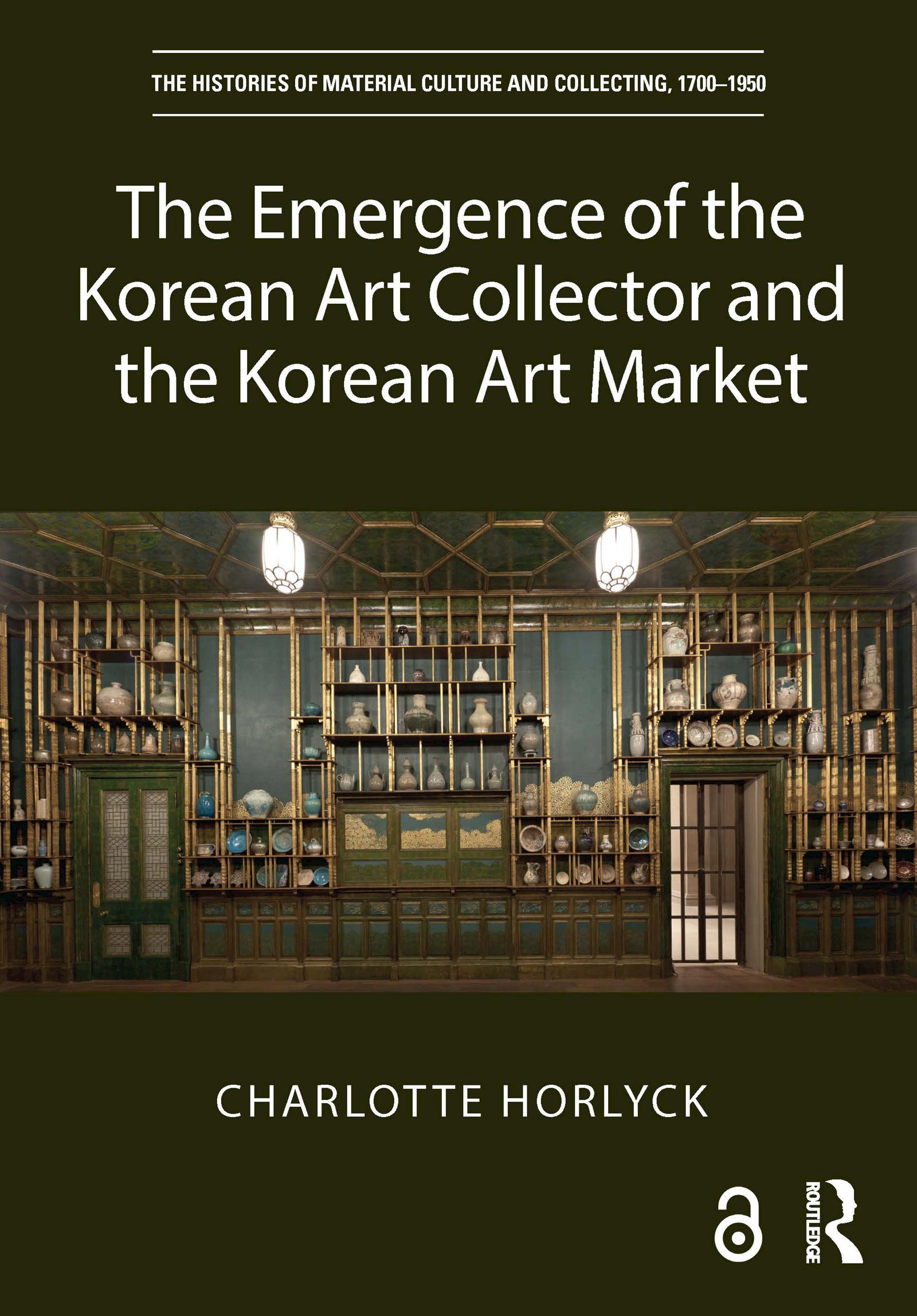
Articulating the shifting interests in Korean art and offering new ways of conceiving the biases that initiated and impacted its collecting, this book traces the rise of the modern Korean art market from its formative period in the 1870s through to its peak and subsequent decline in the 1930s.
The discussion centres on the collecting of Koryŏ celadon ceramics as they formed the focal point of commercial exchanges of Korean artefacts and explores how their acquisition and ownership formed part of the complex power relationship that played out between the Koreans, Japanese, Americans, and Europeans. Drawing on a wide range of primary sources, the volume analyses collectors’ acquisition practices, arguing that their fascination with ceramics from the Koryŏ kingdom (918–1392) was shaped not only by the aesthetic appeal of the objects but also by biased perceptions of the Korean peninsula, its history, and people.
The book will be of interest to scholars working in art history, social history, cultural history, Korean studies, collection studies, museum studies, Korean history, and Asian studies.
The Open Access version of this book, available at www.taylorfrancis.com, has been made available under a Creative Commons Attribution-Non Commercial-No Derivatives (CC-BY-NC-ND) 4.0 license.
Pay easily by card, Klarna, Apple Pay or Google Pay. Not happy? You always have a 14-day money-back guarantee. Read more in our terms. If you have any questions, email us at hello@memmo.org.
Memmo makes studying easier – wherever you are in the world. We bring your course books and smart study tools together in one place: summaries, quizzes, podcasts and flashcards. Plus Ted, your study buddy who answers anything you wonder. Over 50,000 students already study here – built to help you learn faster and stress less.