
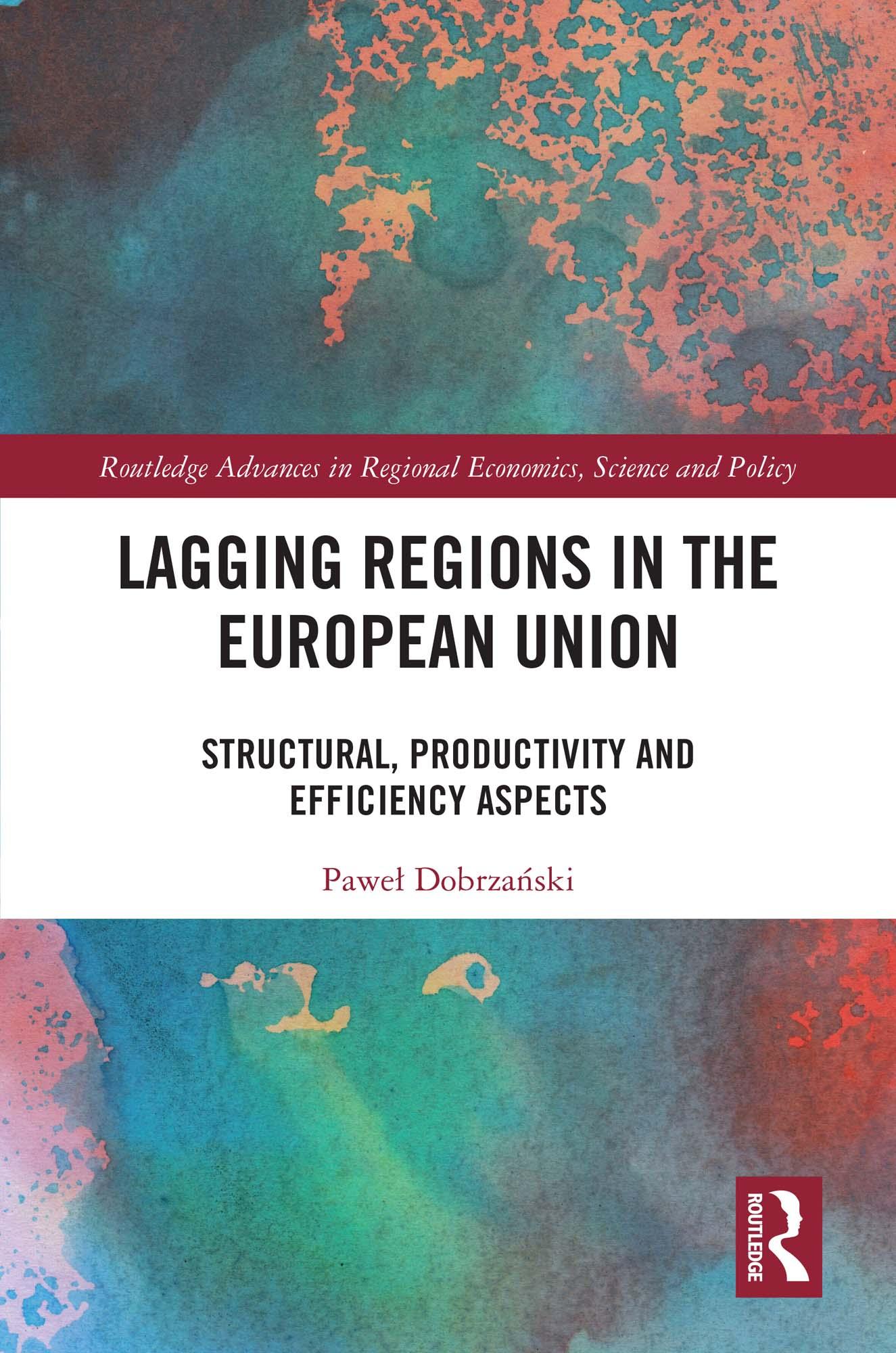
Unequal distribution of income is one of the most important socio-economic issues. The processes of globalisation and integration are accelerating economic growth; however, at the same time, imbalances between regions are growing. Reducing inequalities within regions and national economies, as well as around the world, is important for individual and societal well-being and cohesion, and for effective state policies.
This book investigates the problem of left-behind regions in the European Union (EU). It first introduces the reader to the theories of regional imbalances and problems with measuring them. It then explores imbalances in the EU using a variety of indicators and describes the EU’s regional policy for reducing regional disparities. It uses an empirical shift-share analysis to assess the productivity of EU regions which are lagging behind. The book also provides an empirical analysis of the effectiveness of EU funds in increasing labour productivity performed with DEA methodology.
This book can be used as a teaching resource for undergraduate and postgraduate students and can serve as reference material for academics and researchers, as well as policymakers at the European, national and local levels.
Pay easily by card, Klarna, Apple Pay or Google Pay. Not happy? You always have a 14-day money-back guarantee. Read more in our terms. If you have any questions, email us at hello@memmo.org.
Memmo makes studying easier – wherever you are in the world. We bring your course books and smart study tools together in one place: summaries, quizzes, podcasts and flashcards. Plus Ted, your study buddy who answers anything you wonder. Over 50,000 students already study here – built to help you learn faster and stress less.