
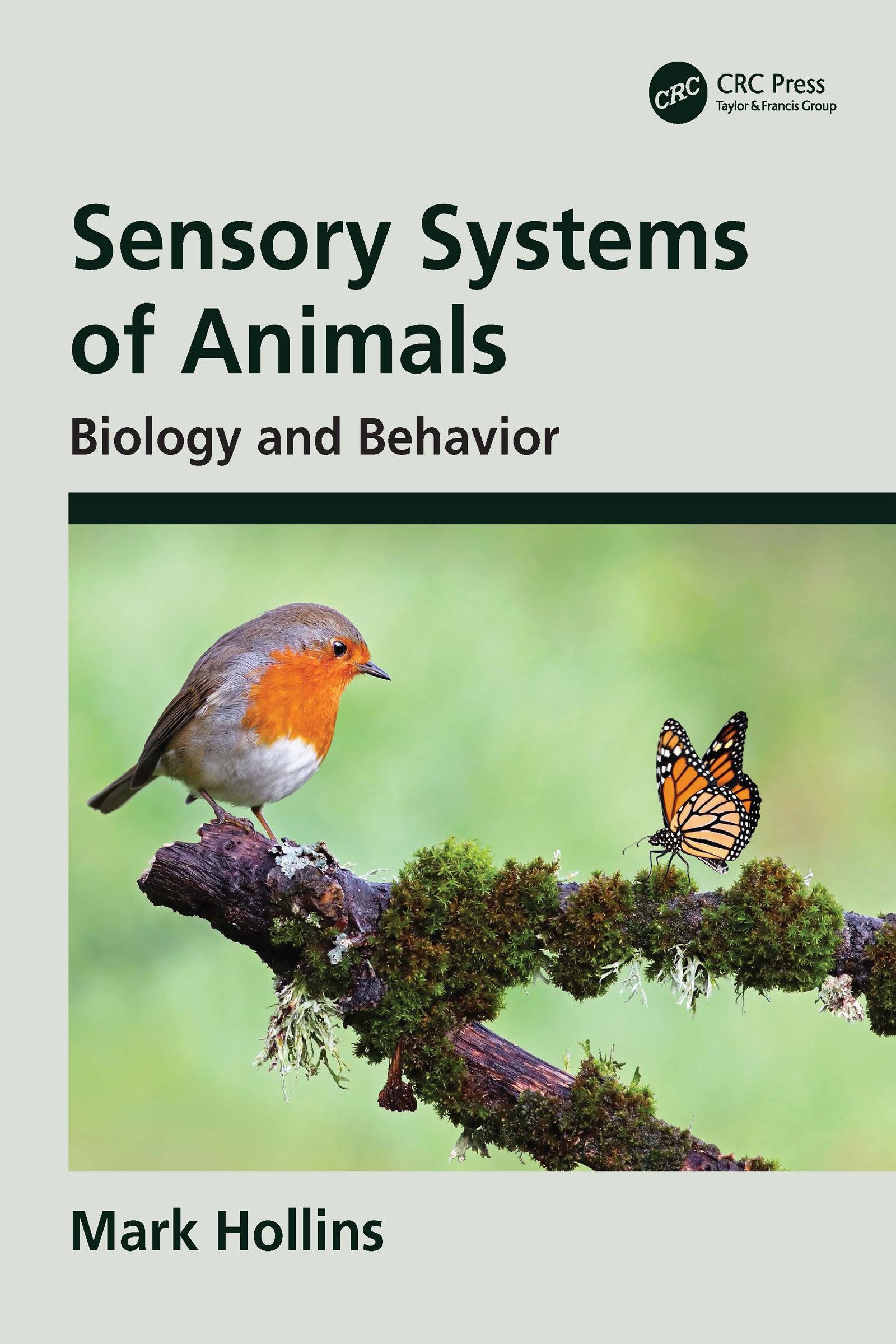
Perception in animals is a fascinating and challenging subject that calls to students from many disciplines. The aim of this book is to provide a knowledge base and unifying perspective on the field that will enable beginning researchers to chart their own course within it. The author describes, in a systematic but engaging way, the sensory systems of humans and other vertebrates, as well as arthropods and molluscs.
Why is it important to understand the senses of animals? One reason is that human activities are changing the perceptual world of animals in ways that expose them to danger. From bright outdoor lighting disorienting migrating birds to human sonar driving whales to beach themselves; it is becoming increasingly important to find ways to reduce such dangers. This will require big changes in human behavior, and greater understanding of how animals react, physiologically and behaviorally, to anthropogenic changes in their environment.
The emphasis throughout is on research, in both the behavioral/ethological and neuroscientific traditions, that has led to important discoveries. The functional anatomy of each system, from receptor cells to brain areas, is succinctly described, explaining how it underlies the animal’s sensory abilities and behavior. Overall descriptions of a sense for a class of animals (for example, hearing in arachnids) are interspersed with expanded coverage of that sense in a particular animal, such as the ogre-faced web-casting spider that does a backflip to capture an insect buzzing overhead. Evolutionary themes are found throughout the book, for example in describing the development of the vertebrate ear, and in the convergent evolution of the eyes of vertebrates and cephalopods.
With over 500 references and 80 illustrations, this textbook is intended as primary reading for advanced undergraduates and beginning graduate students of biology, neuroscience, sensory psychology, and veterinary science. It will also be of interest to professionals and academics in these fields, and to anyone else who works with or studies animals.
Pay easily by card, Klarna, Apple Pay or Google Pay. Not happy? You always have a 14-day money-back guarantee. Read more in our terms. If you have any questions, email us at hello@memmo.org.
Memmo makes studying easier – wherever you are in the world. We bring your course books and smart study tools together in one place: summaries, quizzes, podcasts and flashcards. Plus Ted, your study buddy who answers anything you wonder. Over 50,000 students already study here – built to help you learn faster and stress less.