
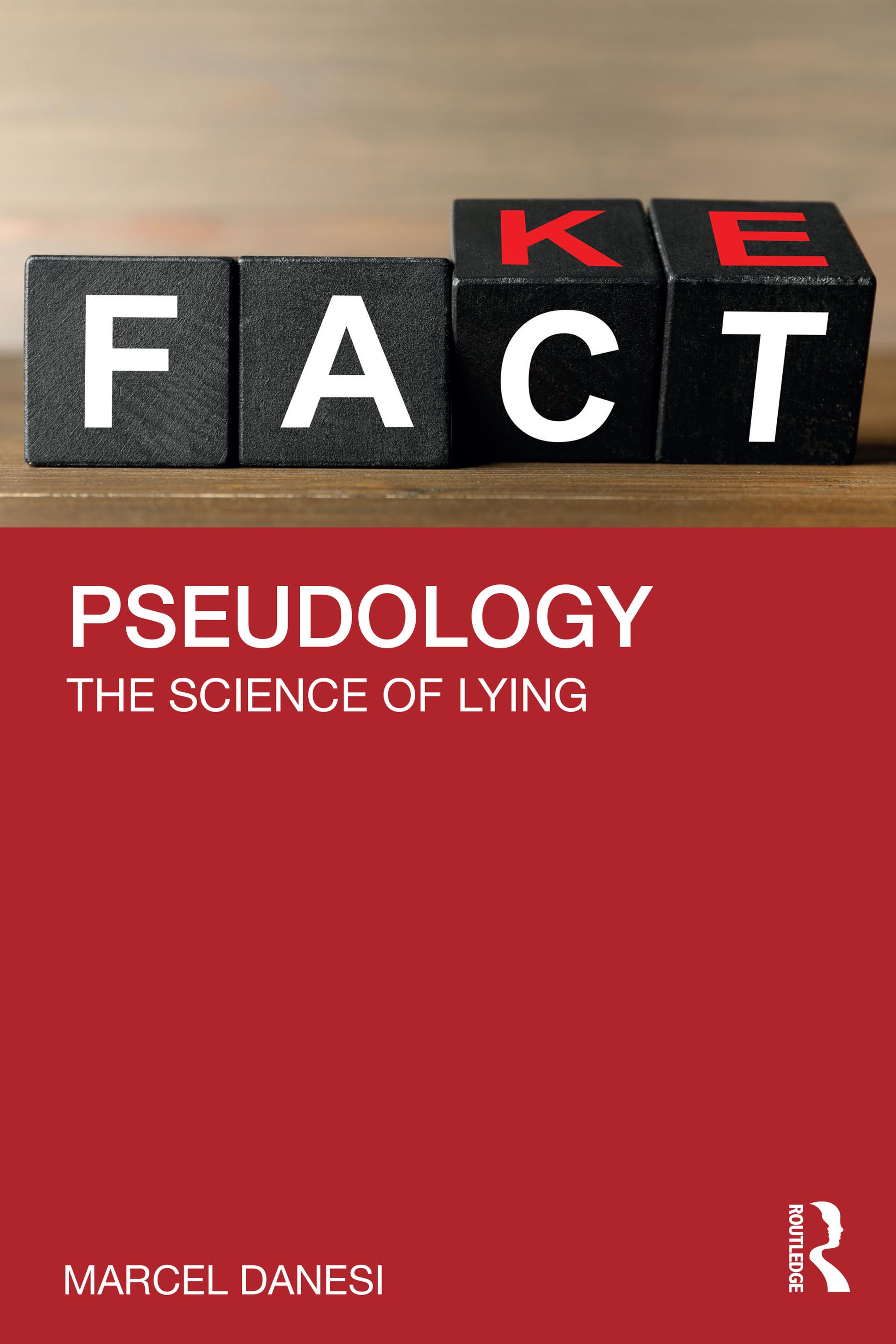
In an age where fake news, conspiracy theories, and outright lies by political and cultural leaders are commonplace, we may be becoming accustomed to lying, or worse, even immune to it. Pseudology unravels the reasons for this by describing a “science of lying” that looks at various aspects of this trait, from how it affects the brain to how it distorts perception.
Interest in lying goes back to antiquity and writing and debate has only increased in the present day, but what is missing is a treatment that synthesizes the work from linguists, political scientists, anthropologists, psychologists, neuroscientists, and sociologists, tying them to the philosophical and literary views of lying throughout history. Such a treatment can be called "pseudology": an interdisciplinary science for classifying, collating, and assessing ideas about lying. This book is a comprehensive treatment of pseudology, emphasising the importance of studying lying in our current climate. Pseudology addresses questions such as:
• What is a lie?
• Why do we lie?
• Why are we so susceptible to lying?
• How does lying activate false beliefs and generate hatred of others?
• How has lying shaped the course of history (at least to some extent)?
• How has lying been adopted as a basic thematic element in literature and the arts?
Synthesising research from a broad range of disciplines and from the perspective of a leading cognitive linguist, this text weaves ideas and theories about lying cohesively into an overall interdisciplinary science. This landmark book is vital for students and scholars of language as well as anyone interested in politics, sociology, or psychology.
Pay easily by card, Klarna, Apple Pay or Google Pay. Not happy? You always have a 14-day money-back guarantee. Read more in our terms. If you have any questions, email us at hello@memmo.org.
Memmo makes studying easier – wherever you are in the world. We bring your course books and smart study tools together in one place: summaries, quizzes, podcasts and flashcards. Plus Ted, your study buddy who answers anything you wonder. Over 50,000 students already study here – built to help you learn faster and stress less.