
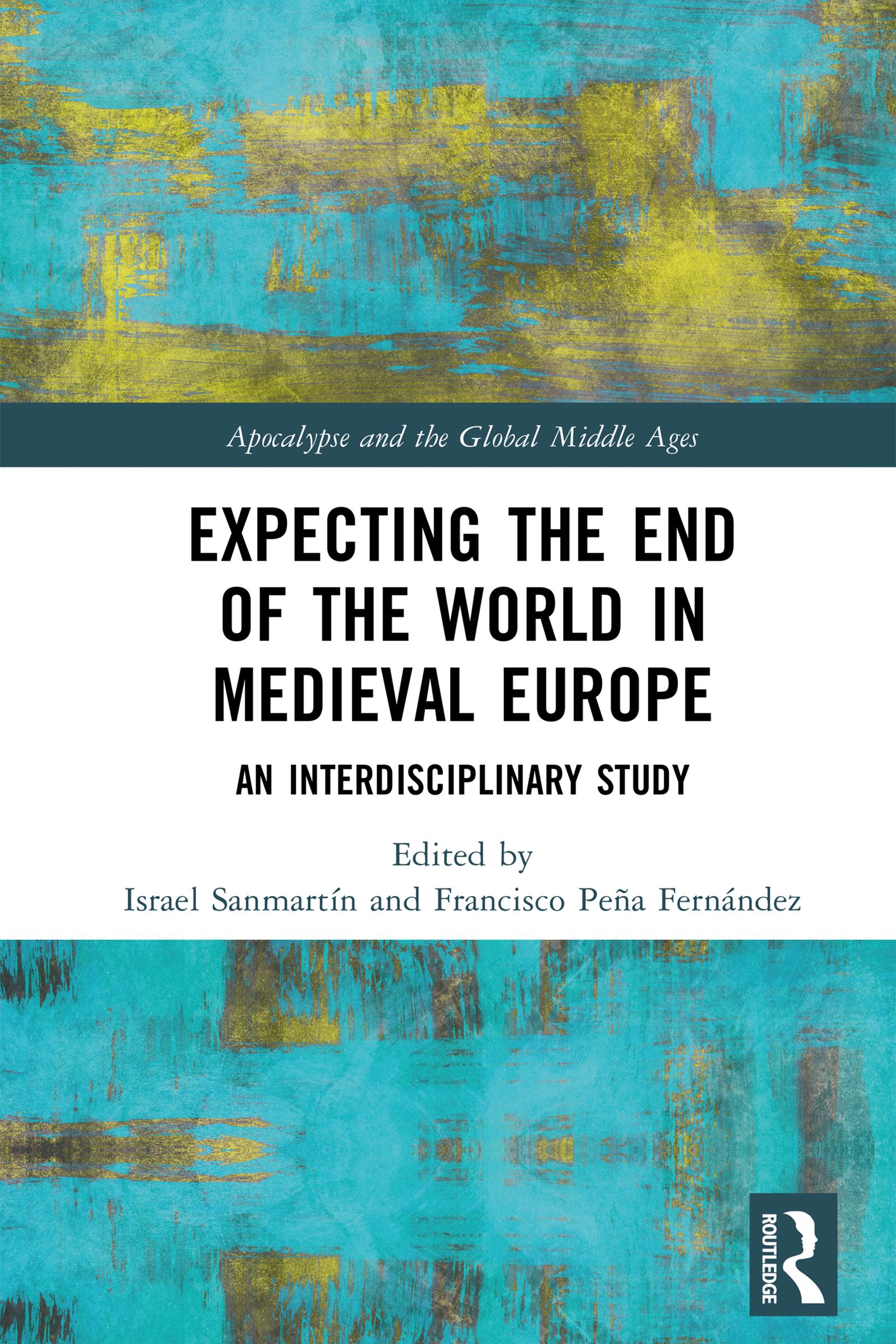
Expecting the End of the World in Medieval Europe: An Interdisciplinary Study examines the phenomenon of medieval eschatology from a global perspective, both geographically and intellectually. The collected contributions analyze texts, authors, social movements, and cultural representations covering a wide period, from the 6th to the 16th century, in geographically liminal spaces where Catholic, Byzantine, Islamic, and Jewish cultures converged.
The book is organized in eleven chapters which reflect and explore the following arguments: the study of specific eschatological episodes in medieval Europe and their interpretations; the analysis of apocalyptic visionaries, apocalyptic authors, and their individual contributions; the social and political implications of eschatology in medieval society; the study of medieval apocalyptic literature from a rhetorical, narratological, and historiographical perspective; the history of the transmission of apocalyptic literature and its transformation over time; and a comparative examination of apocalypticism between the Middle Ages and the Early Modern era.
This study provides a lens through which academics, specialists, and interested researchers can observe and reflect on this entire eschatological universe, dwelling both on well-known texts, authors, and events, and on others which are much less popular. In gathering different paradigms, tools, and theoretical frameworks, the book exposes readers to the complex reality of medieval anxiety regarding the end of the world.
Pay easily by card, Klarna, Apple Pay or Google Pay. Not happy? You always have a 14-day money-back guarantee. Read more in our terms. If you have any questions, email us at hello@memmo.org.
Memmo makes studying easier – wherever you are in the world. We bring your course books and smart study tools together in one place: summaries, quizzes, podcasts and flashcards. Plus Ted, your study buddy who answers anything you wonder. Over 50,000 students already study here – built to help you learn faster and stress less.