
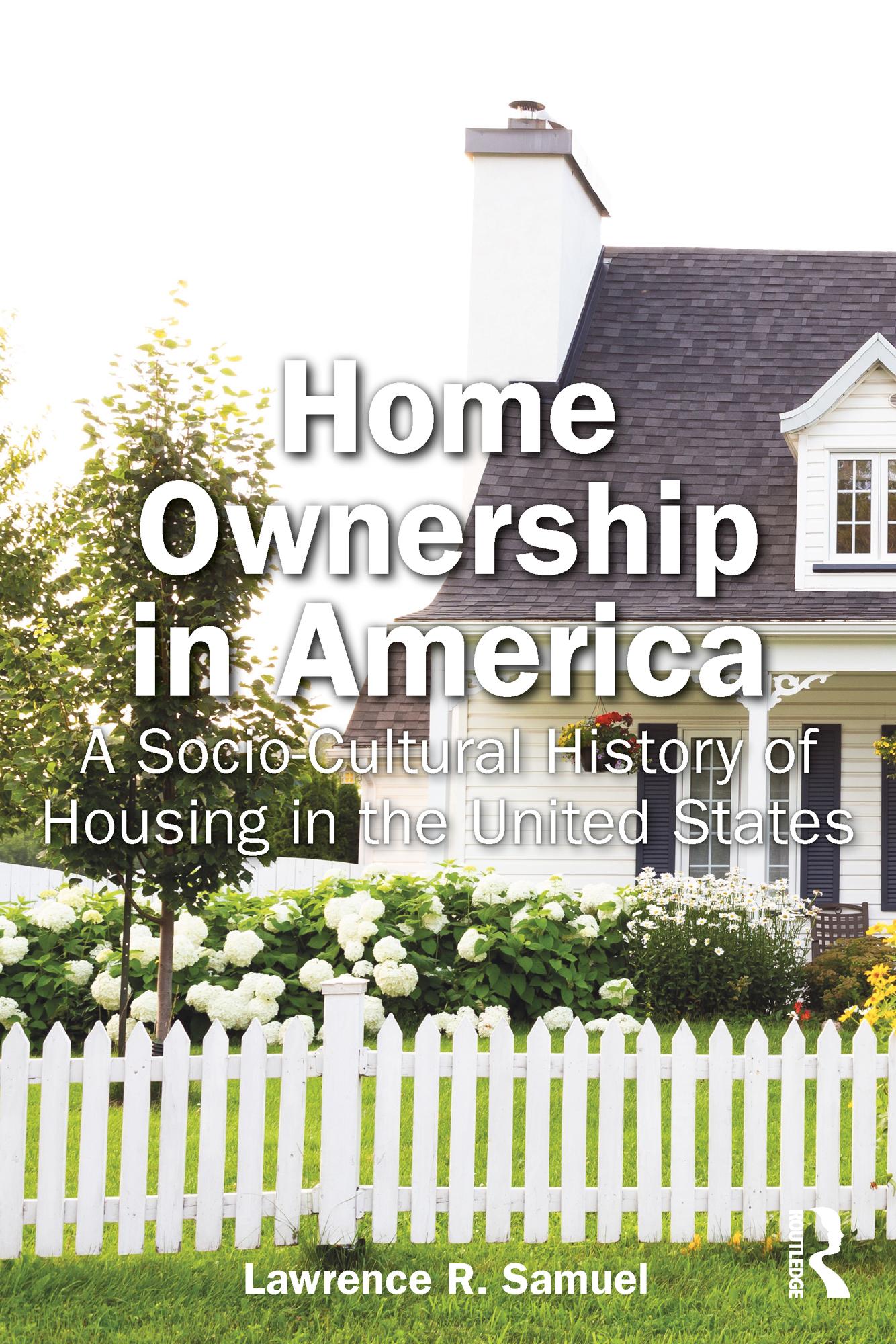
A wide-ranging cultural history centered around the concepts of real estate, the family home, and the American dream, and how they evolved over the years, Home Ownership in America: A Socio-Cultural History of Housing in the United States traces narratives around home ownership from the 1920s to today.
As a product of the emergence of a large middle class during the Roaring Twenties, the modern concept of home ownership continued through the shaky Great Depression years, holding pattern of World War II, and glory days of the postwar era, when home ownership became a reality for much of the White middle class. While the late 1960s and 1970s were difficult years for home ownership as the postwar economic engine ran out of steam, a renaissance took place in the 1980s and 1990s due to tens of millions of baby boomers wanting to nest. Although there have been a few bumps in the road over the last couple of decades, home ownership, or at least the pursuit of it, is once again booming, making the subject as relevant as ever.
With the single-family home central to the American idea and experience, this book touches on a host of issues related to our social divisions of race, gender, and class. Home Ownership in America is a truly interdisciplinary study, crossing over into a wide variety of subjects including sociology, family, urban history/planning, suburban studies, the built environment, public policy, business, finance, economics, politics, architecture, design, technology, and popular and consumer culture.
Pay easily by card, Klarna, Apple Pay or Google Pay. Not happy? You always have a 14-day money-back guarantee. Read more in our terms. If you have any questions, email us at hello@memmo.org.
Memmo makes studying easier – wherever you are in the world. We bring your course books and smart study tools together in one place: summaries, quizzes, podcasts and flashcards. Plus Ted, your study buddy who answers anything you wonder. Over 50,000 students already study here – built to help you learn faster and stress less.