
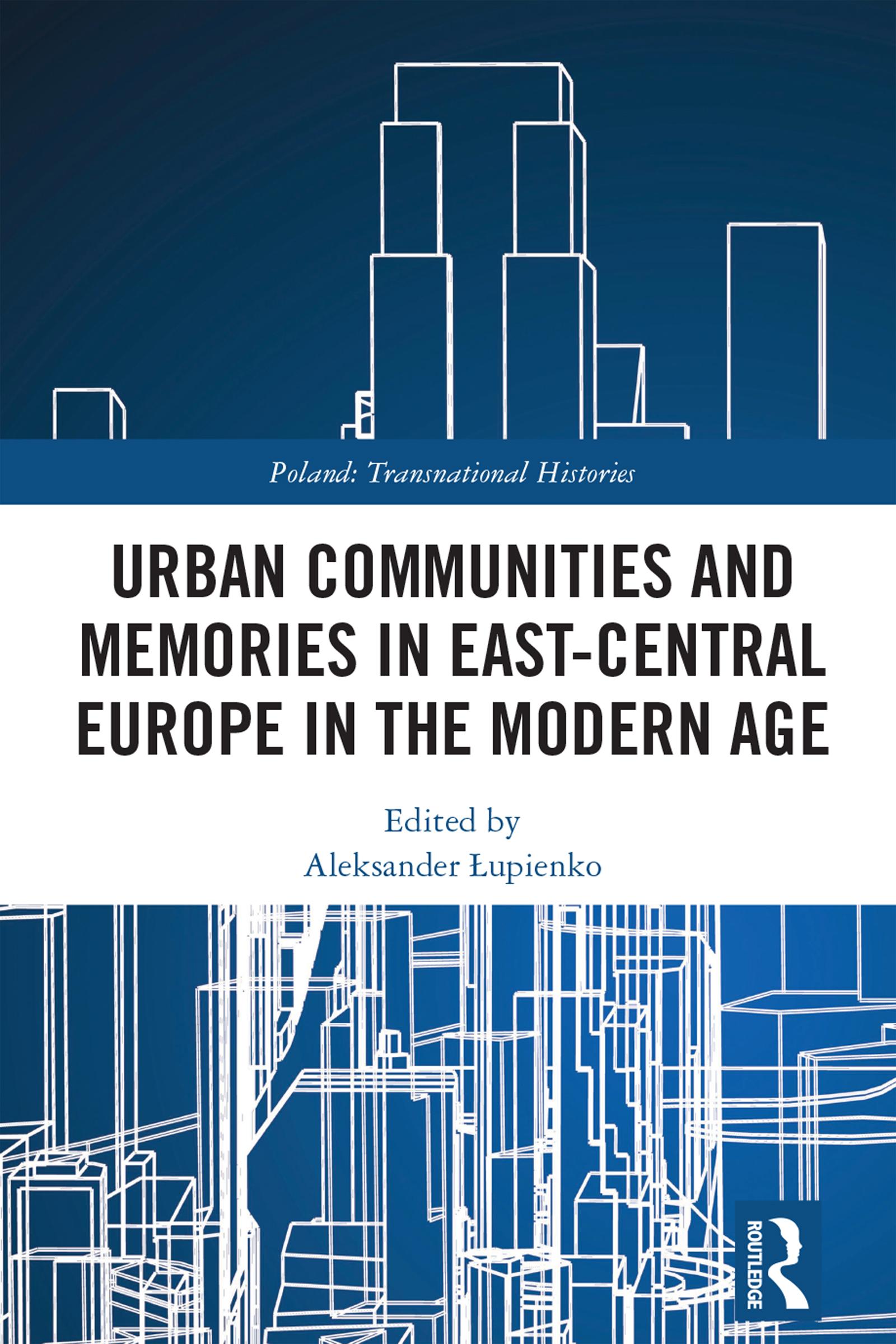
This edited volume studies the logic of community formation and the common view of the past to show how various social bonds of communities functioned during the modern national era of East-Central Europe from the late eighteenth century until today and how multifaceted this group-building really was.
Through an overview of selected examples of communities in East-Central European urban centres, mainly the territories of the Polish-Lithuanian Commonwealth and its successor empires, the volume shows the potential of re-interpretation or adaptation of the past as a crucial tool for assuring social cohesion and for strengthening the image of group boundaries. It studies not only textual sources but also the cultural construction of local historical writings such as oral tradition and municipal publications, as well as symbolic objects such as epitaphs, plaques, monuments and public edifices. The contributors explore the actual creativity employed by these communities to envision their past and their future in homage to the ideals of centralised nationalism or regionalism and how these strongly ethnically marked historic spaces can be interpreted, celebrated or neglected.
This book will be of interest to scholars and students of regional urban history and cultural diversities, memory cultures and community formation.
Pay easily by card, Klarna, Apple Pay or Google Pay. Not happy? You always have a 14-day money-back guarantee. Read more in our terms. If you have any questions, email us at hello@memmo.org.
Memmo makes studying easier – wherever you are in the world. We bring your course books and smart study tools together in one place: summaries, quizzes, podcasts and flashcards. Plus Ted, your study buddy who answers anything you wonder. Over 50,000 students already study here – built to help you learn faster and stress less.