
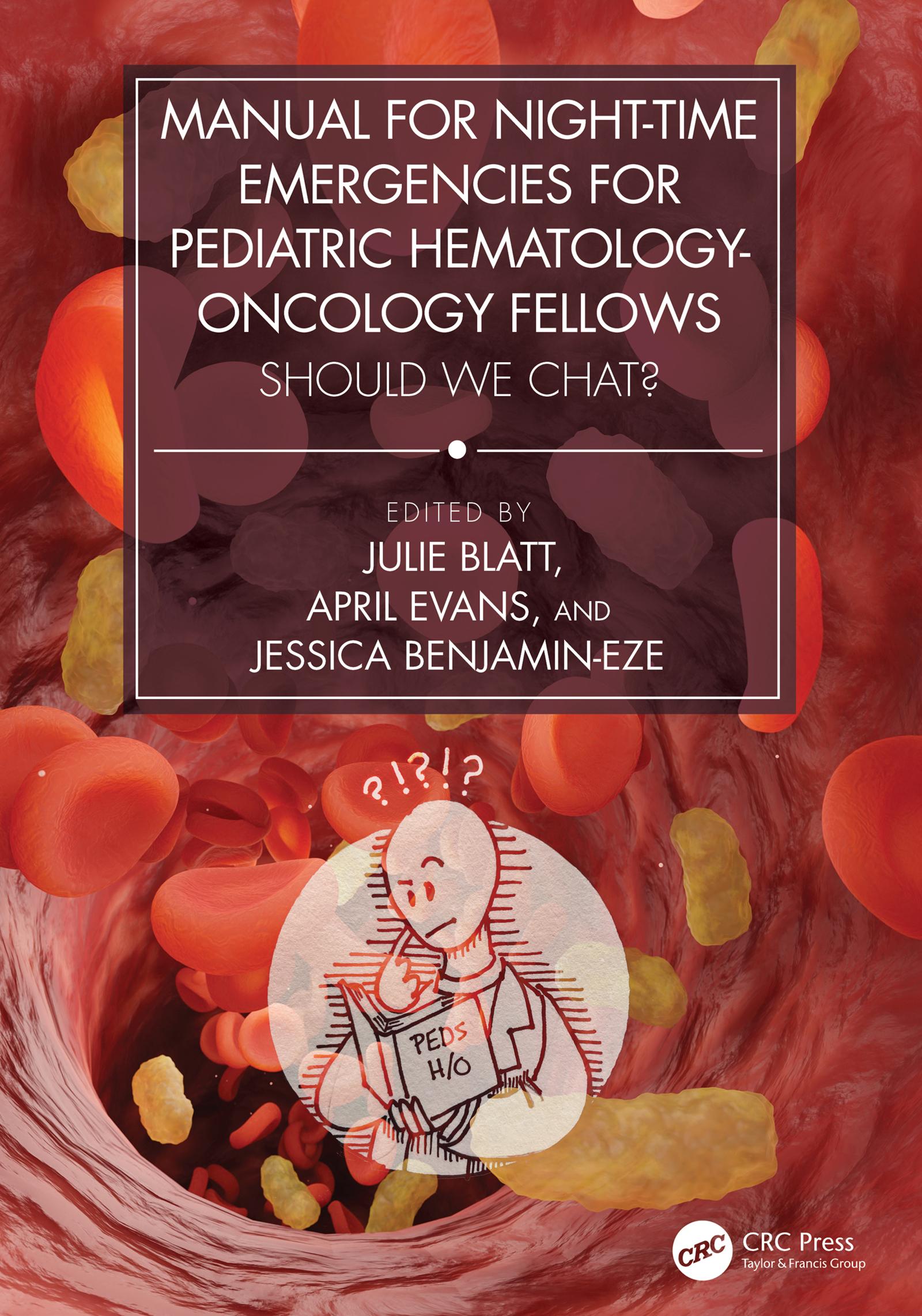
Being on call as a pediatric resident or a pediatric hematology-oncology fellow can cause great anxiety. In addition to the relatively common patient with chemotherapy-related fever and neutropenia, there is the anticipation of problems that a trainee may have read about but not yet actually seen - the adolescent newly presenting with a white blood cell count of 600,000/mm3, the 2 year old spitting up blood with a platelet count of 2,000/ mm3 and a hemoglobin of 5g/dL, the child who comes to the ER with difficulty walking and is found to have a paraspinal mass on MRI. Most issues can wait until the next day when more senior practitioners are around, but some are true medical emergencies and just can’t.
This manual is intended as a one-stop solution for such frantic moments - a quick resource to bridge the hours between the start of night call and morning rounds that focuses on what needs to be done immediately to avoid hurting a patient. It offers succinct guidelines and algorithms to address the emergencies most likely to come up overnight. For those tempted to turn to AI for quick solutions, there are some salutary lessons from responses AI has given when asked about such emergencies.
Pay easily by card, Klarna, Apple Pay or Google Pay. Not happy? You always have a 14-day money-back guarantee. Read more in our terms. If you have any questions, email us at hello@memmo.org.
Memmo makes studying easier – wherever you are in the world. We bring your course books and smart study tools together in one place: summaries, quizzes, podcasts and flashcards. Plus Ted, your study buddy who answers anything you wonder. Over 75,000 students already study here – built to help you learn faster and stress less.