
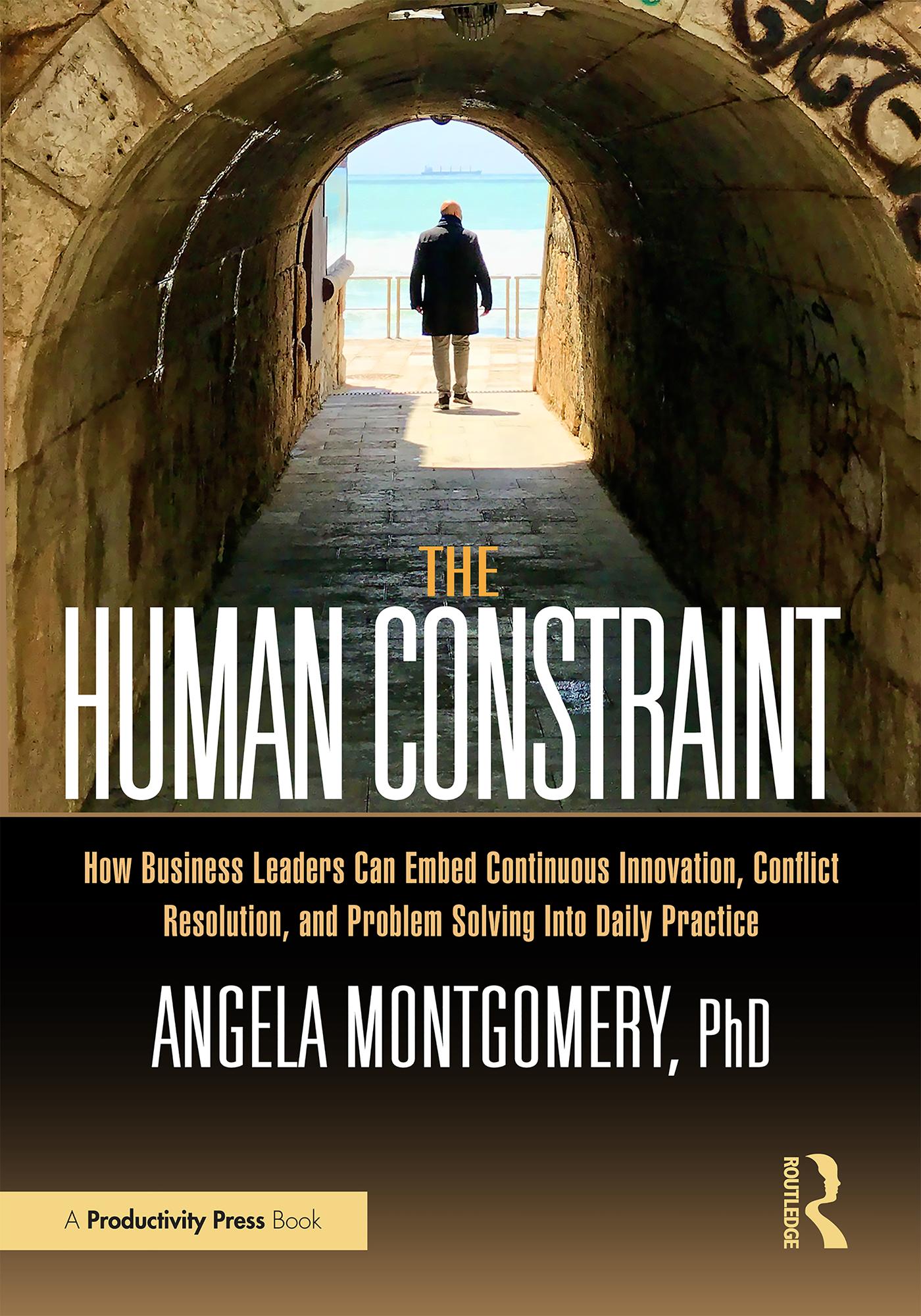
The Human Constraint is a business novel with supplementary material for business leaders. It is inspired by dozens of implementations of the Decalogue methodology in Europe and North America since 1996. The Decalogue blends Deming’s philosophy with the Theory of Constraints in a cohesive, systemic approach to management. The novel explores an increasingly complex, interdependent and fast-changing world where companies must have a way to overcome obsolete mental models and embed continuous innovation in their operations with a coherent organizational model.
The story in Part One unfolds during the financial crisis that follows 2008 and illustrates how this affects a group of executives engaged in a transformation process. It charts their attempts through the crisis to transform part of an industry dominated by a zero-sum game mentality using a very different approach: an ethical and value-based supply chain where all stakeholders benefit.
Through the narrative in Part One, readers are exposed to a way to embed continuous innovation, conflict resolution, and problem-solving in action. In Part Two readers will find an introduction to a systemic method for management and the Thinking Processes from the Theory of Constraints.
These Thinking Processes can help readers develop the skills to:
■ Understand and analyze our current reality, as individuals and organizations.
■ Surface assumptions that keep us trapped in less-than-desirable situations.
■ Generate robust solutions/innovations.
■ Identify unintended consequences of what may seem like an effective idea and avert them upstream.
■ Resolve conflicts in a win-win way.
The knowledge, method, and tools to overcome obsolete mental models and practices exist. This book aims to present the reader, through narrative and supplementary material, with elements of a new way and a new economics that are fit for purpose in our age of complexity.
Pay easily by card, Klarna, Apple Pay or Google Pay. Not happy? You always have a 14-day money-back guarantee. Read more in our terms. If you have any questions, email us at hello@memmo.org.
Memmo makes studying easier – wherever you are in the world. We bring your course books and smart study tools together in one place: summaries, quizzes, podcasts and flashcards. Plus Ted, your study buddy who answers anything you wonder. Over 50,000 students already study here – built to help you learn faster and stress less.