
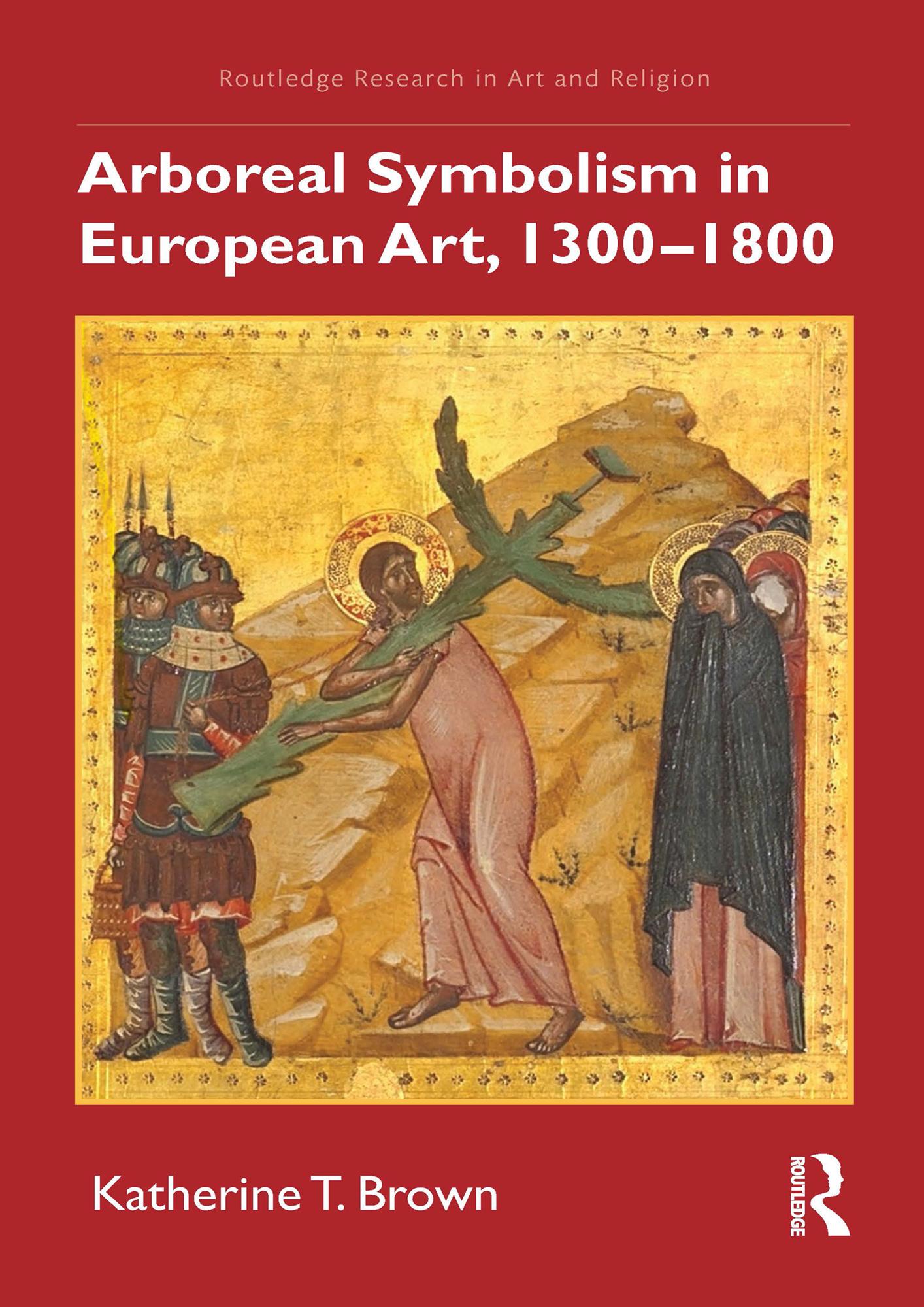
Arboreal Symbolism in European Art, 1300–1800 probes the significance of trees in religious iconography of Western art.
Based in the disciplines of art history, botany, and theology, this study focuses on selected works of art in which tree forms embody and reflect Christian themes. Through this triple lens, Brown examines trees that early modern artists rendered as sacred symbols—symbols with origins in the Old Testament, New Testament, Greek and Roman cultures, and early medieval legends. Tree components and wood depicted in works of art can serve as evidence for early modern artists’ embrace of biblical metaphor, classical sources, and devotional connotations. The author considers how artists rendered seasonal change in Christian narratives to emphasize themes of spiritual transformation. Brown argues that many artists and their patrons drew parallels between the life cycle of a tree and events in the Gospels with their respective annual, liturgical celebrations.
This book will interest scholars in art history, religion, humanities, and interdisciplinary studies.
Pay easily by card, Klarna, Apple Pay or Google Pay. Not happy? You always have a 14-day money-back guarantee. Read more in our terms. If you have any questions, email us at hello@memmo.org.
Memmo makes studying easier – wherever you are in the world. We bring your course books and smart study tools together in one place: summaries, quizzes, podcasts and flashcards. Plus Ted, your study buddy who answers anything you wonder. Over 50,000 students already study here – built to help you learn faster and stress less.