
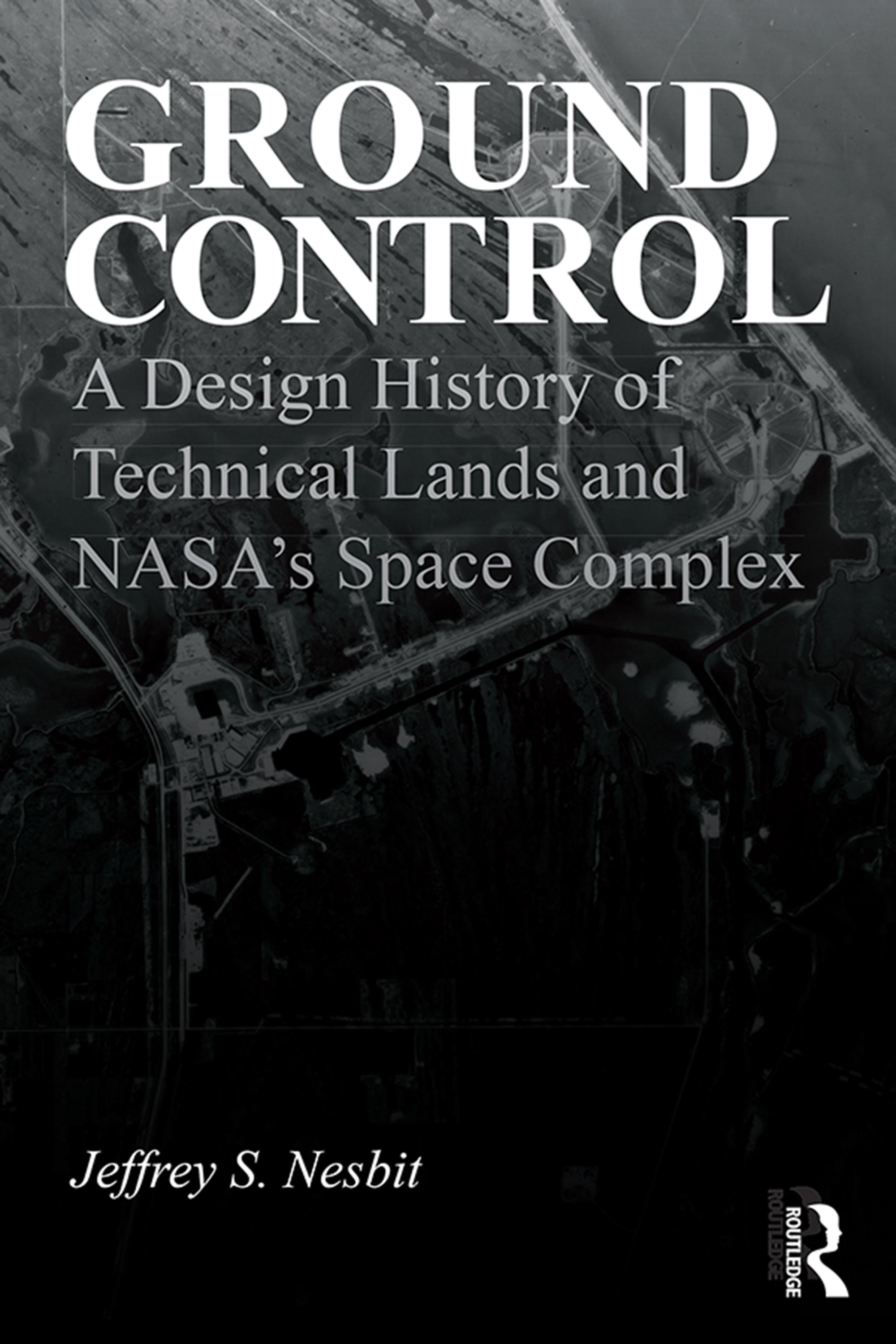
Ground Control: A Design History of Technical Lands and NASA’s Space Complex explores the infrastructural history of the United States rocket launch complex. Working primarily between 1950, the year of the first rocket launch at Cape Canaveral, to 1969, the Apollo moon landing, the book highlights the evolution of its overlooked architecture and infrastructural landscape in parallel to US aerospace history. The cases outlined in this book survey the varying architectural histories and aesthetic motivations that helped produce America’s public image of early space exploration. The built environment of the U.S. space complex shows how its expanded infrastructural landscape tended to align with national Cold War politics and themes found in the age of modernity. Examples across often inaccessible sites of remote landscape help explain the contingent histories and deep association of an American aesthetic, land-use, and ultimately a form of nation-building practices. Ground Control offers a new way of understanding how technological uses of place-based science were designed and constructed in support of both industrial and military activities in postwar America. This book will be of interest to researchers, scholars, students, and anyone with a general interest in the history of American infrastructure, land use, and space exploration.
Pay easily by card, Klarna, Apple Pay or Google Pay. Not happy? You always have a 14-day money-back guarantee. Read more in our terms. If you have any questions, email us at hello@memmo.org.
Memmo makes studying easier – wherever you are in the world. We bring your course books and smart study tools together in one place: summaries, quizzes, podcasts and flashcards. Plus Ted, your study buddy who answers anything you wonder. Over 50,000 students already study here – built to help you learn faster and stress less.