
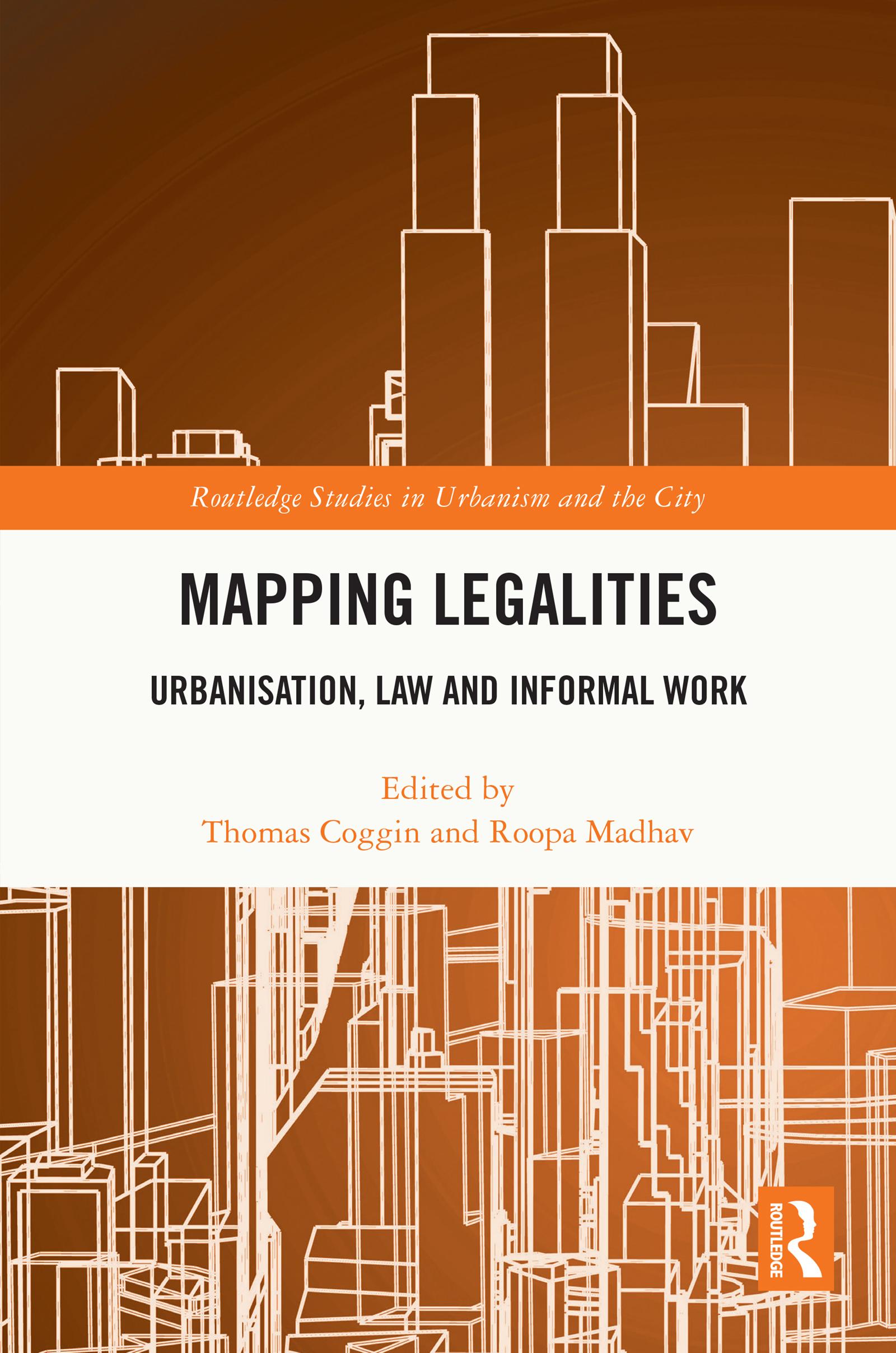
This book maps the interactions between informal workers and the law within the urban and spatial environment. It focuses on access to physical space, revealing the punitive ways in which law regulates space and informal work which relies on space.
Across various cities worldwide, the chapters in this book uncover how informal workers remain at the policy and legal margins of urban society and reveal their ongoing endeavour for social and legal protection within local jurisdictional contexts. It spans multiple themes, ranging from street vending to informal work in the gig economy. They shed light on the collective influence of the law and the pursuit of a modern city in contributing to the marginalisation of informal workers. Despite this, the chapters illuminate the strategies employed by informal workers to leverage the law in acknowledging their contributions and asserting their presence in the city.
The book is targeted towards an academic audience and practitioners specialising in law, urban studies and the informal economy. The reader will gain an in-depth and cross-jurisdictional understanding of the indispensable role played by informal workers in providing services to a broader urban population, ranging from street vendors to sanitation workers and sex workers.
Pay easily by card, Klarna, Apple Pay or Google Pay. Not happy? You always have a 14-day money-back guarantee. Read more in our terms. If you have any questions, email us at hello@memmo.org.
Memmo makes studying easier – wherever you are in the world. We bring your course books and smart study tools together in one place: summaries, quizzes, podcasts and flashcards. Plus Ted, your study buddy who answers anything you wonder. Over 50,000 students already study here – built to help you learn faster and stress less.