
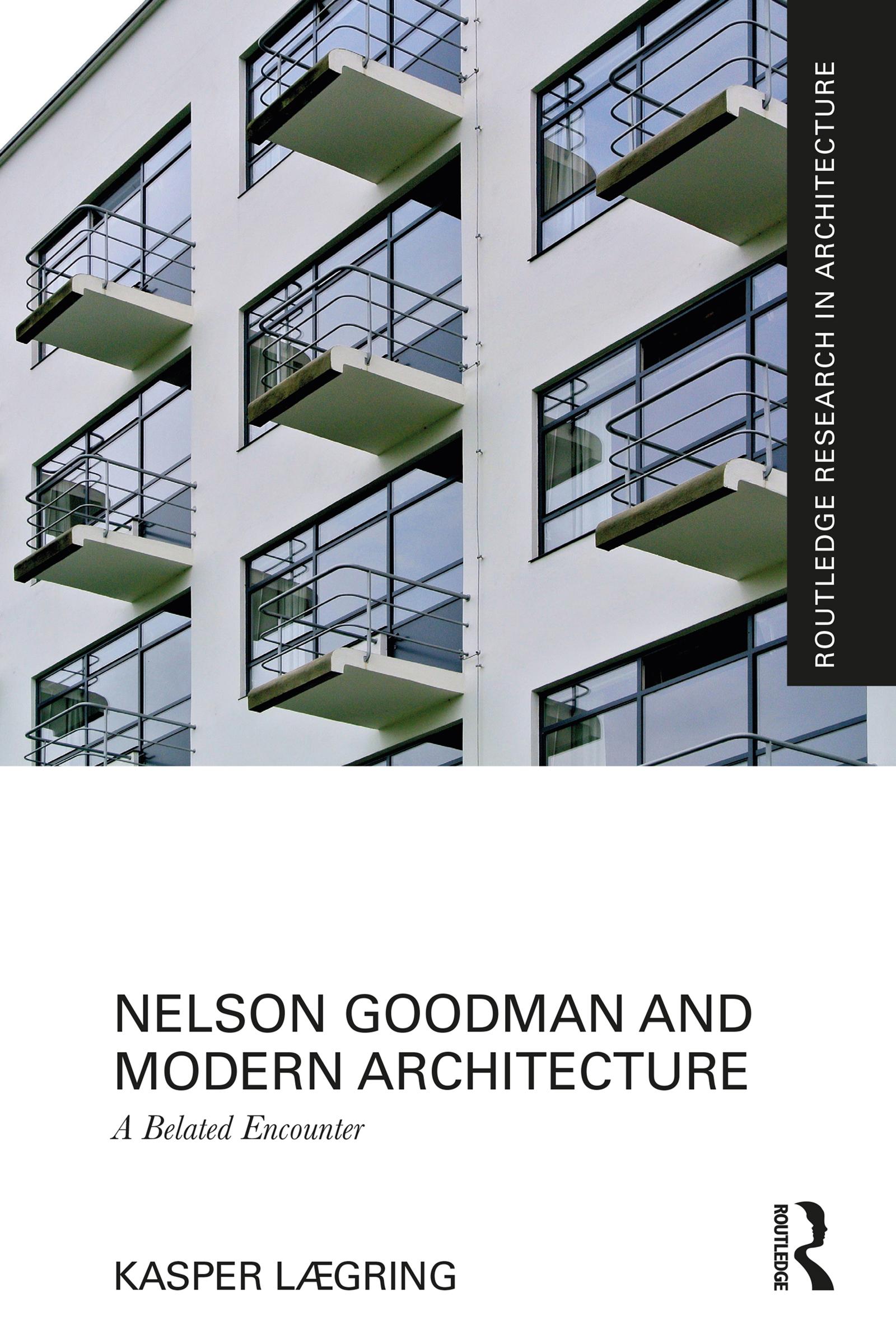
This book orchestrates a convergence of two discourses from the 1960s—Nelson Goodman’s aesthetic theory on one side and critiques of modern architecture articulated by figures like Peter Blake, Charles Jencks, and Robert Venturi/Denise Scott Brown on the other. Grounded in Goodman’s aesthetic theory, the book explores his conceptual framework within the context of modern architecture.
At the heart of the investigation lies Goodman’s concept of exemplification. While his notion of denotation pertains to representational elements, often ornaments, in architecture, exemplification accentuates specific formal properties at the expense of others, including color, spatial orientation, transparency, seriality, and the like. Supplemented by findings from phenomenology, the book traces these effects in buildings, notably those by Ludwig Mies van der Rohe, Walter Gropius, Le Corbusier, and Frank Lloyd Wright—all key figures in the critiques of modern architecture.
Employing Goodman’s framework, the book aims to address accusations of emptiness and alienation directed at modern architecture in the postwar era. It illustrates that modern architecture symbolizes aesthetically in a fundamentally different way than architecture from earlier periods.
This book will be of interest to architects, artists, researchers, and students in architecture, architectural history, theory, cultural theory, philosophy, and aesthetics.
Pay easily by card, Klarna, Apple Pay or Google Pay. Not happy? You always have a 14-day money-back guarantee. Read more in our terms. If you have any questions, email us at hello@memmo.org.
Memmo makes studying easier – wherever you are in the world. We bring your course books and smart study tools together in one place: summaries, quizzes, podcasts and flashcards. Plus Ted, your study buddy who answers anything you wonder. Over 75,000 students already study here – built to help you learn faster and stress less.