
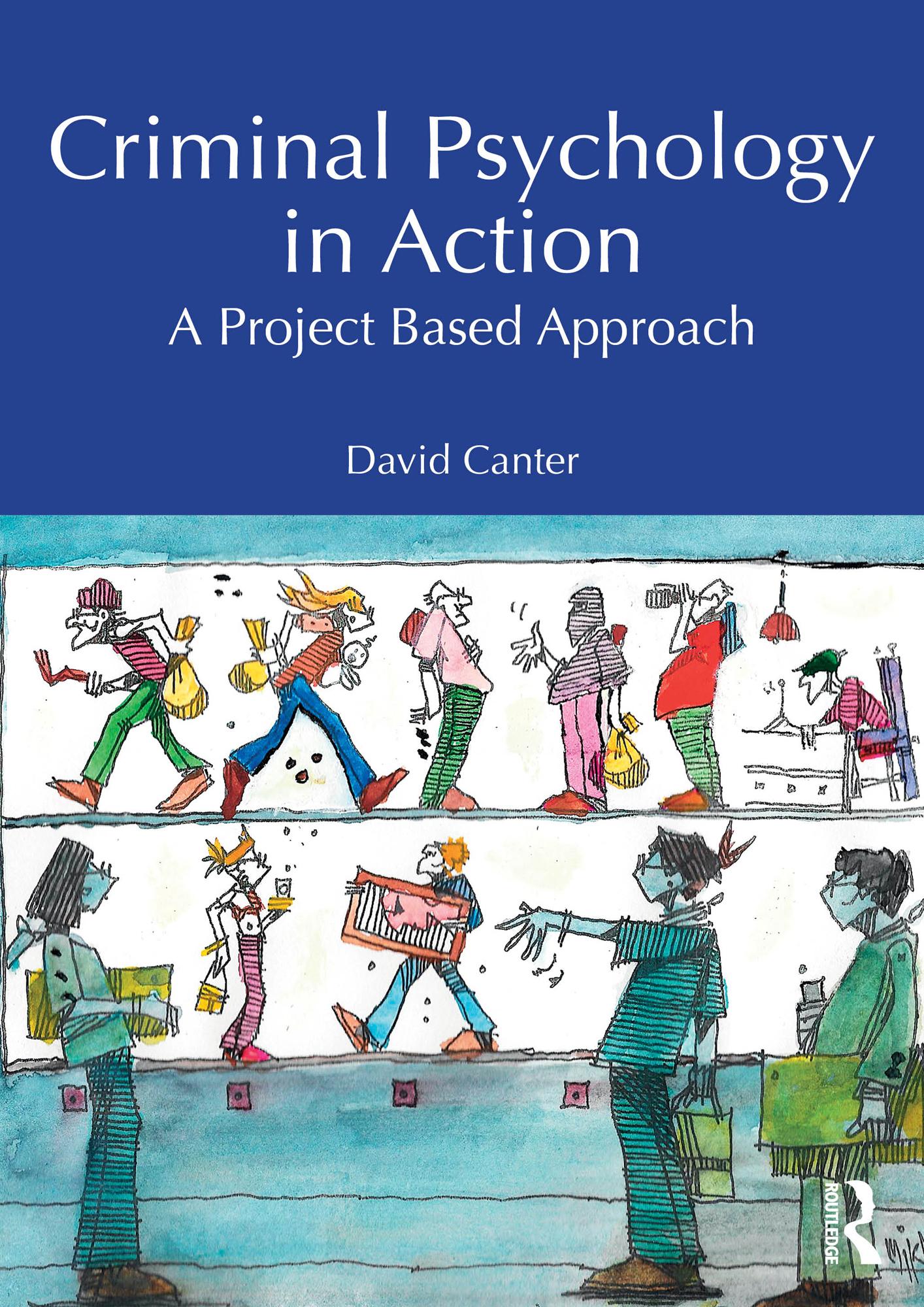
Criminal Psychology in Action provides a practical, hands-on introduction to criminal psychology through unique projects for students, illustrating the many ways research into crimes and criminals can be conducted. It also provides an overview of many individual and social psychological theories of criminality.
Drawing on over half a century of experience supervising hundreds of projects at undergraduate, master’s, and doctoral levels, David Canter provides well-grounded and detailed guidance for students of how to conduct a range of relevant and interesting projects designed to engage students directly with empirical research. This includes consideration of the ethical and practical issues of doing research in this area, as well as examples of documents needed for informed consent and submissions to ethical committees. The range of research designs described – laboratory experiments, surveys, case studies and simulations – provide introductions to methodologies relevant to many other areas of research beyond criminal psychology.
Both engaging and interactive, this is an invaluable resource for instructors and students from colleges and universities around the world in many different fields, such as psychology, criminology, and socio-legal studies. It will also be of interest to all those who want to know more about the psychology of crime and criminality.
Pay easily by card, Klarna, Apple Pay or Google Pay. Not happy? You always have a 14-day money-back guarantee. Read more in our terms. If you have any questions, email us at hello@memmo.org.
Memmo makes studying easier – wherever you are in the world. We bring your course books and smart study tools together in one place: summaries, quizzes, podcasts and flashcards. Plus Ted, your study buddy who answers anything you wonder. Over 50,000 students already study here – built to help you learn faster and stress less.