
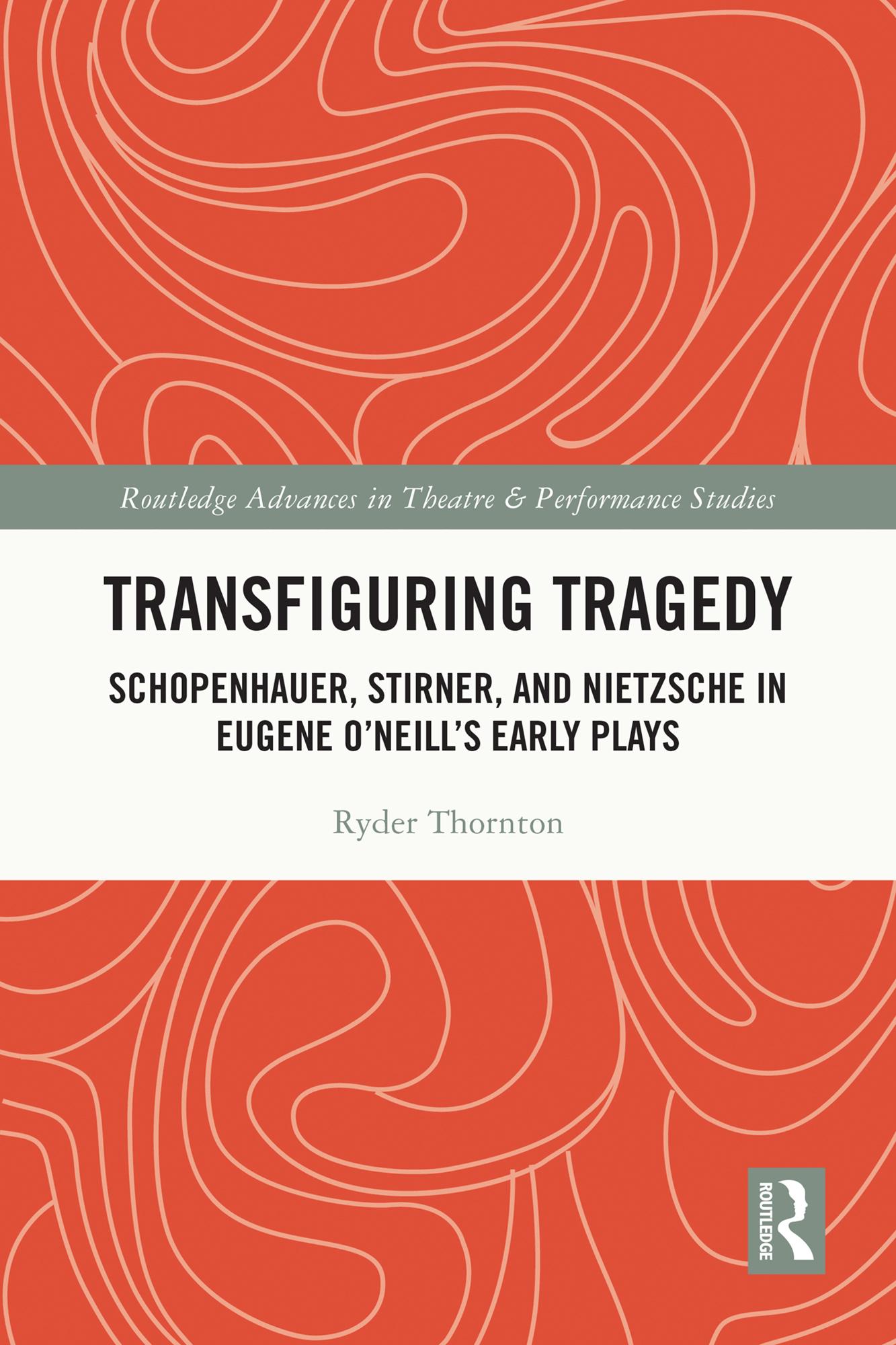
This book demonstrates Eugene O’Neill’s use of philosophy in the early period of his work and provides analyses of selected works from that era, concluding with The Hairy Ape, completed in 1921, as an illustration of the mastery he had achieved in dramatizing key concepts of philosophy.
Analyses of one-act and full-length plays from 1913 to 1921 reveal the influence of the three philosophers and establish that O’Neill was fundamentally a philosophic playwright, even from his earliest dramatic sketches. Specific concepts from Schopenhauer, Stirner, and Nietzsche went into O’Neill’s shaping of character arcs, dramatic circumstances, symbology, and theme. Among them are Schopenhauer’s concept of will and representation, Stirner’s notion of possession, and Nietzsche’s principle of the Apollonian–Dionysian duality. These ideas were foundational to O’Neill’s construction of tragic irony apparent in his early period plays. The critical concepts of these three philosophers are the major pathways in this study. However, such an approach inevitably reveals other layers of spiritual influence, such as Catholicism and Eastern philosophy, which are touched on in these analyses.
This book is a much-needed introduction to philosophic concepts in Eugene O’Neill’s early work and would be of great interest to students and scholars in theatre studies and philosophy.
Pay easily by card, Klarna, Apple Pay or Google Pay. Not happy? You always have a 14-day money-back guarantee. Read more in our terms. If you have any questions, email us at hello@memmo.org.
Memmo makes studying easier – wherever you are in the world. We bring your course books and smart study tools together in one place: summaries, quizzes, podcasts and flashcards. Plus Ted, your study buddy who answers anything you wonder. Over 75,000 students already study here – built to help you learn faster and stress less.