
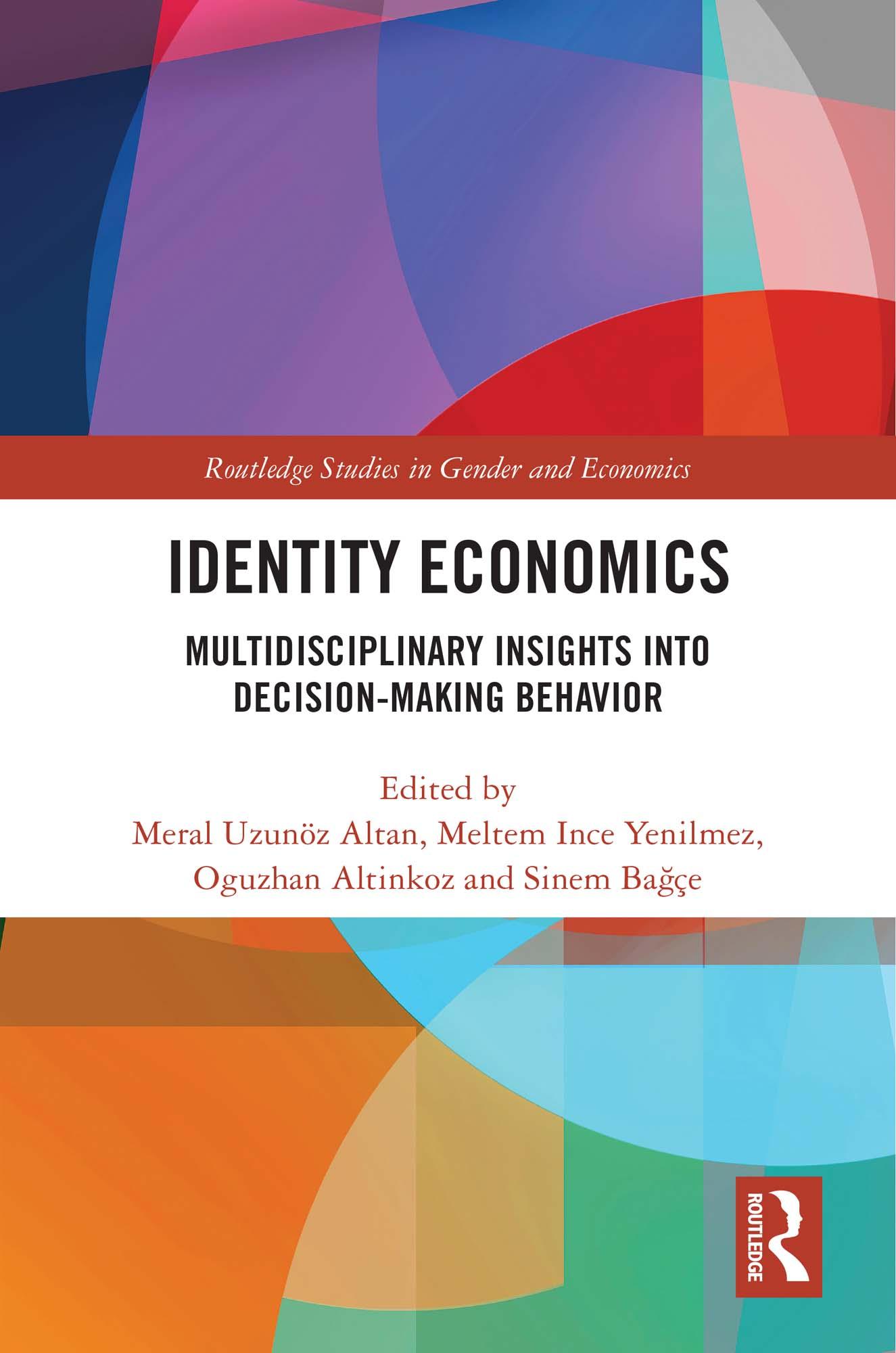
Critics contend that identity economics overemphasizes social identities as drivers of economic activity, potentially obscuring other elements including personal preferences, incentives, and market pressures. Identity-related notions are challenging to measure and quantify meaningfully and rigorously, which is one of the most common criticisms. Identity economics has long been debated by economic scientists and practitioners, but it is still considered to be in its infancy, which also draws attention to the absence of a clear consensus and solid empirical support. This book fills that gap by providing an in-depth analysis of the main claims made in favour of identity economics.
It explores the reliability of identity-based explanations, the difficulties with measurement and quantification, concerns about overgeneralization and essentialism, the function of economic institutions, policy implications, a lack of agreement and empirical evidence, and considerations of intersectionality and multidimensionality. The book considers three interrelated aims. Firstly, it familiarizes readers with the concept of Identity Economics. Secondly, and essentially, it persuades a larger audience of the relevance and creativity of this sector, and thirdly, it advocates for the applicability of the approach to the field of knowledge. The focus of the examination centres around these three objectives. Few would argue that identity impacts our decisions but given that solid theory is predicated on good abstraction, the real question is whether we lose anything by excluding identity from the theory.
The book skilfully weaves together the literature from several disciplines including regional, gender, labour, social areas of studies, thus academics, students, and researchers in these fields will find the individual contributions useful for their respective areas of study.
Pay easily by card, Klarna, Apple Pay or Google Pay. Not happy? You always have a 14-day money-back guarantee. Read more in our terms. If you have any questions, email us at hello@memmo.org.
Memmo makes studying easier – wherever you are in the world. We bring your course books and smart study tools together in one place: summaries, quizzes, podcasts and flashcards. Plus Ted, your study buddy who answers anything you wonder. Over 50,000 students already study here – built to help you learn faster and stress less.