
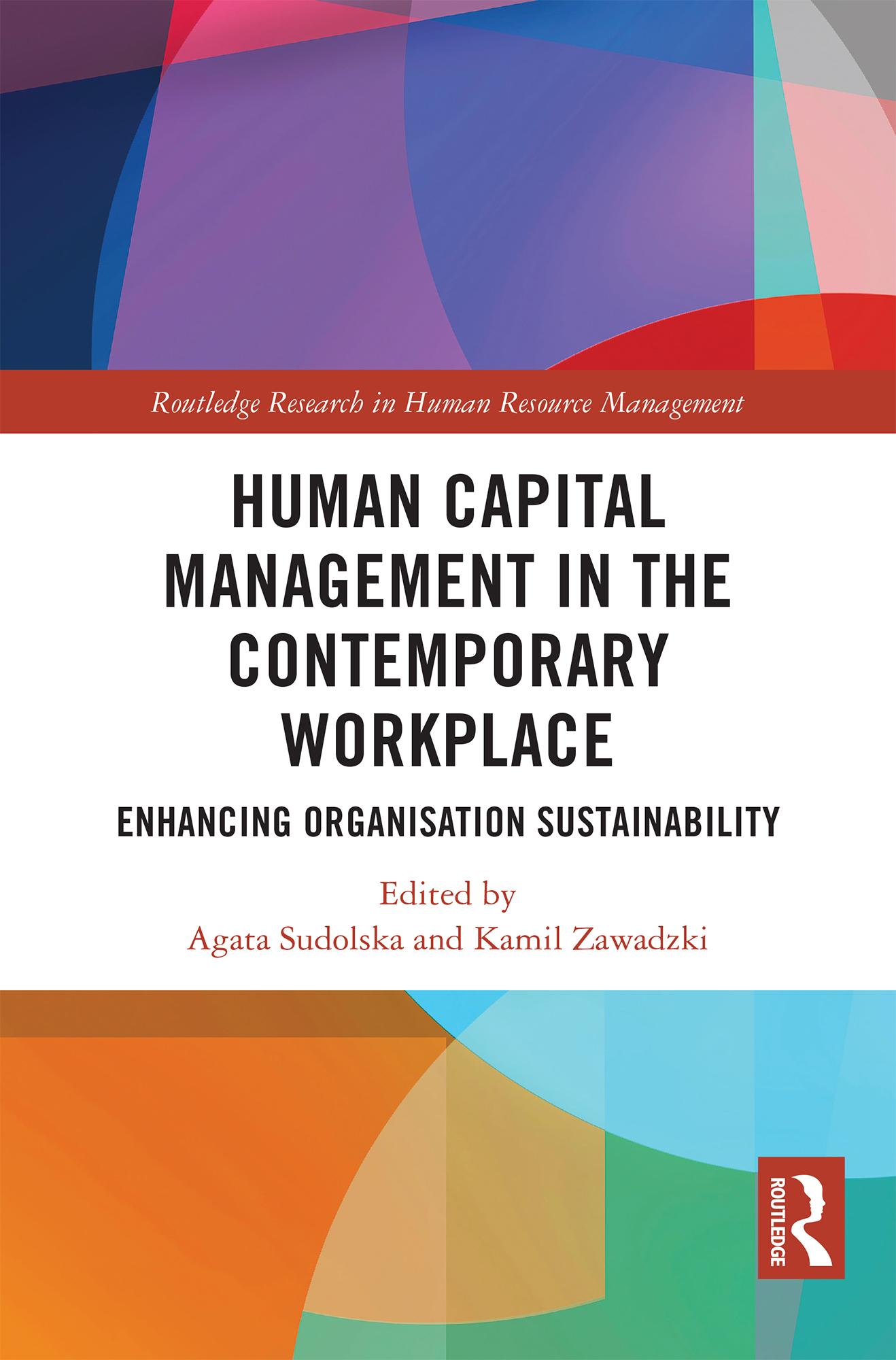
Nowadays, organisations are confronted with the imperative to enhance their organisational sustainability. This involves establishing an appropriate balance between the economic, ecological, and social aspects of an organisation's operations and striving to accomplish their economically viable goals that are both socially and environmentally responsible. By aligning the priorities and incorporating environmental, social, and economic factors into their operational strategies, organisations can generate value for themselves, while also making a positive impact on the current and future welfare of society and the environment. Noticeably, the advancement of organisational sustainability relies heavily on human capital management in the workplace.
Today, more than ever, human capital is regarded as the foundation of organisations and ought to be treated as such. Given the pivotal role of human capital management for ensuring the long-term organisational sustainability of an organisation, emphasis should be placed on redefining leadership strategies and priorities, focusing on diversity and inclusion, cultivating talent, facilitating remote work, fostering employee engagement, promoting skill development for environmentally friendly practices, and prioritising job satisfaction and employee well-being.
In response to the multi-faceted challenges of the third decade of the 21st century, this book provides an in-depth review of research avenues addressing present and future human capital development concerns in terms of enhancing organisation sustainability. The main aim of the book is to indicate the direction of demand for new competences regarding workplace human capital and identify synergies between its particular aspects with reference to contemporary human capital development. The monograph’s objectives include presenting tools that allow the analysis and development of human capital competences, pro-active and pro-environmental attitudes and behaviours, the coexistence of workers and AI in the organisation, as well as providing employee well-being, satisfaction, and commitment. Moreover, the book offers recommendations for contemporary responsible organisations that carry themselves towards the new economic and social order and sustainability.
Pay easily by card, Klarna, Apple Pay or Google Pay. Not happy? You always have a 14-day money-back guarantee. Read more in our terms. If you have any questions, email us at hello@memmo.org.
Memmo makes studying easier – wherever you are in the world. We bring your course books and smart study tools together in one place: summaries, quizzes, podcasts and flashcards. Plus Ted, your study buddy who answers anything you wonder. Over 50,000 students already study here – built to help you learn faster and stress less.