
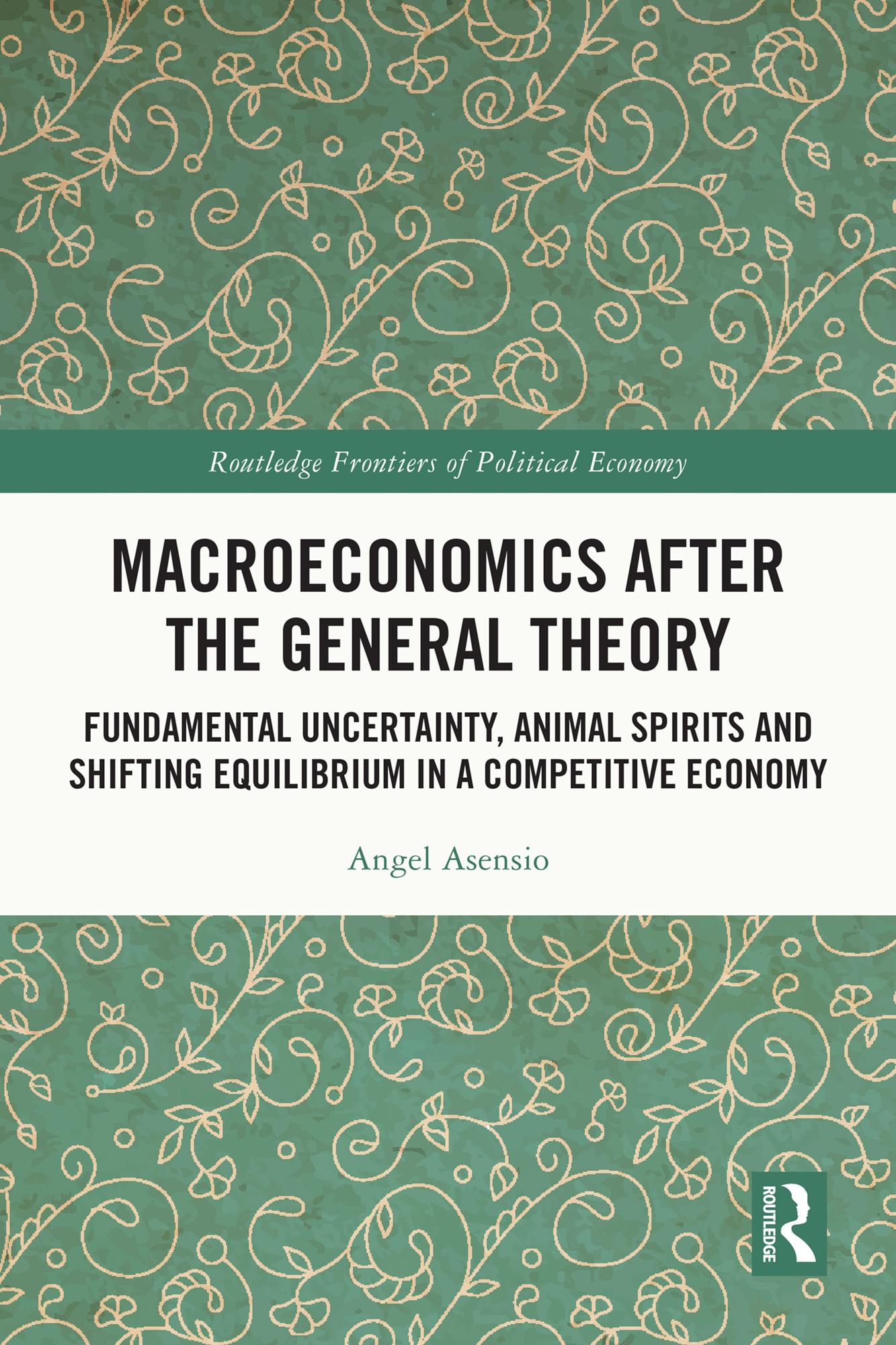
Both Keynes’s General Theory and orthodox economics seek to understand how competitive markets work, but they diverge sharply with respect to the nature and properties of the competitive equilibrium. The reason, as Keynes himself pointed out, is that the General Theory recognises that the future consequences of current decisions are fundamentally uncertain which, contra the orthodox view, radically affects decision-making and the functioning of markets.
This book approaches macroeconomics on the basis of the General Theory, of which a new exposition is offered in the first part, purged of the grey areas that resulted from the context in which it was written, and of the considerable confusion generated for almost a century by the vain attempts of orthodox thinking to integrate such novel ideas in its deficient conceptual framework. The second part aims at extending the conceptual framework to the open economy and considering how uncertainty affects international linkages. The third part proposes an integrated conceptual and formal framework for analysing how changes in the national and international context, including macroeconomic policies, affect an economy.
This new examination of General Theory is a major addition to the literature on Keynes, macroeconomics, economic theory and the history of economic thought.
Pay easily by card, Klarna, Apple Pay or Google Pay. Not happy? You always have a 14-day money-back guarantee. Read more in our terms. If you have any questions, email us at hello@memmo.org.
Memmo makes studying easier – wherever you are in the world. We bring your course books and smart study tools together in one place: summaries, quizzes, podcasts and flashcards. Plus Ted, your study buddy who answers anything you wonder. Over 50,000 students already study here – built to help you learn faster and stress less.