
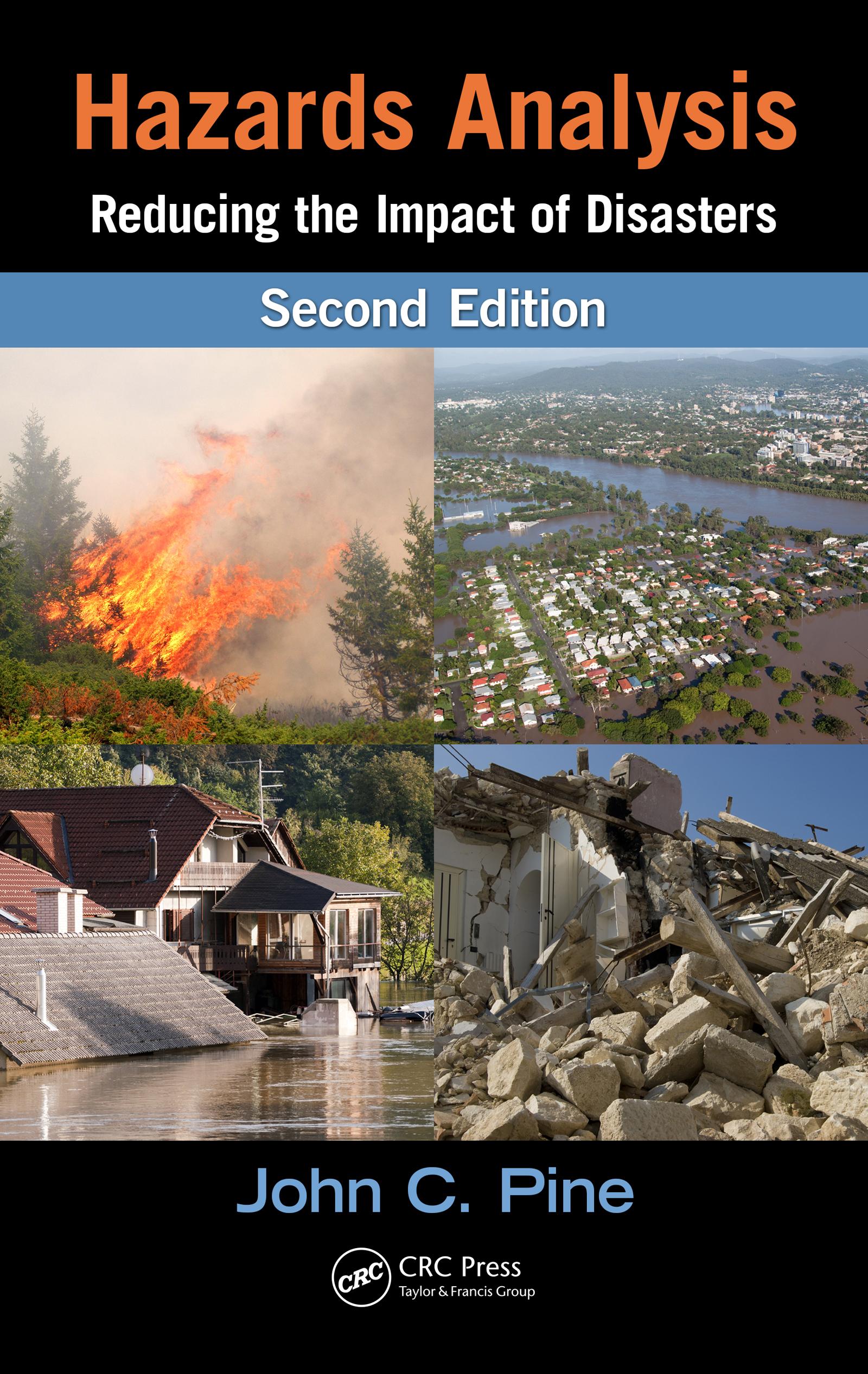
The impacts of natural and man-made disasters have increased exponentially over the past few decades. Moreover, with our global interconnectedness and the growing scale of disasters, today's catastrophic disasters can have regional, national, and even global economic consequences.
Following in the tradition of the successful first edition, Hazards Analysis: Reducing the Impact of Disasters, Second Edition provides a structure and process for understanding the nature of natural and human-caused disasters. Stressing the role of hazard risk management for public, private, and nonprofit organizations, the author and expert contributors cover problem solving, risk analysis, and risk communications to ensure readers are in a position to identify key problems associated with hazards and the risks that they present.
The book details a systematic process of hazards identification, vulnerability determination, and consequence assessment for the natural, built, and human environment. Using a cross-disciplinary approach, this book effectively demonstrates how to use the results of vulnerability assessment, spatial analysis, and community planning to reduce adverse disaster outcomes and foster social, economic, and environmental sustainability. Throughout, the book stresses that hazards analysis is not an isolated process but one that must engage the local community.
Complete with clearly set objectives, key terms, discussion questions, satellite images and maps, and ancillary websites for further study, this authoritative guide covers every element of the hazard analysis process in a step-by-step format. Hazards Analysis presents time-proven strategies for building sustainable communities, identifying and prioritizing risks, and establishing successful disaster prevention and relief strategies prior to a disaster.
Pay easily by card, Klarna, Apple Pay or Google Pay. Not happy? You always have a 14-day money-back guarantee. Read more in our terms. If you have any questions, email us at hello@memmo.org.
Memmo makes studying easier – wherever you are in the world. We bring your course books and smart study tools together in one place: summaries, quizzes, podcasts and flashcards. Plus Ted, your study buddy who answers anything you wonder. Over 50,000 students already study here – built to help you learn faster and stress less.