
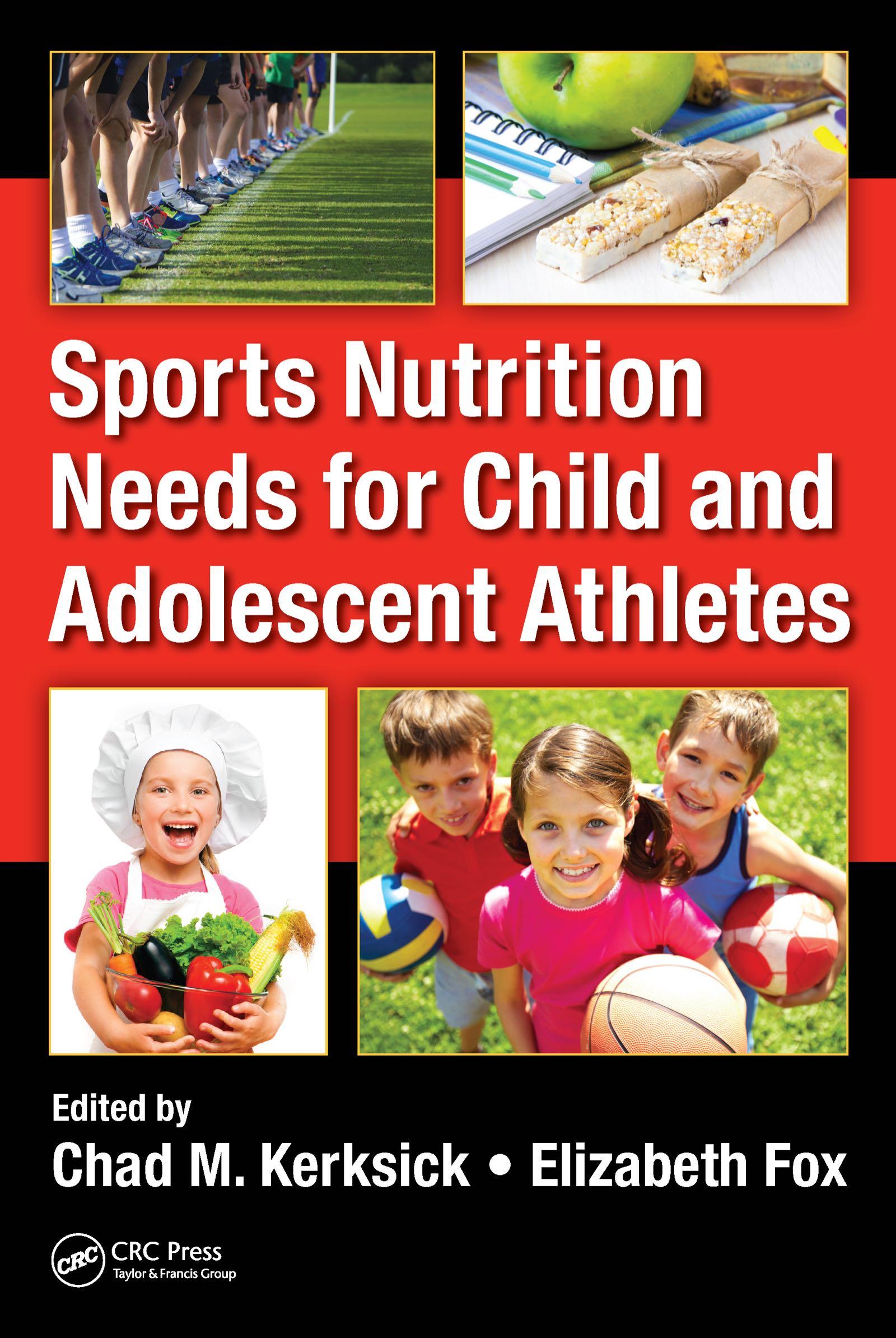
As the number of child and adolescent athletes continues to increase each year, more children are being exposed to greater training volumes and increasing physical demands—making the need for nutritional and recovery guidance increasingly important. While massive amounts of empirical research are published each year on responses and adaptations to exercise and nutrition, a relative lack of this data is focused on children and adolescents.
Filling this need, Sports Nutrition Needs for Child and Adolescent Athletes explores the optimal sports nutrition needs for the child and adolescent athlete in three, detailed sections. The first section—Nutritional Foundation—supplies a comprehensive look at topics that relate to nearly every athlete. It focuses on the need for optimal nutrition in youth athlete populations, highlighting energy, body composition, hydration, and both macro- and micro-nutrient requirements.
The second section—Special Considerations in Child and Adolescent Athletes—focuses on topics that are more specific. This section includes coverage of the impact of common recreational drugs on exercise performance, steroid use in youth and associated dangers, key elements of working with diabetic and other clinically relevant populations, as well as discussions that relate to overweight and weight-conscious athletes, respectively.
The final section—A Hands-On Approach—reviews nutritional programs for both child and adolescent athletes. It uses an easy-to-understand approach to discuss and apply situations that can challenge athletes, their parents, and coaches by making sure young athletes are well fueled and recovered for all sporting situations.
For the purposes of the research presented in this book, a child athlete is defined as an athlete between the ages of 7 and 12 years while an adolescent athlete is defined as an athlete 13–17 years of age.
Pay easily by card, Klarna, Apple Pay or Google Pay. Not happy? You always have a 14-day money-back guarantee. Read more in our terms. If you have any questions, email us at hello@memmo.org.
Memmo makes studying easier – wherever you are in the world. We bring your course books and smart study tools together in one place: summaries, quizzes, podcasts and flashcards. Plus Ted, your study buddy who answers anything you wonder. Over 50,000 students already study here – built to help you learn faster and stress less.