
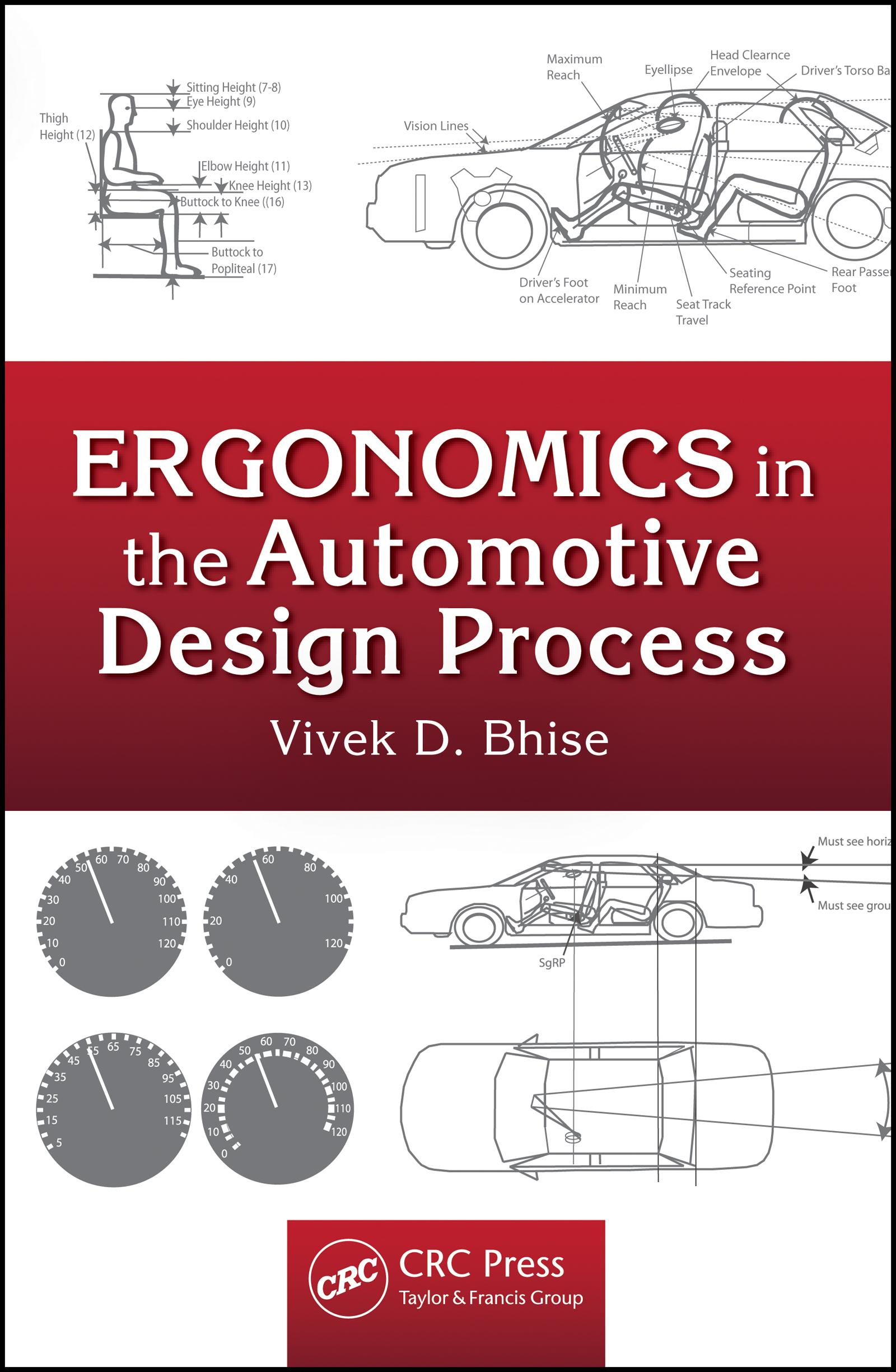
The auto industry is facing tough competition and severe economic constraints. Their products need to be designed right the first time with the right combinations of features that not only satisfy the customers but continually please and delight them by providing increased functionality, comfort, convenience, safety, and craftsmanship. Based on the author'sforty plusyears of experience as a human factors researcher, engineer, manager, and teacher who has conducted numerous studies and analyses, Ergonomics in the Automotive Design Process covers the entire range of ergonomics issues involved indesigning a car or truck and provides evaluation techniques to avoid costly mistakes and assure high customer satisfaction.
The book begins with the definitions and goals of ergonomics, historic background, and ergonomics approaches. It covers human characteristics, capabilities, and limitations considered in vehicle design in key areas such as anthropometry, biomechanics, and human information processing. It then examines how the driver and the occupants are positioned in the vehicle space and how package drawings and/or computer-aided design models are created from key vehicle dimensions used in the automobile industry. The author describes design tools used in the industry for occupant packaging, driver vision, and applications of other psychophysical methods. He covers important driver information processing concepts and models and driver error categories to understand key considerations and principles used in designing controls, displays, and their usages, including current issues related to driver workload and driver distractions.
The author has included only the topics and materials that he found to be useful in designing car and truck products and concentrated on the ergonomic issues generally discussed in the automotive design studios and product development teams. He distills the information needed to be a member of an automotive product development team and create an ergonomically superior vehicle.
Pay easily by card, Klarna, Apple Pay or Google Pay. Not happy? You always have a 14-day money-back guarantee. Read more in our terms. If you have any questions, email us at hello@memmo.org.
Memmo makes studying easier – wherever you are in the world. We bring your course books and smart study tools together in one place: summaries, quizzes, podcasts and flashcards. Plus Ted, your study buddy who answers anything you wonder. Over 50,000 students already study here – built to help you learn faster and stress less.