
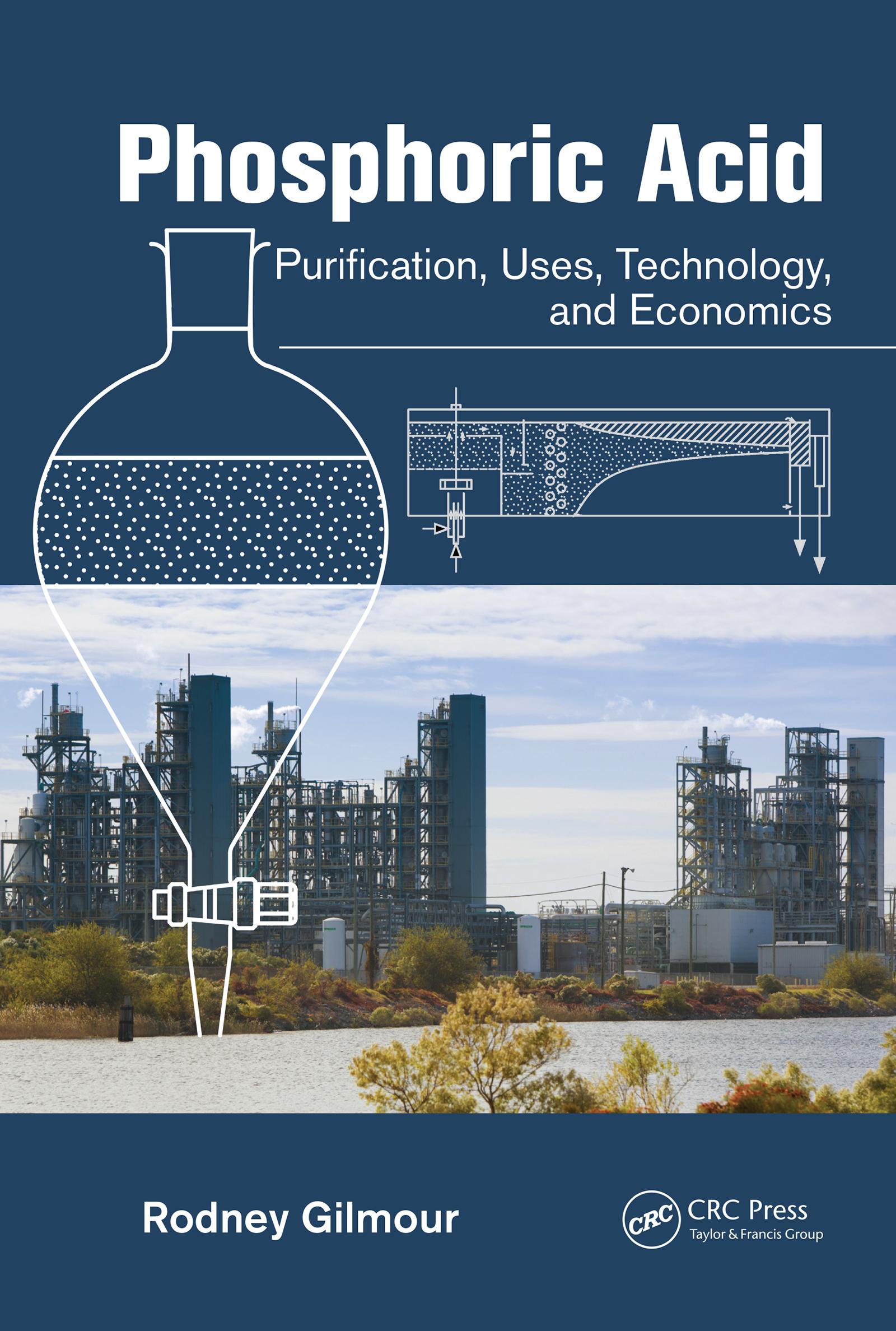
The rise and rationalization of the industrial phosphates industry have gone hand in hand with the development and maturation of technologies to purify phosphoric acid. In the 1960s and 70s, driven by the exponential sales growth of the detergent-builder sodium tripolyphosphate, chemical producers raced to develop processes that would provide a sufficiently pure phosphoric acid feedstock for manufacture to undercut thermal phosphoric acid made from phosphorus. As environmental and political pressure led to a collapse in demand for sodium tripolyphosphate in the 1990s, the commercial pressures to rationalize at plant and corporate levels rose such that only the fittest survived.
Phosphoric Acid: Purification, Uses, Technology, and Economics, the first and only book of its kind to be written on this topic, covers the development of purification technologies for phosphoric acid, especially solvent extraction, describing the more successful processes and setting this period in the historical context of the last 350 years. Individual chapters are devoted to the key derivative products which are still undergoing active development, as well as to sustainability and how to approach the commissioning of these plants. The text is aimed at students of chemistry, chemical engineering, business, and industrial history, and to new entrants to the industry.
Pay easily by card, Klarna, Apple Pay or Google Pay. Not happy? You always have a 14-day money-back guarantee. Read more in our terms. If you have any questions, email us at hello@memmo.org.
Memmo makes studying easier – wherever you are in the world. We bring your course books and smart study tools together in one place: summaries, quizzes, podcasts and flashcards. Plus Ted, your study buddy who answers anything you wonder. Over 75,000 students already study here – built to help you learn faster and stress less.