
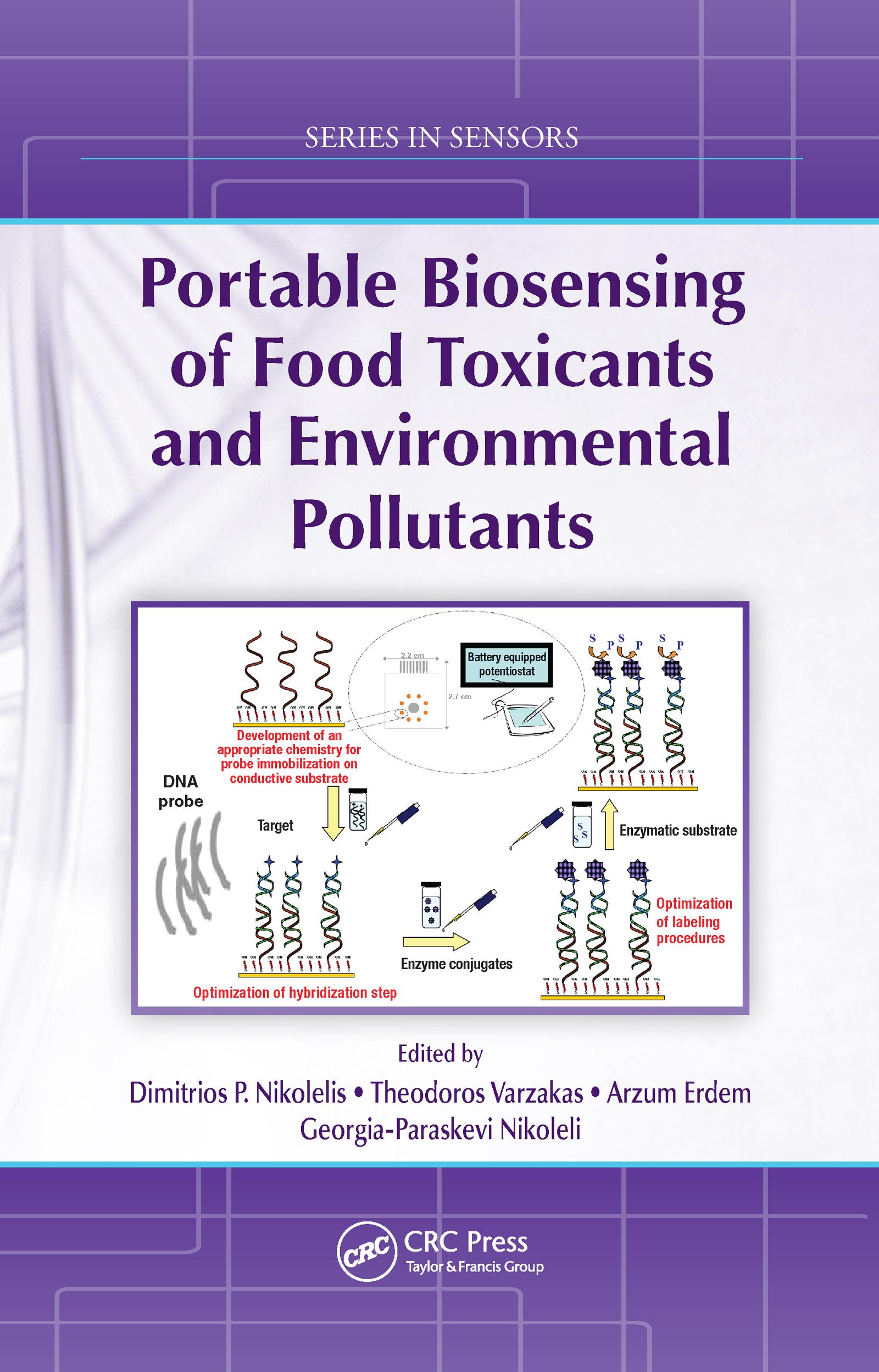
Biosensors are poised to make a large impact in environmental, food, and biomedical applications, as they clearly offer advantages over standard analytical methods, including minimal sample preparation and handling, real-time detection, rapid detection of analytes, and the ability to be used by non-skilled personnel. Covering numerous applications of biosensors used in food and the environment, Portable Biosensing of Food Toxicants and Environmental Pollutants presents basic knowledge on biosensor technology at a postgraduate level and explores the latest advances in chemical sensor technology for researchers.
By providing useful, state-of-the-art information on recent developments in biosensing devices, the book offers both newcomers and experts a roadmap to this technology. In the book, distinguished researchers from around the world show how portable and handheld nanosensors, such as dynamic DNA and protein arrays, enable rapid and accurate detection of environmental pollutants and pathogens.
The book first introduces the basic principles of biosensing for newcomers to the technology. It then explains how the integration of a receptor can provide analytically useful information. It also describes trends in biosensing and examines how a small-sized device can have portability for the in situ determination of toxicants. The book concludes with several examples illustrating how to determine toxicants in food and environmental samples.
Pay easily by card, Klarna, Apple Pay or Google Pay. Not happy? You always have a 14-day money-back guarantee. Read more in our terms. If you have any questions, email us at hello@memmo.org.
Memmo makes studying easier – wherever you are in the world. We bring your course books and smart study tools together in one place: summaries, quizzes, podcasts and flashcards. Plus Ted, your study buddy who answers anything you wonder. Over 50,000 students already study here – built to help you learn faster and stress less.