
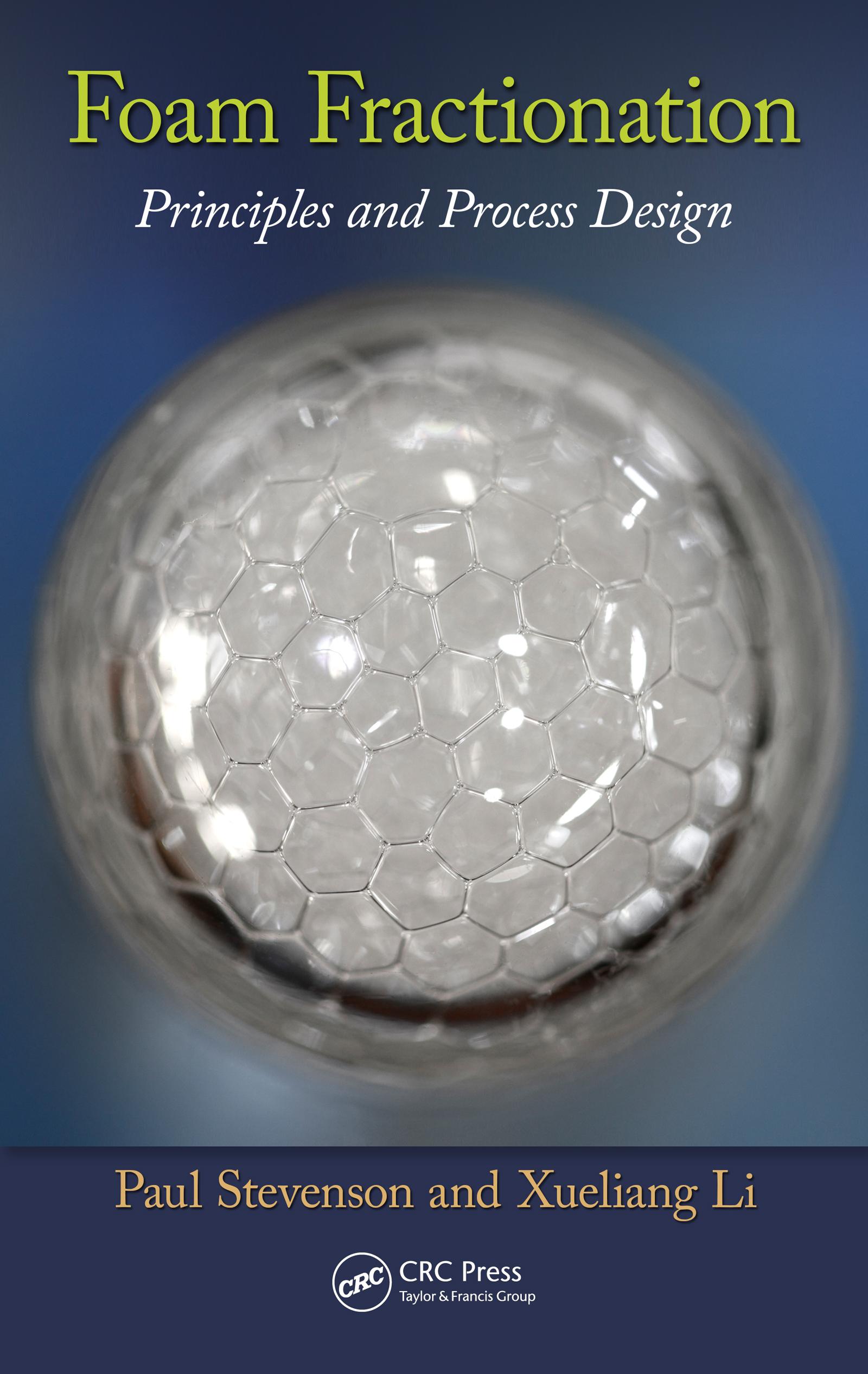
Foam fractionation is a separation process in which proteins and other amphipathic species adsorb to the surface of bubbles. The bubbles are then removed from the solution in the form of foam at the top of a column. Due to its cost-effectiveness, foam fractionation has the potential for rapid commercial growth, especially in biotechnology.
To assist in the widespread adoption of this highly affordable yet powerful process, Foam Fractionation: Principles and Process Design:
- Provides a systematic explanation of the underlying physics of foam fractionation
- Discusses the fundamentals of molecular adsorption to gas liquid interfaces and the dynamics of foam
- Describes foam fractionation process intensification strategies
- Supplies design guidance for plant-scale installations
- Contains the latest knowledge of foam fractionation transport processes
- Presents a case study of the world’s largest commercial foam fractionation plant producing the food preservative Nisin
Foam Fractionation: Principles and Process Design capitalizes on the authors’ extensive practical experience of foam fractionation and allied processes to give process engineers, industrial designers, chemical engineers, academics, and graduate students alike a greater understanding of the mechanistic basis and real-world applications of foam fractionation.
Pay easily by card, Klarna, Apple Pay or Google Pay. Not happy? You always have a 14-day money-back guarantee. Read more in our terms. If you have any questions, email us at hello@memmo.org.
Memmo makes studying easier – wherever you are in the world. We bring your course books and smart study tools together in one place: summaries, quizzes, podcasts and flashcards. Plus Ted, your study buddy who answers anything you wonder. Over 50,000 students already study here – built to help you learn faster and stress less.