
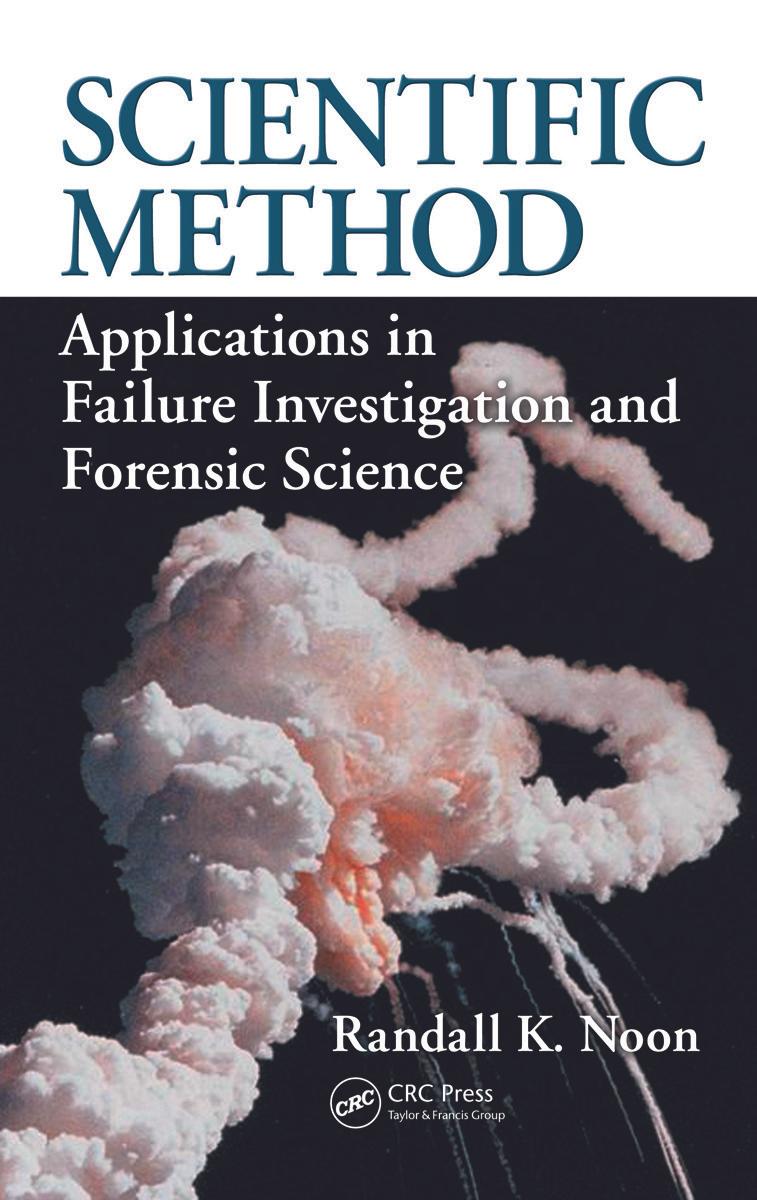
Most failure or accident investigations begin at the end of the story: after the explosion, after the fire has been extinguished, or after the collapse. In many instances, information about the last event and the starting event is known reasonably well. Information about what occurred between these endpoints, however, is often unclear, confusing, and perhaps contradictory. Scientific Method: Applications in Failure Investigation and Forensic Science explains how scientific investigative methods can best be used to determine why and how a particular event occurred.
While employing examples from forensic engineering, the book uses principles and ideas applicable to most of the forensic sciences. The author examines the role of the failure investigator, describes the fundamental method for investigation, discusses the optimal way to organize evidence, and explores the four most common reasons why some investigations fail. The book provides three case studies that exemplify proper report writing, contains a special chapter profiling a criminal case by noted forensic specialist Jon J. Nordby, and offers a reading list of resources for further study.
Concise and illustrative, this volume demonstrates how the scientific method can be applied to failure investigation in ways that avoid flawed reasoning while delivering convincing reconstruction scenarios. Investigators can pinpoint where things went wrong, providing valuable information that can prevent another catastrophe.
Pay easily by card, Klarna, Apple Pay or Google Pay. Not happy? You always have a 14-day money-back guarantee. Read more in our terms. If you have any questions, email us at hello@memmo.org.
Memmo makes studying easier – wherever you are in the world. We bring your course books and smart study tools together in one place: summaries, quizzes, podcasts and flashcards. Plus Ted, your study buddy who answers anything you wonder. Over 50,000 students already study here – built to help you learn faster and stress less.