
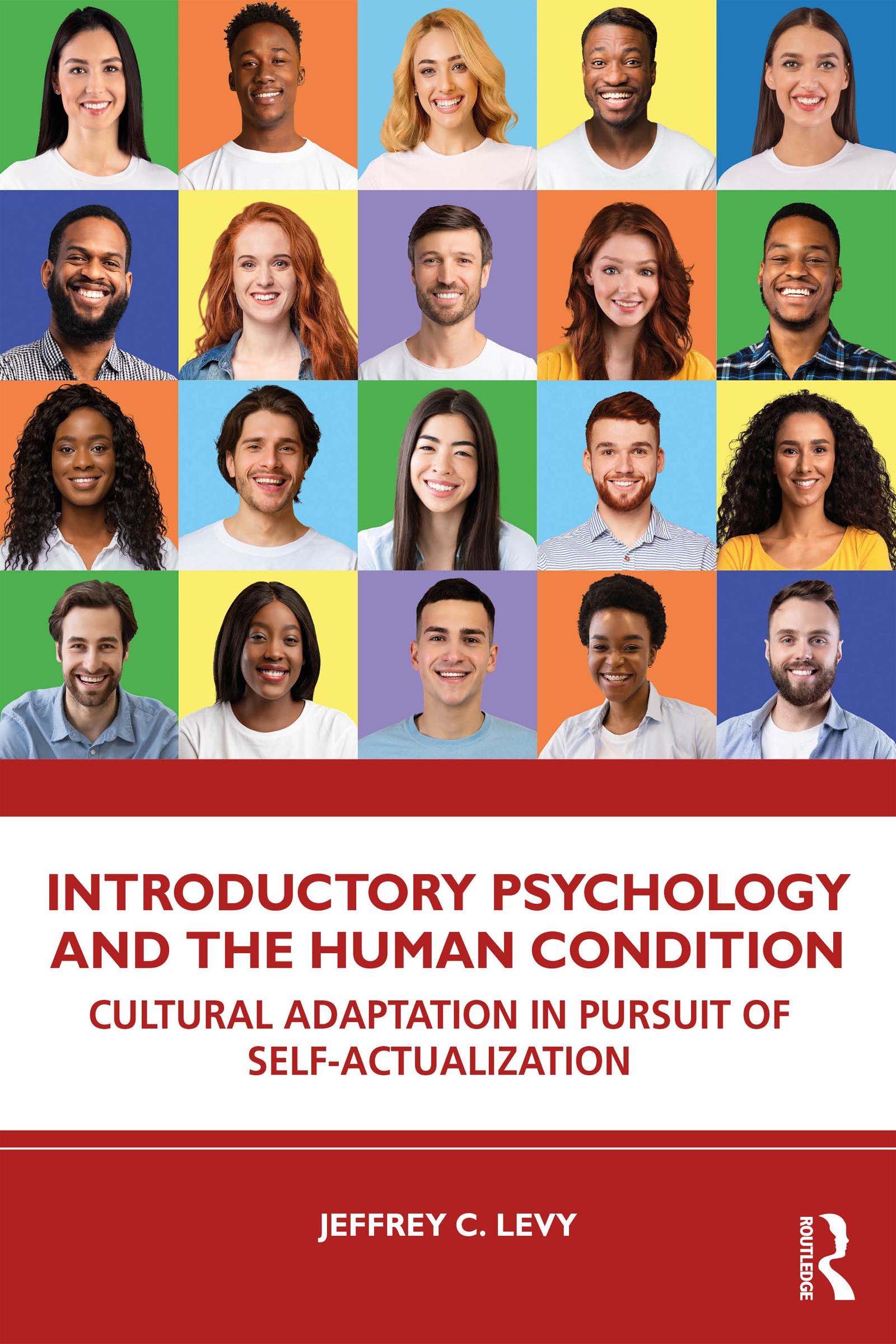
Introductory Psychology and the Human Condition provides an engaging, cohesive, and practical treatment of traditional psychological principles and theories.
The book uses Maslow’s human needs hierarchy and Bronfenbrenner’s ecological theory of development as organizational schemas for considering how cultures have evolved to address human needs. It relates major psychological processes, including biology, perception, motivation, learning, and cognition, to lifespan and personality development in nomadic hunter-gatherer and technologically enhanced cultures. Human history is described as a feedback loop in which inventions and technologies result in the need for individuals and cultures to adapt to changing environmental and social conditions. By applying interdisciplinary perspectives of the humanities, social and natural sciences, and helping professions to the human condition, it offers a meaningful lens through which to study and interpret core psychological concepts. Chapters are supported by self-understanding and self-control exercises that help students place their lives within a cultural and historical context and apply the principles of psychology to themselves.
Offering an engaging overview of the essential elements of an introductory psychology course in an accessible and approachable style, Introductory Psychology and the Human Condition is core reading for introductory students and will appeal also to a general audience interested in psychology.
Pay easily by card, Klarna, Apple Pay or Google Pay. Not happy? You always have a 14-day money-back guarantee. Read more in our terms. If you have any questions, email us at hello@memmo.org.
Memmo makes studying easier – wherever you are in the world. We bring your course books and smart study tools together in one place: summaries, quizzes, podcasts and flashcards. Plus Ted, your study buddy who answers anything you wonder. Over 50,000 students already study here – built to help you learn faster and stress less.