
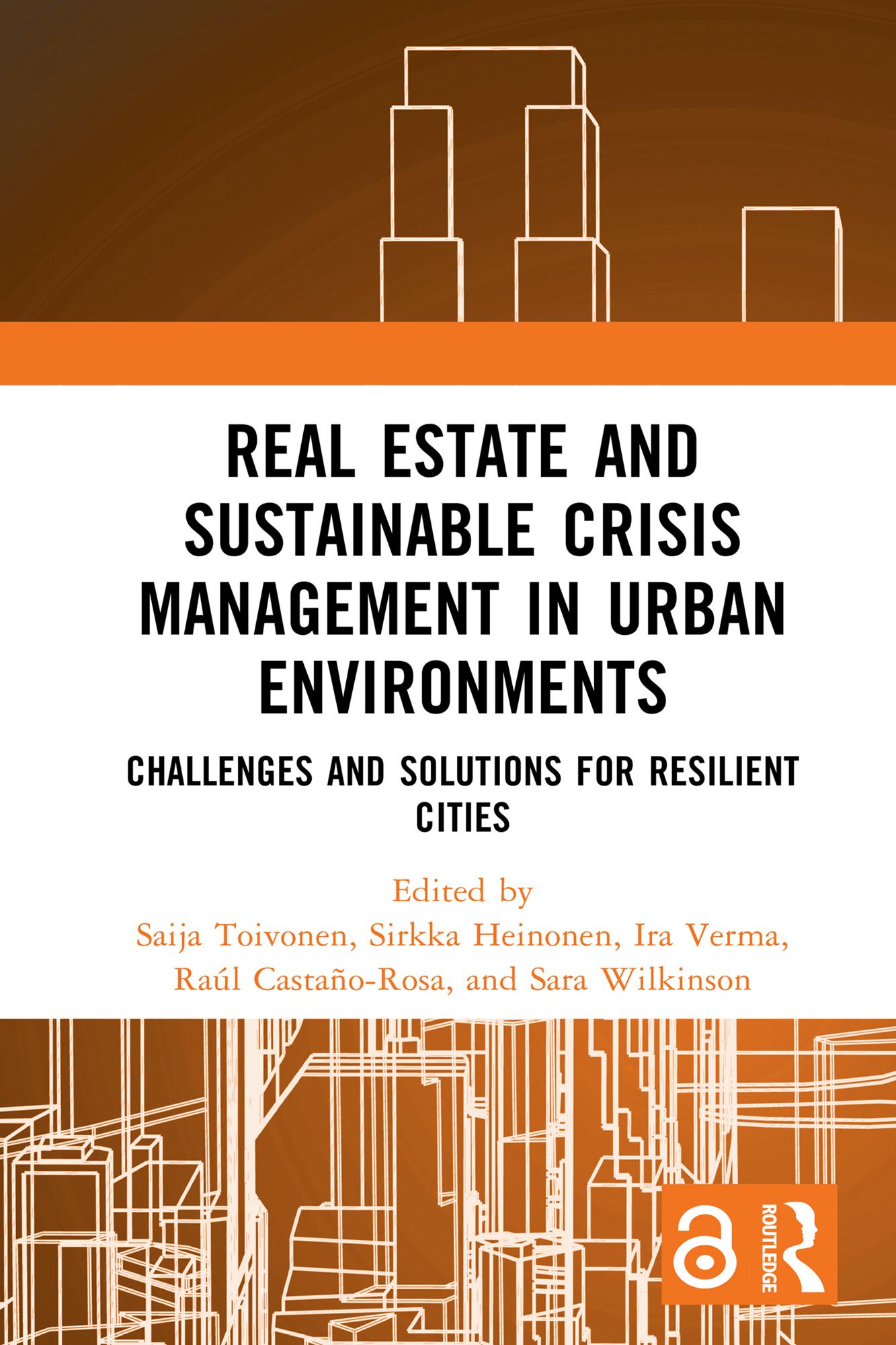
The aim of this book is to promote the dynamic resilience of societies by identifying, analysing, and exemplifying the role of space and land use in both anticipated and unanticipated primary and secondary crisis situations.
The book brings together the expertise of a unique team of researchers and methods from fields of futures studies, land use planning, social sustainability and wellbeing, architecture, spatial planning, design and real estate economics, and presents a novel understanding of the direct and indirect impacts of possible crises in the space and land use context. It goes on to discuss the concept of resilience and exemplifies potential solutions and offers a holistic and forward-looking approach for crisis management through a lens of social sustainability and wellbeing, making an important contribution to the promotion of wellbeing in the built environment, especially in terms of land and residential space and building use.
This book does not only identify barriers and successful incentives in resilient crisis management but also discusses the role of different stakeholders (e.g., households, office workers, real estate owners, space occupants, firms, the public sector, etc.) in crisis management. Finally, international case studies aiming to tackle the challenging landscape of future threats are presented, along with novel tools to support the development of future policies, regulations, and management practices in the built environment, which can increase the dynamic resilience of societies.
Overall, this book is essential reading for decision-makers in the public and private sectors, urban developers, space and spatial designers, architects, planners, community stakeholders, real estate investors, facility managers and crisis and corporate responsibility managers.
A PDF version of this book is available for free in Open Access at www. taylorfrancis.com. It has been made available under a Creative Commons Attribution 4.0 International license.
Pay easily by card, Klarna, Apple Pay or Google Pay. Not happy? You always have a 14-day money-back guarantee. Read more in our terms. If you have any questions, email us at hello@memmo.org.
Memmo makes studying easier – wherever you are in the world. We bring your course books and smart study tools together in one place: summaries, quizzes, podcasts and flashcards. Plus Ted, your study buddy who answers anything you wonder. Over 75,000 students already study here – built to help you learn faster and stress less.