
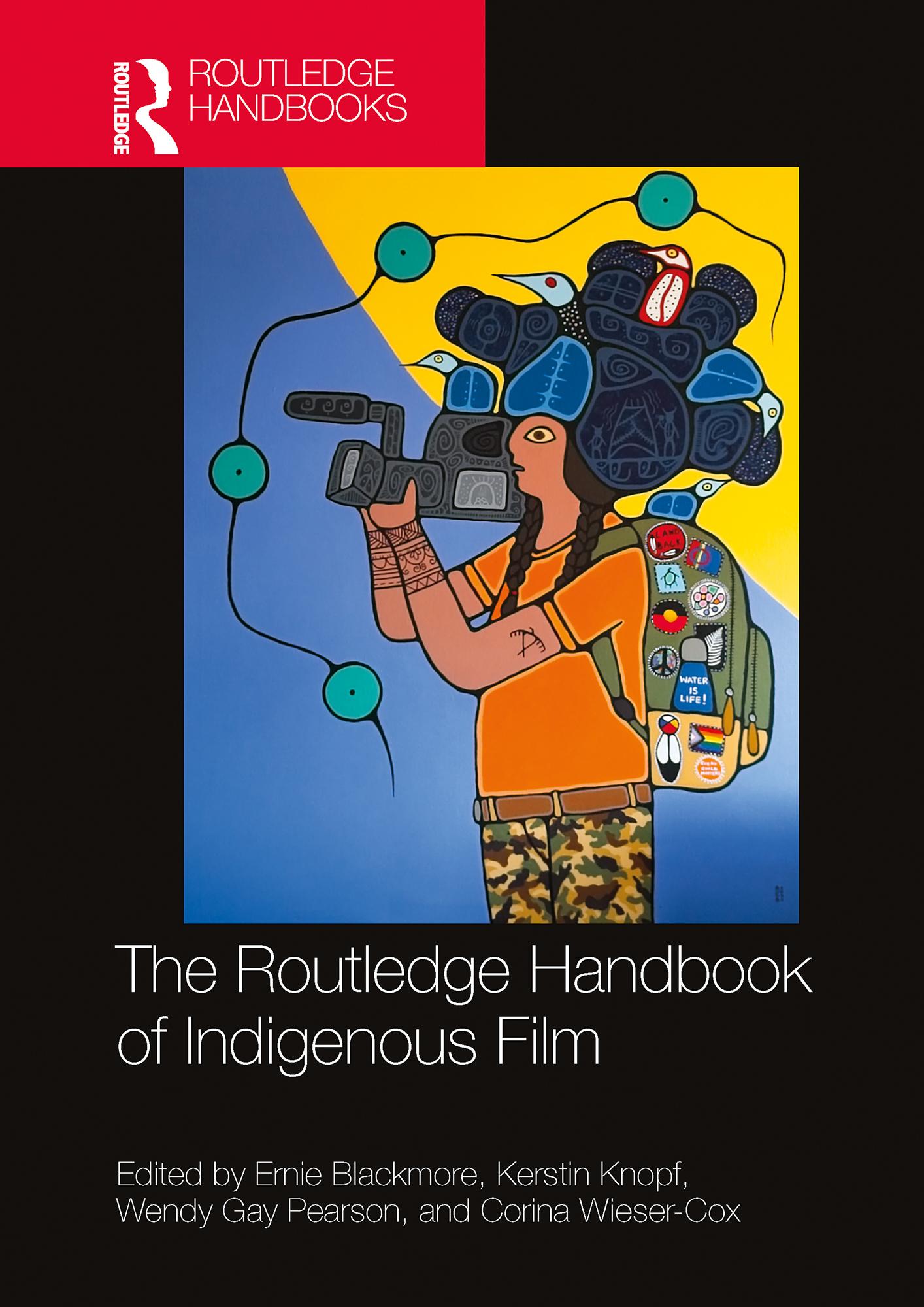
The Routledge Handbook of Indigenous Film is dedicated to bringing the work of Indigenous filmmakers around the world to a larger audience. By giving voice to transnational and transcultural Indigenous perspectives, this collection makes a significant contribution to the discourse on Indigenous filmmaking and provides an accessible overview of the contemporary state of Indigenous film.
Comprising 37 chapters by an international team of contributors, the Handbook is divided into six parts:
- Decolonial Intermedialities and Revisions of Western Media
- Colonial Histories, Trauma, Resistances
- Indigenous Lands, Communities, Bodies
- Queer Cultures and Border Crossings
- Youth Cultures and Emancipation
- Art, Comedy, and Music.
Within these sections Indigenous and non-Indigenous experts from around the world examine various aspects of Indigenous film cultures, analyze the works of Indigenous directors and producers worldwide, and focus on readings (contextual, historical, political, aesthetic, and activist) of individual Indigenous films. The Handbook specifically explores Indigenous film in Canada, Mexico, the United States, Central and South America, Northern Europe, Australia, New Zealand, the Pacific, and the Philippines.
This richly interdisciplinary volume is an essential resource for students and scholars of Indigenous Studies, Cultural Studies, Area Studies, Film and Media Studies, Feminist and Queer Studies, History, and anyone interested in Indigenous cultures and cinema.
Pay easily by card, Klarna, Apple Pay or Google Pay. Not happy? You always have a 14-day money-back guarantee. Read more in our terms. If you have any questions, email us at hello@memmo.org.
Memmo makes studying easier – wherever you are in the world. We bring your course books and smart study tools together in one place: summaries, quizzes, podcasts and flashcards. Plus Ted, your study buddy who answers anything you wonder. Over 50,000 students already study here – built to help you learn faster and stress less.