
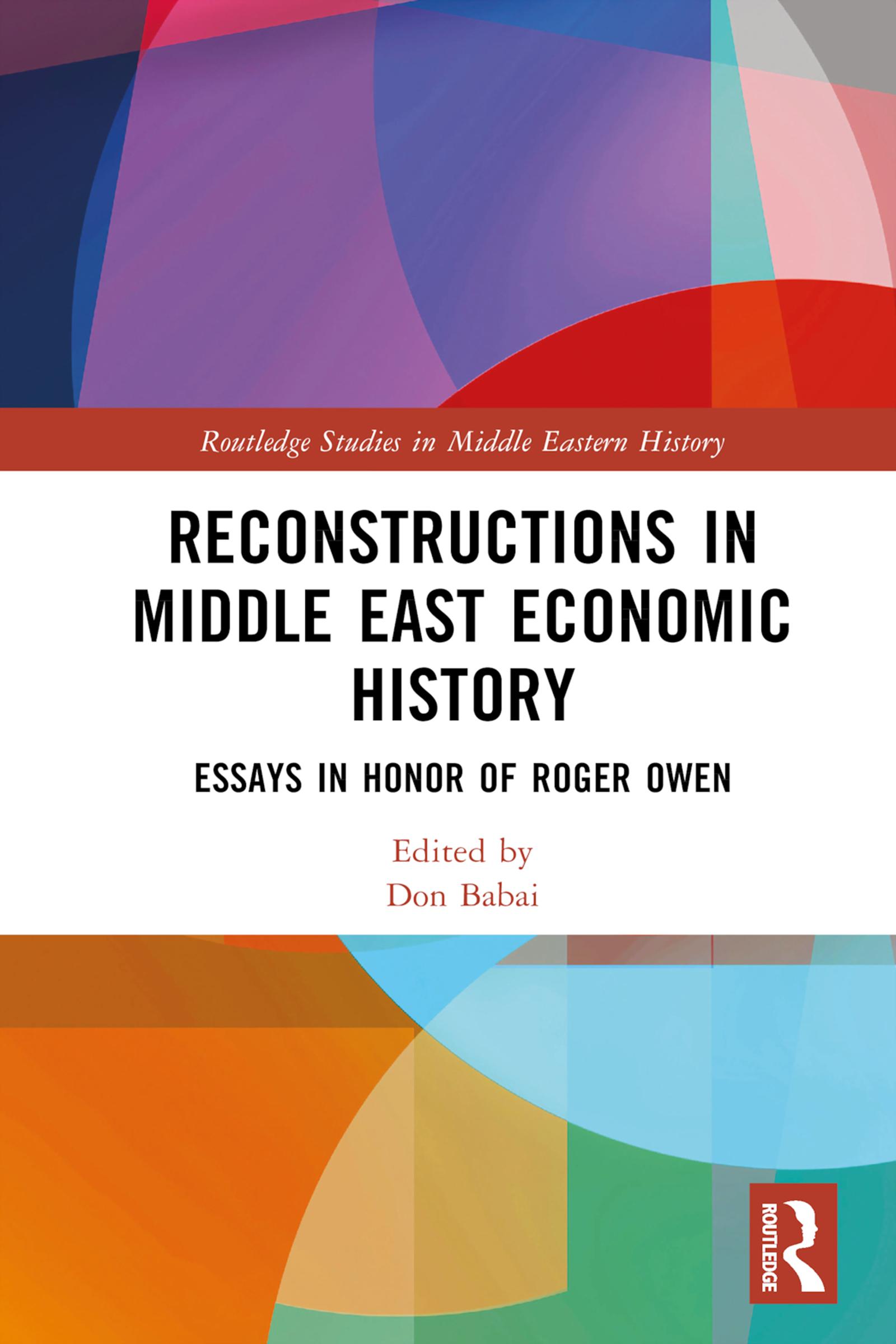
This volume explores major theoretical and empirical themes in the study of the economic history of the Middle East.
Despite the relative neglect of economic history in Middle Eastern studies, this book makes a case for its importance as a discipline of study. On the one hand, it shows promise in illuminating the economic base of historical trends and events; on the other, it can elucidate the historical foundations of economic continuity and change. The chapters employ an array of theoretical and methodological approaches and ultimately demonstrate how economics and history, along with political economy, complement each other in studying the Middle East. Among the substantive topics explored are the trajectories of the Arab Spring, institutional change and economic development in the early Ottoman Empire, the destructive effects of the reordering property rights in Iraq by the American-led occupation authority, the evolution of the political economy of the Islamic Republic of Iran, and the determinants of movements in the yields of Egyptian and Ottoman sovereign debt following political and economic crises in the 19th and early 20th centuries.
The book will be of interest to scholars and students of economic history, political economy, and the Middle East.
Pay easily by card, Klarna, Apple Pay or Google Pay. Not happy? You always have a 14-day money-back guarantee. Read more in our terms. If you have any questions, email us at hello@memmo.org.
Memmo makes studying easier – wherever you are in the world. We bring your course books and smart study tools together in one place: summaries, quizzes, podcasts and flashcards. Plus Ted, your study buddy who answers anything you wonder. Over 50,000 students already study here – built to help you learn faster and stress less.