
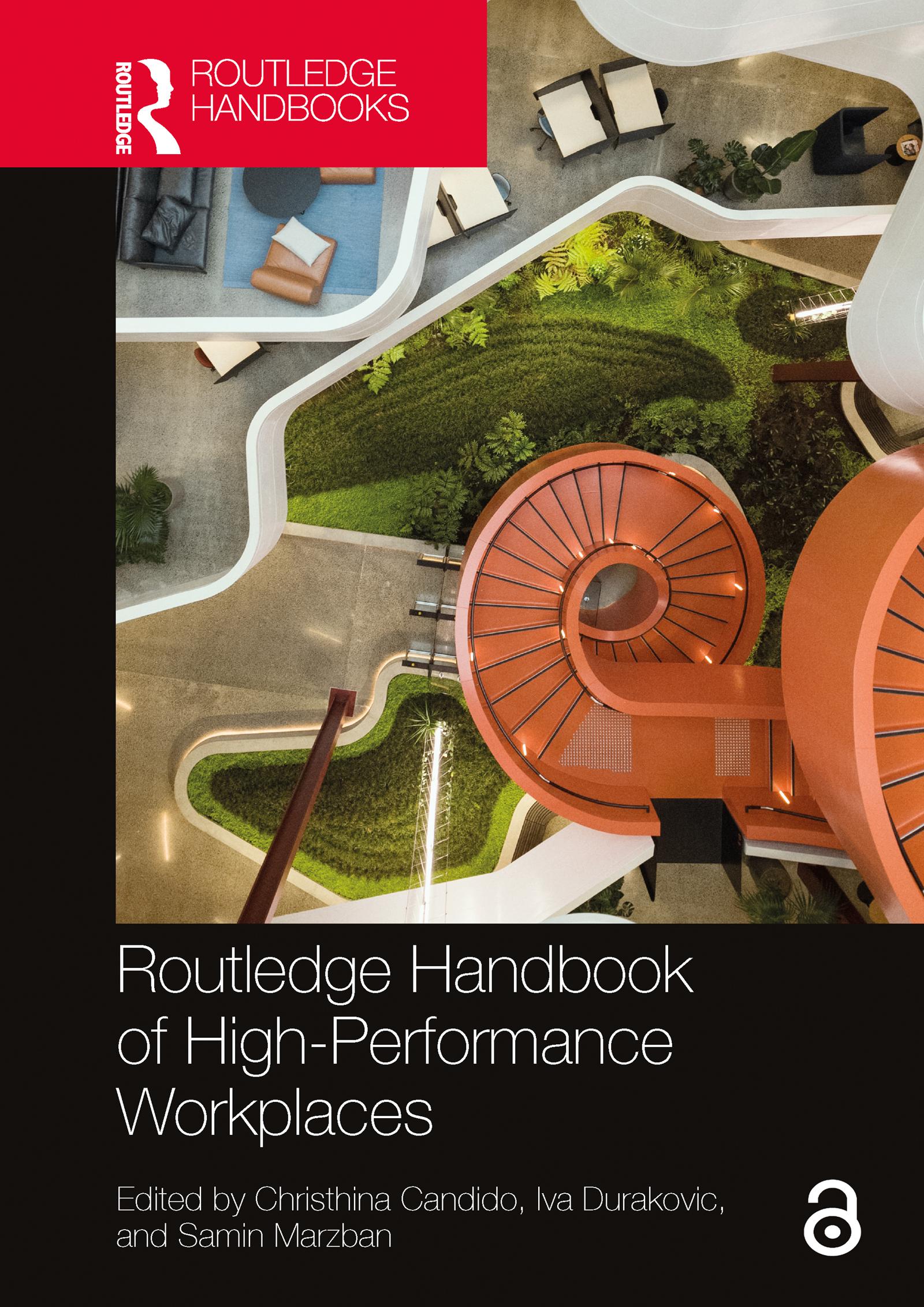
This timely book focuses on an overview of the fundamentals behind high-performance workplaces underpinning occupants’ satisfaction, health, and productivity. To this end, it covers human, environmental, and organisational aspects proven to be of great relevance to the design of high-performance workplaces. Perhaps most significantly it looks at these characteristics both before and after the start of the COVID-19 pandemic.
From the exodus from private offices to the rise of open-plan workplaces, where, how and when people work was changing rapidly pre-COVID. Post-COVID, pandemic-imposed restrictions banished workers from offices into their homes fast, leaving organisation scrambling to keep workers functioning away from HQ. After the immediate shockwaves set by the pandemic, workers and organisations have had the time to learn about positives and negative aspects of remote working with the vast majority now questioning the need to go back to HQ and the purpose of offices. In this book, the contributors share and discuss lessons learned from research conducted in workplaces pre- and post-2020 with a view of providing a clear picture about what high-performance workplaces are about, including the key drivers behind workers’ satisfaction, health, and productivity. This handbook builds on a programme of applied research conducted in workplaces led by the editors over the last decade which is aimed at understanding the synergies between the design, performance, and experience of spaces. It examines ergonomics, biophilic design, acoustics, indoor air quality, thermal comfort, diversity, leadership, psychological safety, culture, and much more.
Research findings are presented side-by-side with case studies selected from the research database led by the editors. Industry experts add to the academic voice, reinforcing the authenticity of this book and its relevance to other stakeholders found outside the academic arena, including the property and design industry, students, government, and the community in general.
The Open Access version of this book, available at http://www.taylorfrancis.com, has been made available under a Creative Commons Attribution-Non Commercial-No Derivatives (CC-BY-NC-ND) 4.0 license.
Pay easily by card, Klarna, Apple Pay or Google Pay. Not happy? You always have a 14-day money-back guarantee. Read more in our terms. If you have any questions, email us at hello@memmo.org.
Memmo makes studying easier – wherever you are in the world. We bring your course books and smart study tools together in one place: summaries, quizzes, podcasts and flashcards. Plus Ted, your study buddy who answers anything you wonder. Over 75,000 students already study here – built to help you learn faster and stress less.