
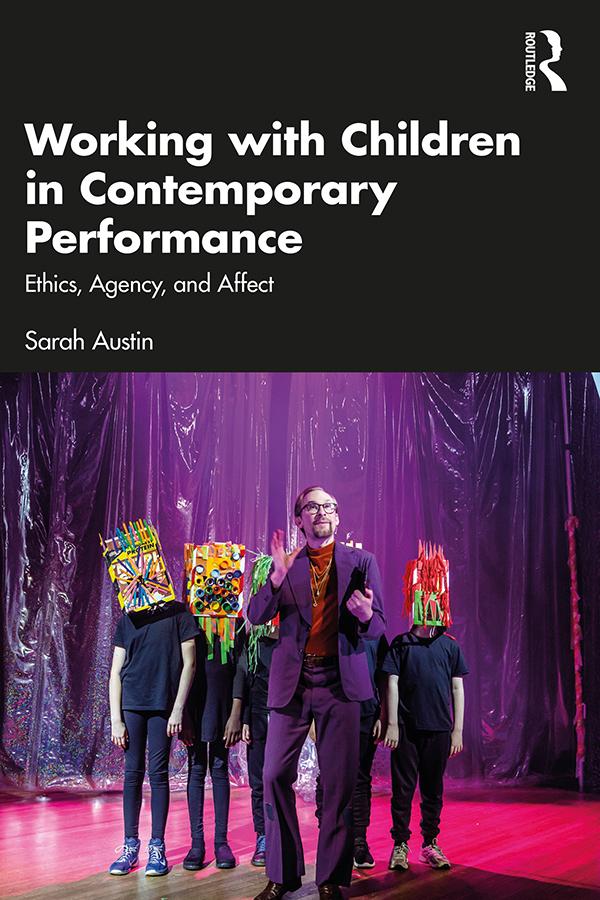
This book outlines how an innovative ‘rights-based’ model of contemporary performance practice can be used when working with children and young people.
This model, framed by the United Nations Convention on the Rights of the Child (1989), challenges the idea of children as vulnerable and in need of protection, argues for the recognition of the child’s voice, and champions the creativity of children in performance. Sarah Austin draws on rich research and practitioner experience to analyse Youth Arts pedagogies, inclusive theatre practice, models of participation, the symbolic potential of the child in performance, and the work of contemporary theatre practitioners making work with children for adult audiences. The combined practical and written research reflected in this book offers a new, nuanced understanding of children as cultural agents, raising the prospect of a creative process that foregrounds deeper considerations of the strengths and capacities of children.
This book would primarily appeal to scholars of theatre and performance studies, specifically those working in the field of applied theatre and theatre for children and young people. Additionally, the practice-based elements of the book are likely to appeal to theatre professionals working in youth arts or theatre for young audiences or associated fields.
Pay easily by card, Klarna, Apple Pay or Google Pay. Not happy? You always have a 14-day money-back guarantee. Read more in our terms. If you have any questions, email us at hello@memmo.org.
Memmo makes studying easier – wherever you are in the world. We bring your course books and smart study tools together in one place: summaries, quizzes, podcasts and flashcards. Plus Ted, your study buddy who answers anything you wonder. Over 75,000 students already study here – built to help you learn faster and stress less.