
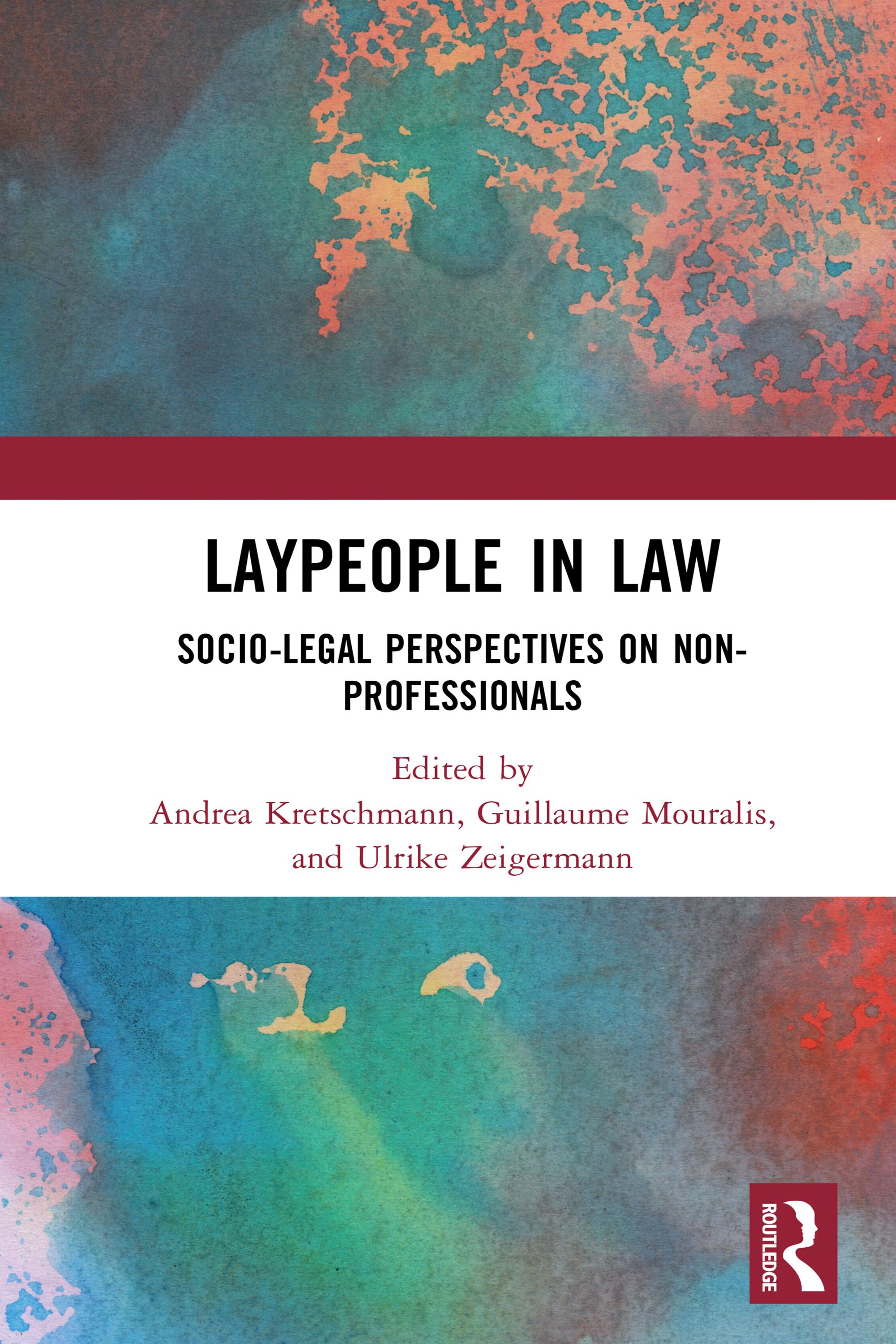
This book contributes to a better understanding of the role laypeople hold in the social functioning of law.
It adopts the scholarly insight that the law is unthinkable without an everyday legal understanding of the law pursued by laypeople. It engages with the assumption that not only the law’s existence but also its development is shaped by the layperson’s affirmations, oppositions, ignorance, or negations of the law. This volume thus aims to fill a void in socio-legal studies. Whereas many sociolegal theories tend to conceptualize the law through legal experts’ actions, institutions, procedures, and codifications, it argues that such a viewpoint underestimates the role of laypeople in the law’s processing and advocates for a strengthened conceptual place in socio-legal theory.
This book will appeal to socio-legal scholars and sociologists (of law), as well as to legal practitioners and laypersons themselves.
Pay easily by card, Klarna, Apple Pay or Google Pay. Not happy? You always have a 14-day money-back guarantee. Read more in our terms. If you have any questions, email us at hello@memmo.org.
Memmo makes studying easier – wherever you are in the world. We bring your course books and smart study tools together in one place: summaries, quizzes, podcasts and flashcards. Plus Ted, your study buddy who answers anything you wonder. Over 50,000 students already study here – built to help you learn faster and stress less.