
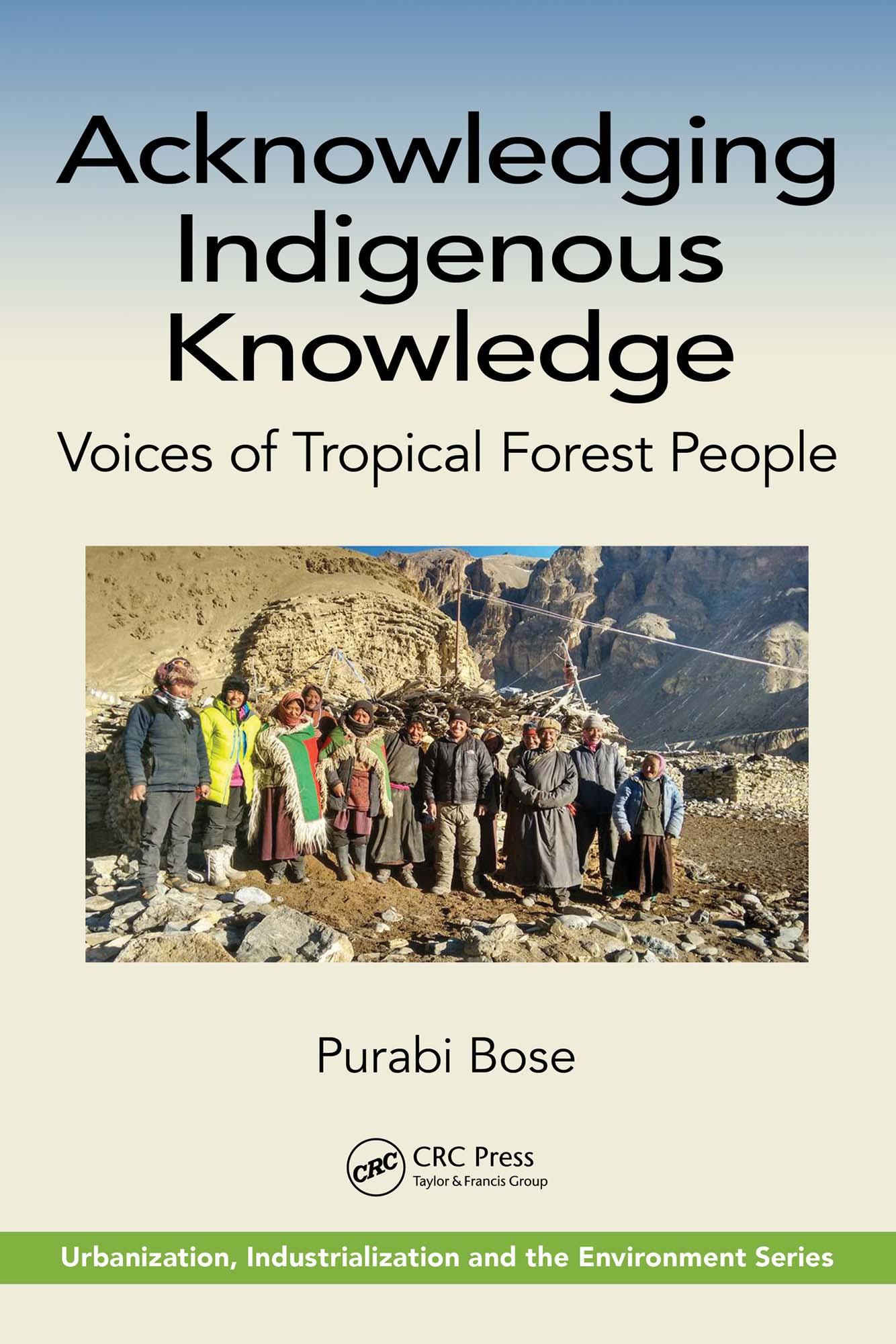
This book explores how the landscapes in indigenous territories are rapidly changing due to increased global industrial demand. This deforestation and urbanization have isolated the indigenous people from practicing ‘traditional ways of life.’ Portrayed in this book is the indigenous people’s perspective of their indigenous knowledge (IK) about the environment and why losing IK is a threat to humans, wildlife, and nature. Insight is shared into why acknowledging IK as a science can help solve climate change, food and nutrition insecurity, and increasing new types of pandemics through evidence‑based stories from indigenous people.
Features:
• Bridges the fractured space between science and nature.
• Documents the perspectives of indigenous peoples about their ancestral knowledge.
• Provides ethnographic qualitative comparative case studies of forest‑dwelling indigenous peoples over a 19‑year period.
• Covers largely remote indigenous territories of ten tropical countries in the Global South.
• Provides evidence‑based stories examining indigenous knowledge’s role in the tropics in preserving diverse landscapes and providing nature‑based solutions.
Pay easily by card, Klarna, Apple Pay or Google Pay. Not happy? You always have a 14-day money-back guarantee. Read more in our terms. If you have any questions, email us at hello@memmo.org.
Memmo makes studying easier – wherever you are in the world. We bring your course books and smart study tools together in one place: summaries, quizzes, podcasts and flashcards. Plus Ted, your study buddy who answers anything you wonder. Over 50,000 students already study here – built to help you learn faster and stress less.