
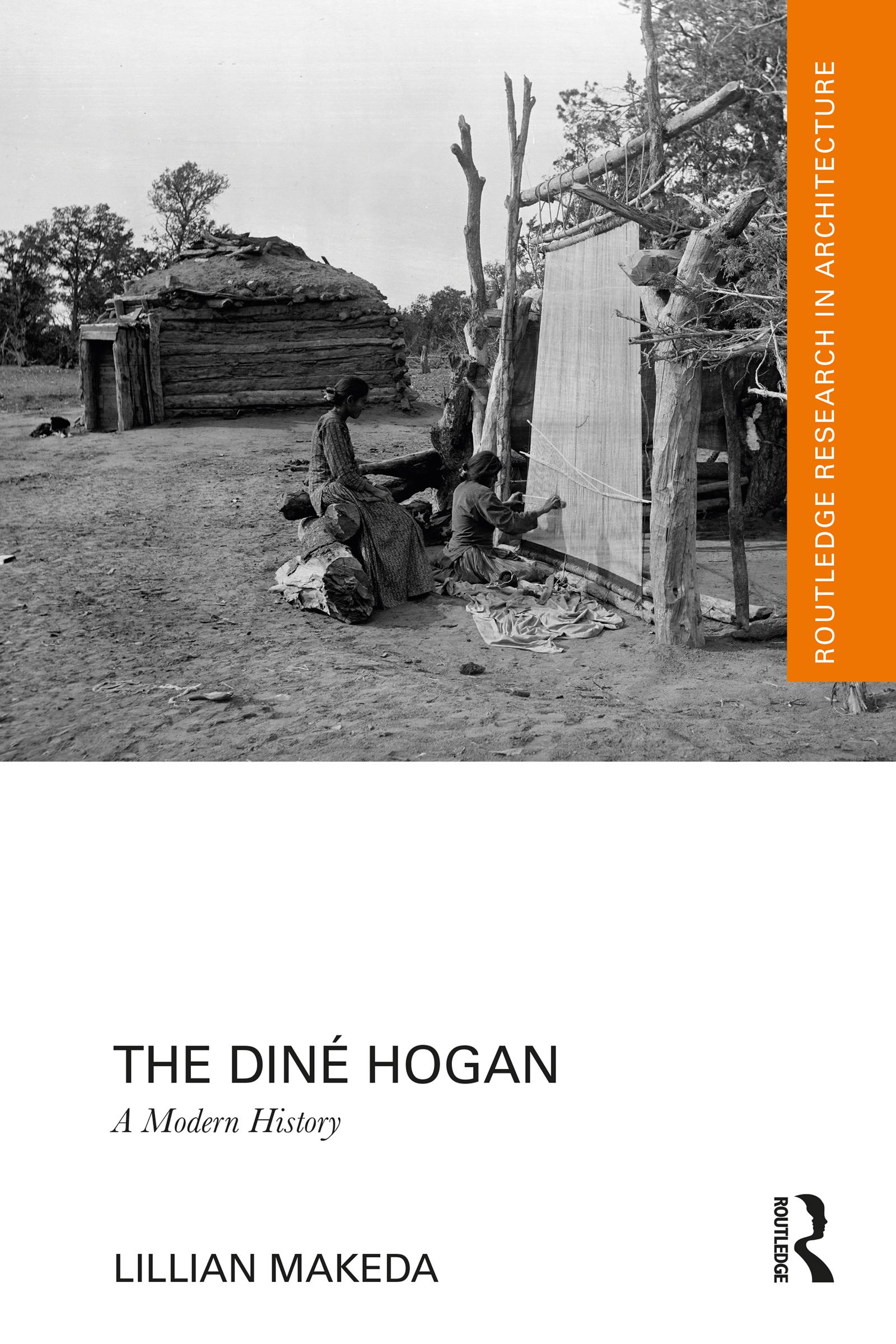
Over the course of their history, the Navajo (Diné) have constructed many types of architecture, but during the 20th century, one building emerged to become a powerful and inspiring symbol of tribal culture. This book describes the rise of the octagonal stacked-log hogan as the most important architectural form among the Diné.
The Navajo Nation is the largest Indian reservation in the United States and encompasses territory from within Arizona, New Mexico, and Utah, where thousands of Native American homes, called hogans, dot the landscape. Almost all of these buildings are octagonal. Whether built from plywood nailed onto a wood frame or with other kinds of timber construction, octagonal hogans derive from the stacked-log hogan, a form which came to prominence around the middle of the last century. The stacked-log hogan has also influenced public architecture, and virtually every Diné community on the reservation has a school, senior center, office building, or community center that intentionally evokes it. Although the octagon recurs as a theme across the Navajo reservation, the inventiveness of vernacular builders and professional architects alike has produced a wide range of octagonally inspired architecture. Previous publications about Navajo material culture have emphasized weaving and metalwork, overlooking the importance of the tribe’s built environment. But, populated by an array of octagonal public buildings and by the hogan – one of the few Indigenous dwellings still in use during the 21st century – the Navajo Nation maintains a deep connection with tradition. This book describes how the hogan has remained at the center of Diné society and become the basis for the most distinctive Native American landscape in the United States.
The Diné Hogan: A Modern History will appeal to scholarly and educated readers interested in Native American history and American architecture. It is also well suited to a broad selection of college courses in American studies, cultural geography, Native American art, and Native American architecture.
Pay easily by card, Klarna, Apple Pay or Google Pay. Not happy? You always have a 14-day money-back guarantee. Read more in our terms. If you have any questions, email us at hello@memmo.org.
Memmo makes studying easier – wherever you are in the world. We bring your course books and smart study tools together in one place: summaries, quizzes, podcasts and flashcards. Plus Ted, your study buddy who answers anything you wonder. Over 75,000 students already study here – built to help you learn faster and stress less.