
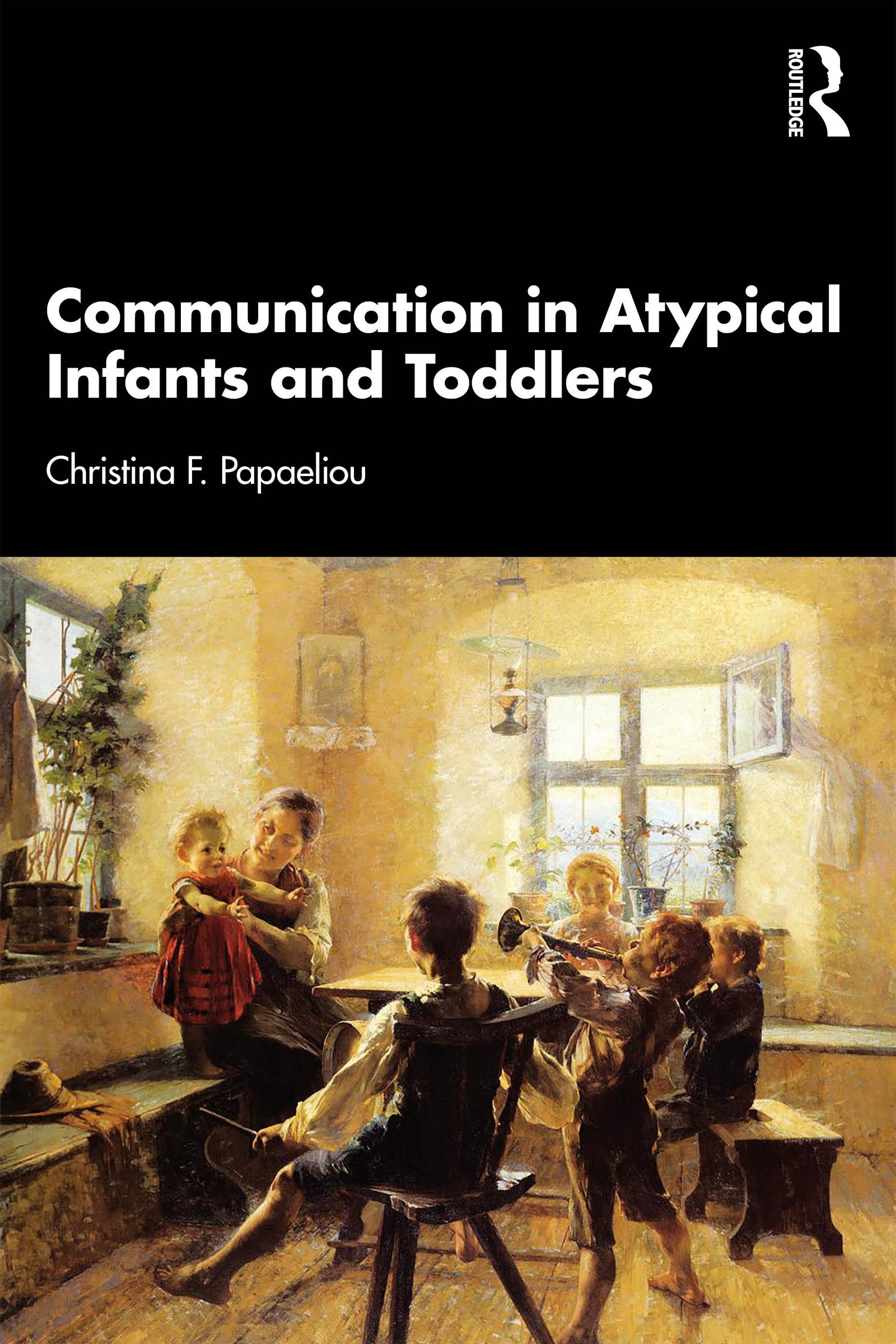
This book presents a comparative review of the latest studies and data on prelinguistic communication and early semantic development in autism spectrum disorder (ASD), Williams syndrome (WMS), attention-deficit/hyperactivity disorder (ADHD), and early language delay. Papaeliou offers a critical analysis of the literature, compares key theoretical approaches, and interprets data on development in atypical populations.
A fruitful synthesis of theory and research reveals that, instead of cognitive deficits, the core feature of these neurodevelopmental disorders consists of deficits in the ability for self- and intersubjective coordination, which adversely affects early interactions and, consequently, the emergence of language. The book composes fragmentary proposals on the role of rhythm disruptions in different conditions, setting out the idea that disruption in interactional synchrony is a connecting thread through neurodevelopmental disorders which show high prevalence or high comorbidity rates. Papaeliou identifies distinct communicative patterns characteristic of each disorder and puts forward a unifying theory for interpreting data on early communication and language development in atypical populations.
This is ideal reading for psychologists, psycholinguists, psychiatrists, paediatricians, speech therapists, and special educators. Students in developmental psychology and anyone interested in understanding the research behind typical and atypical development will also benefit from this text.
Pay easily by card, Klarna, Apple Pay or Google Pay. Not happy? You always have a 14-day money-back guarantee. Read more in our terms. If you have any questions, email us at hello@memmo.org.
Memmo makes studying easier – wherever you are in the world. We bring your course books and smart study tools together in one place: summaries, quizzes, podcasts and flashcards. Plus Ted, your study buddy who answers anything you wonder. Over 50,000 students already study here – built to help you learn faster and stress less.