
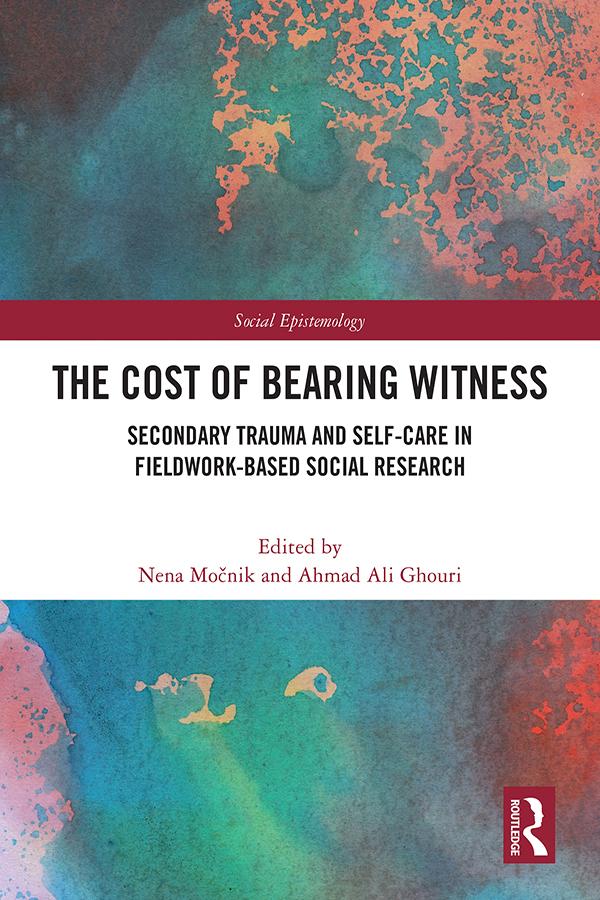
This highly interdisciplinary volume fills the gap in research ethics that has so far omitted to address the psychological, physiological, and socio-political impacts on researchers conducting field-based social research in traumatic environments.
The chapters in this book discuss various facets of secondary trauma from different methodological and theoretical perspectives, geographic, and historical contexts, and address a wide range of questions spanning from recent complex topics to semi-historical events and future concerns causing traumatic anxiety. While most chapters explore the process of healing and recovery from traumatic experiences during fieldwork-based research, few chapters also propose constructive approaches for developing personal and institutional methodologies and techniques to better prepare researchers to cope with secondary trauma.
The book offers useful insights and concrete changes in research methodologies that can help minimize the risk of trauma and new approaches to preventing and handling the consequences of conducting field-based social research in traumatic environments. It was originally published as a special issue of Social Epistemology.
Pay easily by card, Klarna, Apple Pay or Google Pay. Not happy? You always have a 14-day money-back guarantee. Read more in our terms. If you have any questions, email us at hello@memmo.org.
Memmo makes studying easier – wherever you are in the world. We bring your course books and smart study tools together in one place: summaries, quizzes, podcasts and flashcards. Plus Ted, your study buddy who answers anything you wonder. Over 50,000 students already study here – built to help you learn faster and stress less.