
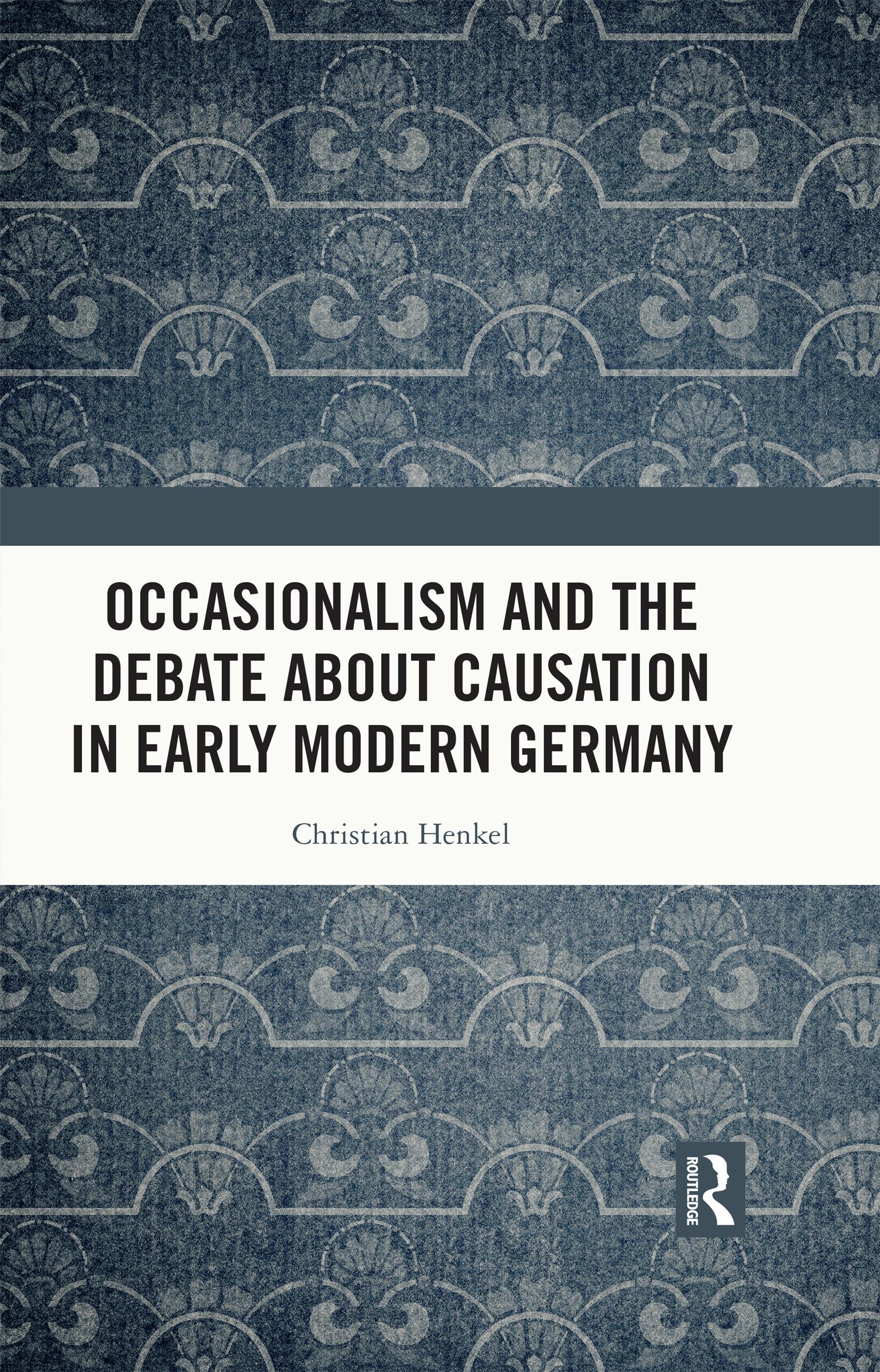
This is the first book to focus on occasionalism in early modern German philosophy. It demonstrates that occasionalism provided a strong foundation for the thought of four important yet underexamined German philosophers: Erhard Weigel, Johann Christoph Sturm, Christian Wolff, and Gottfried Ploucquet.
Occasionalism is most often associated with Cartesian early modern Christian philosophers, the most famous of whom is perhaps Nicolas Malebranche. Early modern German occasionalism has received very little scholarly attention, leaving us with an incomplete picture of the German causation debate from Leibniz to Kant. This book combines a chronological investigation of four influential and historically connected cases of occasionalism in early modern Germany with a reconstruction of arguments to address specific problems in metaphysics, natural philosophy, philosophy of language, and philosophy of psychology. Providing a sufficient ground for nature and human beings’ mental and physical existence is a pressing issue for Weigel, Sturm, Wolff, and Ploucquet. In examining the thought of these four understudied German philosophers, this book helps us rethink the relation between metaphysics of nature and science of nature and better understand the development of early modern debates about causation.
Occasionalism and the Debate about Causation in Early Modern Germany is an important resource for scholars and advanced students working on the history of early modern philosophy and the history of metaphysics and causation.
Pay easily by card, Klarna, Apple Pay or Google Pay. Not happy? You always have a 14-day money-back guarantee. Read more in our terms. If you have any questions, email us at hello@memmo.org.
Memmo makes studying easier – wherever you are in the world. We bring your course books and smart study tools together in one place: summaries, quizzes, podcasts and flashcards. Plus Ted, your study buddy who answers anything you wonder. Over 50,000 students already study here – built to help you learn faster and stress less.